Flexible 3D printing blends soft materials with strength, enabling prototypes that feel like rubber or silicone while maintaining structural integrity. This guide highlights five relevant Amazon products that support flexible resins, flexible filaments, and practical tools for post-processing and repairs. Each option emphasizes softness, resilience, and reliable performance for a range of hobbyist and professional applications.
| Product | Brand | Type | Key Benefit |
|---|---|---|---|
| SUNLU Flexible 3D Printer Resin, 66A 1000G | SUNLU | Flexible Resin | Balanced softness and strength with high impact resistance |
| SUNLU Flexible 3D Printer Resin, 2KG | SUNLU | Flexible Resin | Larger batch for frequent flexible prototypes |
| Superflex 3D Printer Resin, 80A | 3DMaterials | Flexible Resin | Rubbery feel with fast printing on monochrome LCD |
| SUNLU TPU 3D Printer Filament, 1KG | SUNLU | TPU Filament | Fast printing with flexible, resilient parts |
| KRAFTPROTZ 1.76 oz Super Glue Gel | KRAFTPROTZ | Cyanoacrylate Adhesive | No-drip, strong bonding for repairs and supports |
These selections cover resin-based flexible printing, flexible filaments, and essential tooling for post-processing and repairs, offering a practical mix for creators exploring bendable prototypes, flexible enclosures, and impact-absorbing parts.
SUNLU Flexible Resin 66A, 1000G – Gray

SUNLU’s flexible resin combines a soft yet tough 66A durometer with substantial elongation at break, creating parts that emulate flexible rubber while maintaining structural validity. The 405nm photopolymer formula cures quickly, supporting efficient production of bendable prototypes and flexible functional models. This resin is especially useful for textured grips, flexible housings, and parts that require impact resistance without fracturing under minor deformation.
Key benefits include a balanced soft-to-sturdy profile and a formulation designed for durable, drop-tolerant prints. Users should follow standard post-curing routines to maximize elongation and resilience, and consider optimized print settings for layer adhesion and surface finish on flexible parts.
SUNLU Flexible Resin 2KG – Gray
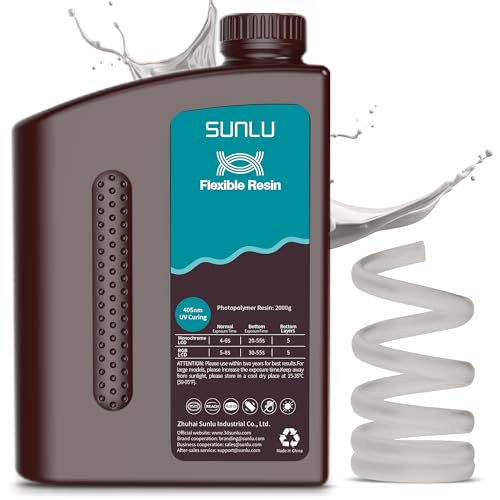
This larger-volume version maintains the same 66A hardness and high elongation at break, enabling more frequent or larger flexible prints without frequent resin swapping. The 2 kg supply supports production runs of soft components, flexible gaskets, or toy-scale rubber-like parts. The resin’s impact resistance helps printed models withstand handling during testing and use, while still allowing reasonable post-processing options for smooth surfaces on flexible geometries.
Consider workflow adjustments for bulk printing, including exposure settings and wash-curing protocols, to preserve elasticity and avoid brittleness at critical joints. The long-term cost-per-part can improve with bulk resin purchases when flexible prototypes are common in your projects.
Superflex 3D Printer Resin, 80A – 500g
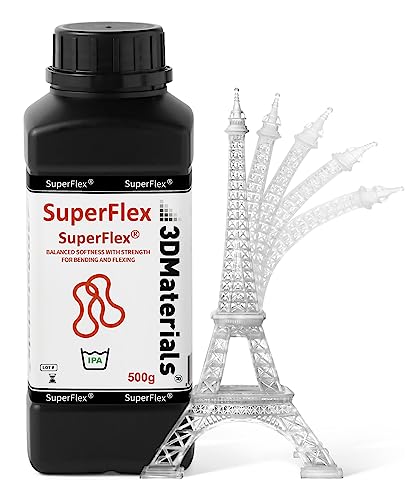
Superflex offers a notably soft 80A shore, designed to simulate flexible rubber while maintaining dimensional stability. Printed objects can emulate soft-touch surfaces or flexible housings with a rubber-like feel, making it suitable for grips, soft enclosures, and prototypes that require conformity to curved profiles. Monochrome LCD printers can achieve rapid layer exposure, supporting higher throughput for flexible prototypes with 50 μm layer heights in suitable setups.
The formulation emphasizes a balance between softness and structural integrity. When using this resin, developers may focus on print orientation to maximize surface quality on flexible parts and optimize post-cure parameters to preserve elasticity over time.
SUNLU TPU 3D Printer Filament, 1KG – Black
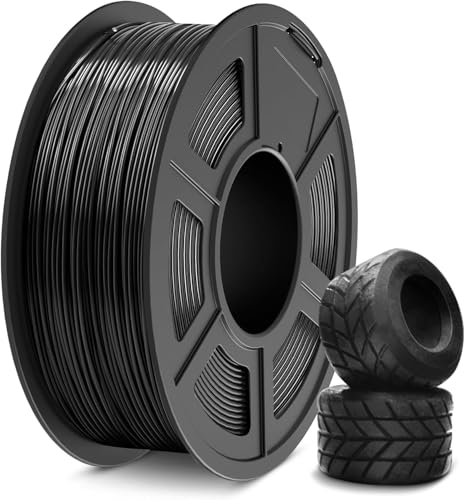
SUNLU’s TPU filament delivers a high-speed printing experience with a Shore hardness of 95A, striking a practical balance between flexibility and resilience. This flexible thermoplastic polyurethane filament is suited for wearable parts, flexible casings, and components that require impact absorption. The filament’s layer adhesion contributes to reliable prints with smooth finishes, while dimensional accuracy helps maintain precise fits in assemblies.
For best results, use a heated bed and appropriate extrusion temperatures, and consider slower print speeds to maintain consistent layer bonding. TPU’s buoyant properties and flexibility make it an attractive option for parts that must bend without cracking or deforming under load.
KRAFTPROTZ 1.76 oz Super Glue Gel – No-Drip

This fast-drying, no-drip gel adhesive is designed for precise applications on 3D prints and a wide range of plastics, including PLA, ABS, PETG, TPU, ASA, and Nylon. The thicker gel reduces run-off on vertical seams and complex joints, supporting reliable repairs and temporary fixes for aids, fixtures, and model assemblies. The XXL tube offers extended usage, making it suitable for labs or print farms where frequent bonding is required.
When using cyanoacrylate glues, ensure surfaces are clean and dry to maximize bond strength. Consider accessories like activators or primers for certain materials to improve adhesion on difficult-to-bond surfaces or highly textured geometries.
Buying Guide: Key Considerations For Flexible 3D Printing
- Material Type And Fit: Choose flexible resins for resin-based prints or TPU filaments for filament-based projects. Resin tends to offer finer detail, while TPU provides superior elasticity and impact resistance for larger parts.
- Hardness And Elongation: Look for shore hardness values (for resins) or durometer ratings (for TPU) that align with your application. Softer materials (lower durometer) bend and compress more easily but may require careful design to avoid deformation.
- Print Technology Compatibility: Ensure your printer supports the chosen material (DLP/SLA resins or FDM/FFF TPU). Some units require exposure settings or slicer adjustments to optimize surface finish and layer adhesion.
- Post-Processing: Resin prints require washing and post-curing, while TPU prints may benefit from surface finishing and careful print bed temperature control. Consider post-processing times and equipment when planning production.
- Adhesion And Repairs: For repairs and bonding, select compatible adhesives (e.g., cyanoacrylate gels) and surface preparation routines to ensure durable joints, especially on flexible materials.
- Bulk Purchasing And Budget: Larger resin quantities and filaments can reduce per-part costs for ongoing flexible projects. Compare batch sizes and shelf life to maximize value without sacrificing performance.
- Surface Finish And Comfort: Flexible parts often require smoothing or coating to reduce tackiness and improve feel. Plan for coatings that maintain flexibility while protecting the surface.
- Environmental And Safety: Follow manufacturer guidelines for ventilation and handling of resins and solvents. Store materials properly to prevent premature curing or degradation.
- Applications And Use Cases: Match material properties to intended applications—grips, sleeves, soft enclosures, or impact-absorbing components—so the chosen material delivers the desired combination of softness and resilience.
In sum, flexible 3D printing encompasses a range of materials and tools, from rubber-like resins and fast-printing TPU filaments to practical bonding and cleanup aids. Selecting the right combination depends on the specific part requirements, printing technology, and intended use, with attention to post-processing and long-term durability.