Looking for a reliable screen printing machine to expand your DIY projects? This guide highlights five notable options that balance space, versatility, and stability. Each pick offers features suited to home studios, startups, or hobbyists who want consistent results without a large footprint. Read on to compare capabilities, materials, and practical uses across color counts and station setups.
| Product | Brand | Key Benefit | Materials/Notes |
|---|---|---|---|
| VEVOR 4 Color 1 Station | VEVOR | Compact, accurate positioning | 21.2 x 17.7 in, 360° rotatable |
| VEVOR 1 Color 1 Station | VEVOR | Space-efficient for light use | 21.2 x 17.7 in, double-layer pallet |
| VEVOR 4 Color 4 Station | VEVOR | Higher throughput for multiple colors | 21.2 x 17.7 in, 360° rotatable |
| Speedball Beginner Kit | Speedball | Easy entry with vinyl and screen printing | DIY friendly, no chemicals needed |
| VEVOR 4 Color 2 Station | VEVOR | Balanced color/space, dual stations | 21.2 x 17.7 in, dual-layer pallet |
VEVOR 4 Color 1 Station Screen Printing Press

The VEVOR 4 Color 1 Station screen printing press is designed for compact spaces while maintaining stable performance. The fuselage is screwed to a workbench for enhanced stability, and the 360° rotatable frame is supported by independent metal bearings to ensure precise registration. Printing area spans 21.2 x 17.7 inches, suitable for T-shirts, pillowcases, fabrics, and other flat materials. A double-layer positioning pallet reduces deviation and helps land designs consistently. This model targets users who print occasionally or have limited workspace, making it a practical entry point for small shops and home studios.
Key features include a dedicated position stop under each arm to guide placement and a robust construction that resists wear. The machine is marketed toward DIY projects across textiles, plastics, wood, glass, and more. While it does not maximize output for large runs, it offers dependable accuracy for one-off designs or limited runs with good repeatability.
VEVOR 1 Color 1 Station Screen Printing Press

Designed for minimal footprints, this single-station model prioritizes space efficiency while preserving stability. The fuselage is mounted on a bench with independent metal bearings for smooth operation and precise alignment. The printing area remains at 21.2 x 17.7 inches, making it suitable for T-shirts and other flat surfaces such as pillowcases and fabrics. The device includes a double-layer positioning system to reduce deviations and improve consistency across prints. The emphasis on compactness makes it appealing for beginners or hobbyists who rarely produce multi-color designs.
With a focus on reliable performance, this unit supports a broad range of flat substrates—from textiles to plastics and wood. Its simple configuration is ideal for first-time screen printers seeking predictable results without a steep learning curve. It’s a practical stepping stone before upgrading to multi-color or multi-station setups.
VEVOR 4 Color 4 Station Screen Printing Press

This four-color, four-station press is built for higher-volume projects without sacrificing space. The fuselage attaches to a workbench for stability, and a 360° rotating frame with independent metal bearings ensures consistent alignment. The 21.2 x 17.7 inch printing area is compatible with a wide range of flat items, including clothing, pillowcases, fabrics, metals, and more. A double-layer positioning pallet helps minimize deviations and improves print accuracy across multiple stations. The stainless and steel components are designed for durability in regular use and potential cleaning between jobs.
Ideal for moderate to heavier workloads, this model suits screen printers who need to reproduce multi-color images with reliable registration. Its design emphasizes durability and repeatable results, making it a sensible choice for small production runs or seasonal demand spikes in home studios or boutique print shops.
Speedball Beginner Screen Printing Craft Vinyl Kit
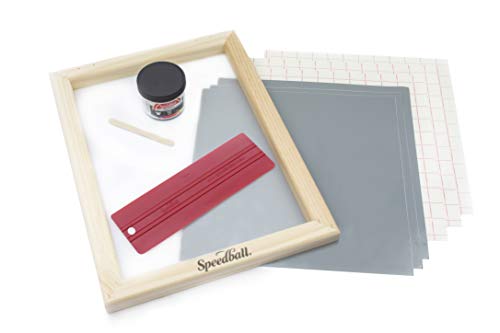
The Speedball Beginner Kit blends vinyl crafting with screen printing to create an approachable entry point for beginners. It enables users to print designs using a home vinyl cutting setup, offering a quick and simple path to screen-printed products. The kit is designed to avoid chemicals and complex emulsion processes, which can reduce setup time and learning curves. It’s well-suited for creating custom T-shirts and home decor pieces using vinyl routes combined with screen printing techniques.
For newcomers, this kit provides an accessible way to explore screen-printing concepts, color layering, and design transfer without a significant upfront investment in traditional screen-printing supplies. It’s best viewed as a stepping-stone toward more advanced multi-color, multi-station presses for expanded production possibilities.
VEVOR 4 Color 2 Station Screen Printing Kit

This four-color, two-station setup balances color printing with workspace constraints. The fuselage mounts to a bench for stability, and the frame features independent metal bearings for smooth operation and precise positioning. The 21.2 x 17.7 inch printing area accommodates a range of flat items, while the dual-layer pallet helps reduce registration errors between colors. The kit also emphasizes a durable build, enhanced by cold-rolled steel and protective coating to resist wear and corrosion. It’s positioned for hobbyists and small shops seeking intermediate throughput without a large footprint.
Users should consider whether two stations meet their color needs or if upgrading to four stations would better support more complex designs. This option offers a practical middle ground between compact single-station tools and larger multi-station presses.
Buying Guide: Key Purchase Considerations
- Printing area and footprint: Match the machine’s table size (typically 21.2 x 17.7 in) to your workspace and target substrates. Smaller footprints suit home studios; larger areas enable bigger or multiple designs per print.
- Color count and stations: One-color, one-station presses are compact and affordable but limit designs. Four-color, multi-station models increase production speed and design complexity but require more space and maintenance.
- Stability and registration: Look for a robust fuselage mounting system, 360° rotatability, and a double-layer positioning pallet. Independent bearings and precise stops improve repeatability for consistent results.
- Materials and build quality: Cold-rolled steel frames, stainless rods, and corrosion-resistant finishes contribute to long-term durability in real-world use and cleaning cycles.
- Versatility: Consider machines that support a range of substrates (cloth, pillowcases, fabrics, plastics, wood, glass, ceramics). Some models emphasize easy adaptation for home decor and DIY crafts beyond T-shirts.
- Setup and space: If you have limited space, prioritize compact models with straightforward bench mounting. If you anticipate higher-volume runs, a larger, multi-station press may be more efficient.
- Accessories and add-ons: Clamps and hinges can improve registration accuracy. Check for compatibility with existing frames or future upgrades to multi-color configurations.
Considerations by Use Case
- For beginners: Start with a compact, single-color unit to learn layout, registration, and curing processes before investing in multi-color equipment.
- For hobbyists: A two-station or four-station setup offers better color layering options without occupying excessive space.
- For small businesses: A four-color, multi-station press provides higher throughput and repeatable results for limited product lines, especially if you plan to scale.
- For versatility: Machines marketed with wide substrate compatibility enable experimentation with textiles, plastics, wood, and ceramics, expanding potential product lines.