Color wheels and watercolor palettes help artists study color relationships, mix accurately, and teach or learn color theory. Below are five carefully chosen color wheel palettes that suit painters, crafters, designers, and students alike. Each option blends ease of use with durable construction, portability, and clear guidance on color interactions.
| Product | Brand | Key Benefit |
|---|---|---|
| JimKing Creative Color Wheel | JimKing | Two-sided rotating wheel for color relationships; portable learning tool |
| KOH-I-Noor Opaque Watercolor Paint Wheel | Koh-I-Noor | Stackable trays with water tray option; durable and portable |
| Mijello MWP-2020 20 Wells Color Wheel Palette | Mijello | Deeply studied color system based on Munsell for primary/secondary/tertiary blends |
| Outus 2 Pcs Color Wheel | Outus | Two wheels with front/back designs; hands-on color mixing guide |
| The Color Wheel Company Watercolor Wheel | Color Wheel | Clear color relationships; designed for watercolor artists |
JimKing Creative Color Wheel
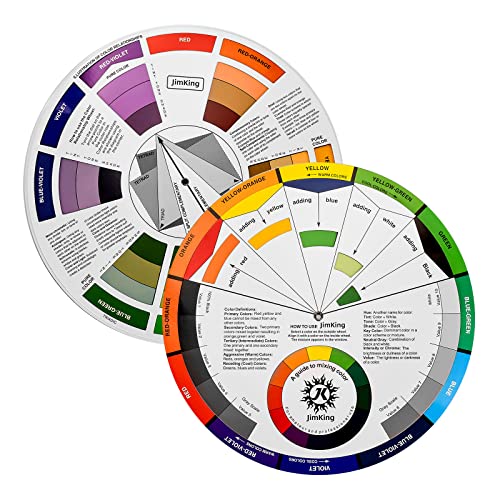
The JimKing Color Wheel is a two-sided, rotating wheel designed to visualize color relationships and guide mixing decisions. Its 230 mm diameter makes it large enough for classroom demonstrations yet portable enough for field use. This tool is marketed as suitable for a wide range of artists—painters, crafters, interior and graphic designers, and even makeup or tattoo coloring guides. The wheel helps users understand common color terms and interactions, supporting both foundational learning and practical application in color selection and harmony. It’s packaged in two packs for convenience and sharing in collaborative settings.
KOH-I-Noor Opaque Watercolor Paint Wheel

The Koh-I-Noor opaque watercolor paint wheel combines compact, interlocking trays with a practical water-tray capability via a clear plastic cover. This design supports on-the-go painting and classroom demonstrations, enabling artists to transport a full palette without sacrificing organization. The set emphasizes portability and safe transport of paints to diverse locations, making it suitable for students and professionals who frequently work away from a fixed studio. The four-tray interlocking system encourages easy access to colors and quick reference for color mixing decisions.
Mijello MWP-2020 20 Wells Water Color Wheel Palette
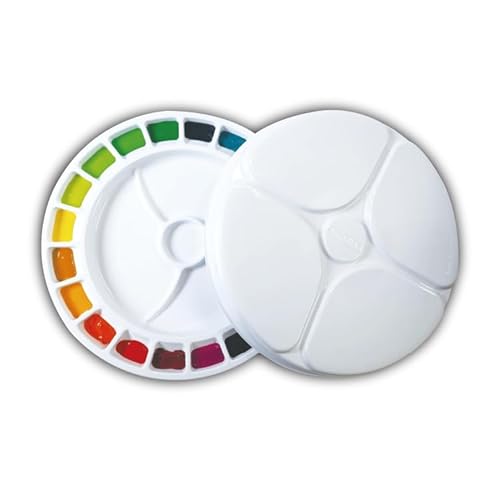
The Mijello MWP-2020 palette integrates the Munsell Color System into a wheel format to study color relationships more deeply and intuitively. With 20 wells, it accommodates a broad spectrum of hues, allowing painters to explore primary, secondary, and tertiary colors within a single system. This palette is designed for serious color study, offering a structured approach to identifying color relationships and balancing color mixing across a complete set of hues. It’s well-suited for studio work, education, and color theory practice.
Outus 2 Pcs Color Wheel
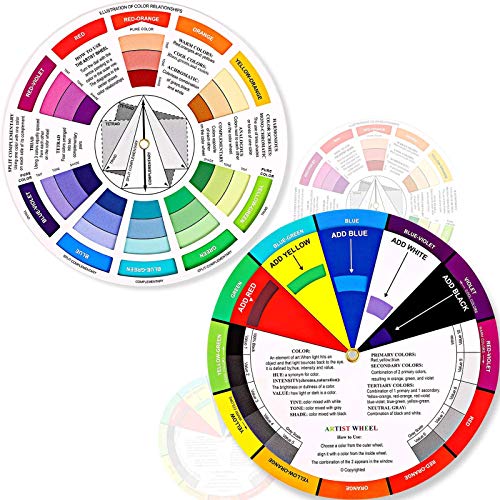
Outus offers a two-pack color wheel set designed for learning color mixing and relationships. Each wheel is 5.5 inches in diameter, making them highly portable for classrooms, workshops, or on-site demonstrations. The front shows color combinations and mixing results, while the backside provides grayscale and triad/tint/toned relationships to deepen color understanding. The dual-face design supports varied teaching styles and collaborative activities, helping students visualize how colors interact in practical projects, from makeup to painting to design.
The Color Wheel Company Watercolor Wheel

The Color Wheel Company’s watercolor wheel focuses on twelve common color mixes suitable for watercolor artists. This wheel emphasizes clear demonstration of how primary colors blend into secondary hues and how related colors interact. It’s a practical tool for classroom settings, workshops, or personal studios where a straightforward visual guide to color relationships is desirable. The wheel’s watercolor-friendly framing makes it easy to apply in painting sessions and color experiments, helping artists choose harmonious palettes for their projects.
Buying Guide
- Color system and scope: Look for wheels that reflect a recognized color theory framework (such as primary/secondary/tertiary blends or the Munsell system). A broader color range supports more nuanced color choices.
- Wells vs. single palette: Palettes come with multiple wells to hold several colors. More wells enable deeper testing of color mixes, but consider the space you have for storage and use.
- Portability and durability: For fieldwork or teaching, choose sturdy materials with secure lids and compact size. Interlocking trays or two-sided wheels offer additional flexibility.
- Ease of use: A rotating wheel or front/back design can speed up demonstrations and practice. Ensure the labeling or guides clearly indicate color relationships and common mixes.
- Materials and cleaning: Porcelain or ceramic palettes are easy to clean but heavier; plastic wheels are lighter but may scratch. A smooth surface reduces color cling and makes cleanup faster.
- Teaching and learning features: Some wheels come with built-in guides, grayscale references, or triad illustrations. These features support beginners and can facilitate structured lessons.
- Compatibility with media: While designed for watercolor practice, many wheels work well with acrylics or gouache for color theory studies. Check the product notes for compatibility.
- Durability and longevity: Look for wheel surfaces that resist staining and don’t warp under moisture. Durable materials help ensure reliable color testing over time.
- Price and value: Compare sets by the number of wells, included guides, and portability. A slightly higher upfront cost may offer better long-term usability in a classroom or studio.
When selecting a color wheel palette, consider how you’ll use it: classroom teaching, disciplined color study, or on-the-go color planning for plein air or makeup/appearance work. Each option above provides a balance of instruction, portability, and practical mixing guidance, enabling artists to experiment with relationships, harmonies, and tonal shifts across media.