For screen printing, choosing the right mesh, frames, and starter supplies is essential for consistent results. This guide highlights quality mesh fabrics and related tools that help printers achieve clean lines, accurate ink transfer, and durable results across fabrics and substrates. The selections below cover common mesh counts, dimensions, and beginner-friendly kits to professional-grade materials, giving you practical options for your next project.
Product Summary
- MS WGO 110 Mesh Silk Screen Printing Fabric Mesh
- Caydo Screen Printing Starter Kit (Frames, Squeegees, Film, Tools)
- Speedball Fabric Screen Printing Ink Starter Set (6 colors)
- MS WGO 160 Mesh Silk Screen Printing Fabric Mesh
- ETPUVIUMBE Silk Screen Printing Mesh (120M/48T)
MS WGO 110 Mesh Silk Screen Printing Fabric Mesh

This mesh uses high-quality polyester filaments and precise monofilament yarn production. It offers high stability, even mesh formation, and the ability to withstand high tension during printing. The mesh is designed to provide accurate results across ink transfer, with good under-ink performance for screen printing processes. It’s a solid option for standard t-shirt and textile printing when a reliable 110 mesh count is desired.
Caydo Screen Printing Starter Kit

The Caydo kit includes three screen printing frames in different sizes (10×14, 8×12, 6×10 inches) with mesh, plus two squeegees, an inkjet transparency film, an ink knife, and masking tape. The kit supports varied print sizes, making it versatile for beginners and hobbyists. The included squeegees cover both large and small frames, helping to achieve stable prints across multiple projects. This bundle focuses on usability and breadth of access to essential tools.
Speedball Fabric Screen Printing Ink Starter Set

This six-color set includes essential shades (Black, White, Red, Yellow, Blue, Green) ready for mixing and printing. The water-based inks offer easy workability, smooth coverage, and low odor, which helps with cleanup. They’re designed for fabrics and also work on paper and cardboard, providing a versatile option for both beginners and experienced printers seeking a straightforward color kit with reliable performance.
MS WGO 160 Mesh Silk Screen Printing Fabric Mesh

This higher mesh count (160) is suitable for finer detail work and thinner inks. Similar to the 110 mesh variant, this mesh is built from high-quality polyester filaments and produced with precision to ensure stability and uniform mesh formation. It supports accurate imaging and ink deposition for detailed designs, making it a strong option for high-detail textile and paper projects.
ETPUVIUMBE Silk Screen Printing Mesh (120M/48T)

This mesh features 120M/48T white monofilament polyester, with a wide width of 50 inches and a 1-yard length. It’s designed for broader print runs and repeatable results on larger formats. The mesh is described as 100% polyester monofilament, emphasizing consistency and reliable ink transfer for screen printing applications across multiple substrates, including textiles and other materials.
Caydo 9 Pieces Screen Printing Frame Set (110 Mesh)
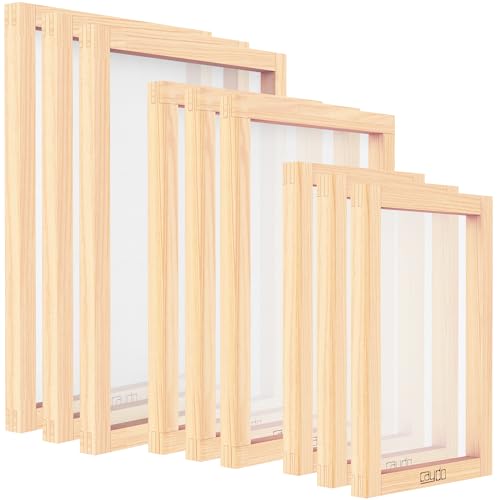
This frame set provides a comprehensive range of sizes (10×14, 8×12, 6×10 inches) with 110-mesh screens. The wood frames are described as sturdy and corrosion resistant, offering durability for long-term use. The 110 mesh ensures a balance between ink coverage and detail, supporting a wide variety of simple to mid-complex designs for beginners and seasoned printers moving toward more complex projects.
Buying Guide: Key Purchase Considerations
- Mesh count and fabric: Higher counts (e.g., 160) yield finer details but require finer screens and inks; mid-range counts (110) provide reliable general-purpose results; consider your typical design complexity and ink opacity.
- Material quality and consistency: Look for monofilament polyester mesh with uniform weave and high tension tolerance to prevent sagging and ensure accurate ink deposition.
- Frame compatibility: Ensure frames fit your press or manual setup; wooden frames with durable joints support repeated use and consistent tension.
- Starter kits vs. individual parts: Kits offer convenience and cost savings for beginners, while individual components let you tailor a setup to specific projects and upgrade over time.
- Inks and compatibility: Water-based inks are easier to clean and suitable for beginners, while plastisol or specialty inks may require compatible mesh counts and curing methods for lasting results.
- Print size and substrates: Match mesh width and frame size to your intended print area. Large-format mesh products support broader designs, while smaller counts suit detail on garments and paper.
- Durability and maintenance: Consider how easy it is to clean and maintain the mesh, frames, and squeegees to extend their life and preserve print quality.
- Cost vs. value: Weigh the upfront cost against the expected number of prints, durability, and versatility across different projects to determine overall value.
- Maintenance steps: Pre-wash screens to remove sizing, properly tension frames, and cure inks according to manufacturer guidance to preserve print fidelity over time.
- Support and documentation: Availability of clear setup instructions, compatibility information, and customer support can help resolve common setup and ink-application questions.
The selections above offer a range of mesh counts, widths, and bundles to fit diverse screen-printing needs. Whether you’re starting a hobby, teaching a class, or operating a small shop, these options provide practical paths to consistent ink transfer, crisp lines, and durable results across fabrics and substrates.