Explore authentic Gyotaku-inspired art and traditional sumi ink tools that empower you to capture fish forms with Japanese aesthetics. This guide highlights five top picks for Japanese fish ink prints, from DIY Gyotaku kits to sumi ink essentials, helping anglers and artists alike preserve memories in a refined, wall-ready style.
| Product | Brand | Focus |
|---|---|---|
| Fishin’ Prints Standard Pack DIY Gyotaku | Fishin’ Prints | Gyotaku printing on cloth with cuttable options |
| Iko Print Gyotaku Fish Printing Art Kit | Iko Print | Gyotaku on washi paper with inks and brushes |
| I-MART Sumi Ink (8.5 fl oz) | I-MART | Premium sumi ink for calligraphy and brush art |
| Yasutomo Bokuju Liquid Ink | Yasutomo | Water-resistant sumi ink for professional use |
| I-MART Sumi Ink (3.5 fl oz) | I-MART | Compact sumi ink for traditional art and writing |
Note: The following sections provide concise product-focused overviews, featuring official product details and features to help you compare options for Japanese fish ink prints and Gyotaku-inspired art.
Fishin’ Prints Gyotaku Printing Kit

Product features emphasize a standard pack with two 36×18 inch cloth sheets that can yield four smaller prints by halving the cloth or two full-size prints. The kit uses food-grade cuttlefish ink enabling safe cleanup and the possibility to fillet and eat fish after printing. Developed cloth enhances ease of printing, designed for non-artists to achieve clean prints with minimal skill. This option suits anglers seeking a straightforward Gyotaku experience and tangible wall-ready results.
Iko Print Gyotaku Fish Printing Art Kit
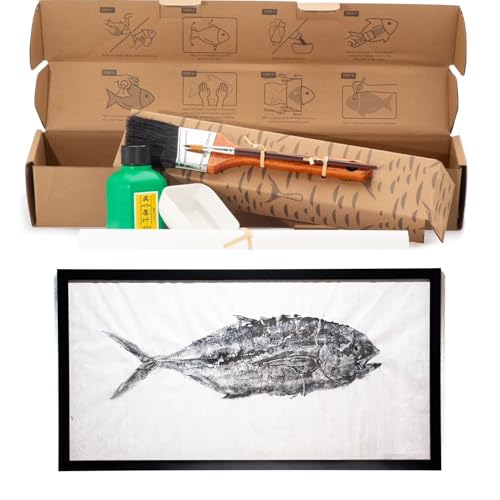
Gyotaku supplies include authentic Gyotaku ink and Japanese washi-style rice paper. This kit offers a refined route to creating wall-worthy prints that preserve the memory of a catch in a natural way. It appeals to anglers who want a collectible, decorative piece that reflects traditional Japanese aesthetics. The combination of sumi ink and washi paper helps produce detailed, elegant prints suitable for home or office décor.
I-MART Sumi Ink for Calligraphy & Japanese Art
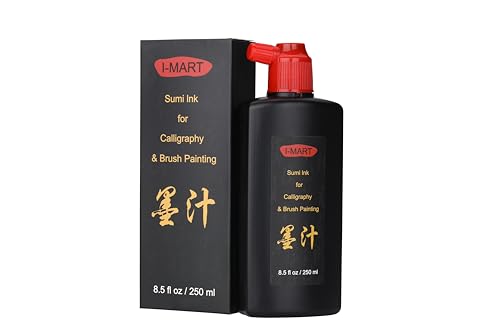
Premium sumi ink in a large 8.5 fl oz bottle provides rich, deep black tones for precision brushwork in both Chinese calligraphy and Japanese brush art. It is designed for smooth, elegant strokes and is ready to use straight from the bottle. Suitable for artists and hobbyists seeking reliable, versatile ink for traditional Asian artwork, including calligraphy and brush painting, with durable, long-lasting color.
Yasutomo Bokuju Liquid Ink

Bokuju liquid sumi ink features water-resistant properties once dry, making it suitable for layering with other media. The ink comes in a 2oz, 6oz, and 12oz bottle and is pigment-rich, ensuring a darker, more durable finish. It is smudge-resistant on unsized papers and versatile enough to dilute for lighter washes or mix with other mediums for different surfaces, appealing to mixed-media practitioners seeking robust black ink.
I-MART Sumi Ink (3.5 fl oz / 100 ml)
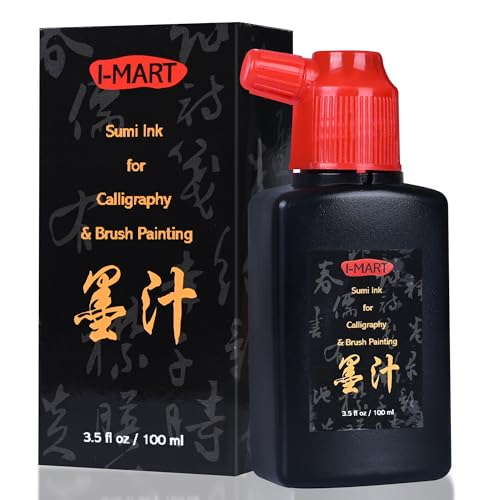
This compact sumi ink option provides premium-grade black tones, ideal for traditional calligraphy and brush painting. The bottle design supports easy, ready-to-use application with consistent flow for precise strokes. Suitable for both beginners and experienced artists seeking dependable ink for Japanese and Chinese brush art, as well as simple Gyotaku experiments that incorporate ink on paper or fabric.
Buying Guide: Key Purchase Considerations For Japanese Fish Ink Prints
- Medium compatibility: Gyotaku kits favor fabric sheets or rice paper, while sumi ink works across paper and fabric. Choose based on your preferred display style (print on cloth vs. wall art).
- Ink characteristics: Food-grade ink offers safer handling when working with fish prints, while traditional sumi inks provide deeper blacks and richer tones for detailed line work.
- Print surface: Washed or uncoated papers and specialized Gyotaku cloths affect ink absorption and print clarity. Test surfaces if possible to predict detail retention.
- Ease of use: Kits marketed toward beginners typically include step-by-step guidance and pre-cut or pre-sized sheets to simplify printing.
- Preservation and framing: Consider archival papers or varnish/sealing options to protect prints from fading and moisture when displayed long-term.
- Versatility: Some inks are labeled for calligraphy and brush art, offering broader use beyond fish prints. This can be a cost-effective choice for mixed-media projects.
- Color and tone options: While sumi ink provides deep black, some kits include colored inks or combinations, which can influence the final look of the Gyotaku piece.
When selecting products, prioritize how well the ink and paper source align with your artistic goals—whether you want a lifelike Gyotaku print for a gallery wall or a calligraphy-inspired piece that celebrates maritime life.