Small electric kilns make hobbyists and professional crafters capable of wax burnout, glazing, metal casting, and clay firing from a compact workspace. The following selections emphasize reliable temperature control, energy efficiency, and fast heat-up times, delivering consistent results for jewelry, pottery, and ceramic hobby projects. Each option includes key features and practical considerations to help you choose a kiln that fits your studio size and project needs.
| Product | Brand | Max Temp | Key Strength |
|---|---|---|---|
| VEVOR Electric Kiln | VEVOR | 2192℉ / 1200℃ | Precise PID control, versatile for wax casting and glazing |
| PRO Tabletop Kiln for Pottery & Jewelry Making | Aredwhiterui | 1150℃ | Four-sided heating, efficient energy use |
| TozMvi Electric Kiln | TozMvi | 1150℃ | Intelligent display, surround heating |
| Electric Kiln for Pottery at Home | adeproptitysed | 1150℃ | Multi-use studio furnace with precise control |
| 2000W Electric Kiln for Pottery at Home | chengxiaorui | 1150℃ | Rapid heat-up, reliable for home kilns |
When selecting a small kiln, consider the size of your workspace, typical project types (jewelry wax burnout, glaze firing, or clay casting), and how often you anticipate using the kiln. The following sections present five top options with direct product links, image references, and core features to help you compare at a glance.
VEVOR Electric Kiln: Precise, Portable Melting Furnace

The VEVOR model combines portability with robust heat control ideal for jewelry making, metal clay, and ceramic firing. Its 1500W heater supports fast heating, while a PID digital control system delivers accurate temperature management. A spacious inner chamber accommodates multiple small projects, and the design supports wax casting, glazing, and metal tempering. Users benefit from evenly distributed heat and easy-to-read display for real-time adjustments, enabling reliable results across repeated cycles.
PRO Tabletop Kiln For Pottery & Jewelry Making

Designed for small-batch casting and dewaxing, this kiln emphasizes precise heat control with four-sided surround heating and a digital display up to 1150℃. Its 2000W heater enables rapid heat-up, and thick wiring supports consistent performance. The sealed door and insulation contribute to energy efficiency and stable operation, making it a solid choice for jewelers and hobbyists focused on mold making, enamel work, and ceramic processes in a home studio.
TozMvi Electric Kiln For Jewelry Making And Pottery

TozMvi offers a 2000W capacity with surround heating and intelligent temperature control, maintaining a steady 0–1150℃ range. The design emphasizes efficient heat retention through a robust door structure and sealing system, reducing energy use while speeding up heat cycles. The bright digital display provides real-time temperature feedback for precise adjustments during jewelry casting, glaze firing, and metal processing tasks in smaller studios or educational settings.
Electric Kiln For Pottery At Home (Adeproptitysed)

This 2000W muffle furnace is built for professional burnout and metal melting tasks, delivering uniform heating with a four-sided surround design. An intuitive digital display shows real-time temperature with ±1℃ precision, and a wide 0–1150℃ range helps accommodate glaze firing, wax burnout, and metal casting. The kiln’s sealed door minimizes heat loss and supports reliable performance in home studios and small labs, offering versatile use for jewelry, ceramics, and enamel work.
2000W Electric Kiln For Pottery At Home By Chengxiaorui
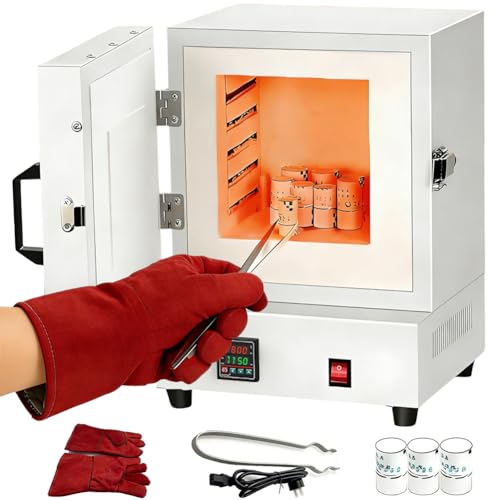
Chengxiaorui’s 2000W kiln emphasizes rapid heat-up and steady, uniform heating with a four-sided surround system. The temperature control ranges from ambient to 1150℃, making it suitable for pottery, glaze firing, dewaxing, and jewelry work. The digital display provides real-time monitoring to keep projects on track, while the robust construction supports reliable operation in home studios and small workshops for repeated firing cycles and delicate casting projects.
Buying Guide: Key Purchase Considerations And Comparisons
When choosing a small electric kiln, start with size and capacity needs. Products with four-sided surround heating tend to offer even heat distribution for consistent results in glaze firing, dewaxing, and metal casting. Evaluate the maximum temperature and whether it comfortably covers your typical projects; most hobbyists will not require beyond 1150℃ for pottery and jewelry casting, but a higher ceiling can enable more advanced metalworking tasks.
Control systems matter. Kilns with PID digital controllers provide fine temperature regulation, real-time readouts, and predictable cycles. Look for features such as automatic shutoff, programmable ramp rates, and clear displays. A well-insulated body and multi-layer construction improve energy efficiency and protect workspace temperatures, particularly in small studios where heat management is critical.
Consider heat-up speed versus energy use. Higher-wattage elements heat more quickly but may consume more electricity. For home studios, a balanced approach with efficient insulation and thoughtful door sealing can yield faster cycles without excessive energy costs. Evaluate maintenance needs and the availability of replacement parts when selecting a brand.
Versatility is another key factor. Some kilns are optimized for jewelry wax burnout, others for ceramic glaze firing or metal casting. If your projects span multiple crafts, a model marketed as multi-use or with flexible temperature ranges can be advantageous. Finally, check for safety features such as stable stands, anti-tip designs, and overheating protection to support safe operation in compact spaces.
Consumption, durability, and support are practical considerations. Look for kilns with robust inner linings and durable heating coils suitable for repeated cycles. Brand reputation and customer support can influence long-term satisfaction, especially when you need spare parts or technical advice for complex projects.