Lead casting is a popular DIY activity for making fishing weights, bullets, and other minor metal components. This guide highlights top molds and accessories designed for lead casting, offering options for quick melts, reliable ingots, and durable ingot molds. Each featured product is evaluated for material quality, heat resistance, ease of demolding, and suitability for small to mid-scale projects. Read on to compare features and find the best fit for your workshop.
| Product | Brand | Primary Use |
|---|---|---|
| Nelyrho Graphite Ingot Molds (4 Pieces) | Nelyrho | Making 1 kg ingots for refining lead and other metals |
| Molten Masters Electric Lead Melting Pot | Molten Masters | Fast melting of lead, weights, and bullets |
| Bonbo 100 oz Loaf Ingot Mold | Bonbo | Large capacity ingots for various metals |
| Nelyrho 50 oz Cast Iron Loaf Bar Mold | Nelyrho | Medium-sized ingots with handle for easy handling |
| Nelyrho 100 oz Troy Ounce Cast Iron Loaf Bar Mold | Nelyrho | High-capacity ingots with durable casting |
These selections span graphite and cast iron molds, from compact designs for small batches to larger loaves for higher output. They pair with familiar casting accessories such as lead melting pots and precision ladles. The list emphasizes heat tolerance, demolding ease, and corrosion resistance to support consistent results in lead casting tasks.
Nelyrho Graphite Ingot Molds — 4 Pieces

The Nelyrho set includes four identical 1 kg graphite ingot molds that measure 4.01 x 2.01 x 1.01 inches. Constructed from high-density graphite (99.9%), these molds are designed for refining and casting metal ingots with minimal sticking. A simple demolding process is achieved by inverting and gently tapping to release the ingots. Graphite offers excellent thermal conductivity and resistance to thermal shock, aiding repeatable results in lead and other non-ferrous metals.
Reference features include: premium graphite material, four 1 kg molds, and a demolding method that reduces sticking. The compact 1 kg size is well-suited for home shop users who prefer manageable batches. Because graphite can be sensitive to certain chemical exposures, users should avoid aggressive abrasive cleaning and store molds in a dry environment to preserve their integrity.
Molten Masters Electric Lead Melting Pot — 5 lb

This 5-pound capacity lead melting pot focuses on speed and reliability. It heats quickly to melt lead, making it ideal for crafting fishing weights, jig heads, and bullets. The cast iron pot enables strong heat retention for repeated melts, while a simple plug-and-use operation with an easy-pour spout supports efficient workflow. The unit is compact and portable, enabling use in small home workshops or on-site projects where space is limited.
Key considerations include: fast heating, durable cast iron crucible, and user-friendly design. While the pot supports lead melting with consistent performance, operators should monitor temperature to prevent overheating and ensure proper ventilation during high-temperature casting operations. The pot’s base provides stability on workbenches, enhancing safety during operation.
Bonbo 100 oz Loaf Ingot Mold

The Bonbo loaf mold is designed to hold up to 100 troy ounces of metal, making it suitable for producing substantial ingots in gold, silver, copper, aluminum, brass, and other non-ferrous metals. A notable feature is the enhanced handle design for better control during casting and demolding. The interior cavity is not as smooth as graphite molds, which can simplify release when the mold is inverted. The design aims to minimize sticking while offering a stable, controllable pour.
Important design attributes include a tapered wall that aids demolding and a robust steel body for repeated use. As with any large ingot mold, patience is advised during cooling before the ingot is removed to avoid warping. This mold provides a practical balance between capacity and manageability for hobbyists and small workshops pursuing larger ingot production.
Nelyrho 50 oz Cast Iron Loaf Bar Mold

This 50-ounce cast iron loaf mold provides a durable option with a built-in handle for safer operation during heating and demolding. It’s designed for melting and refining non-ferrous metals such as gold, silver, copper, aluminum, brass, and iron. The release tip advises cooling before demolding to accommodate thermal expansion and contraction, reducing the risk of deformation or sticking. The mold can also function as a graphite crucible alternative under appropriate usage conditions.
The mold’s strong construction supports repeated cycles in home foundry setups. Operators should ensure even heating across the cavity and exercise care during handling while the metal is hot. Proper ventilation is recommended when working with molten metals to minimize fumes and heat buildup in the workspace.
Nelyrho 100 oz Troy Ounce Cast Iron Loaf Bar Mold
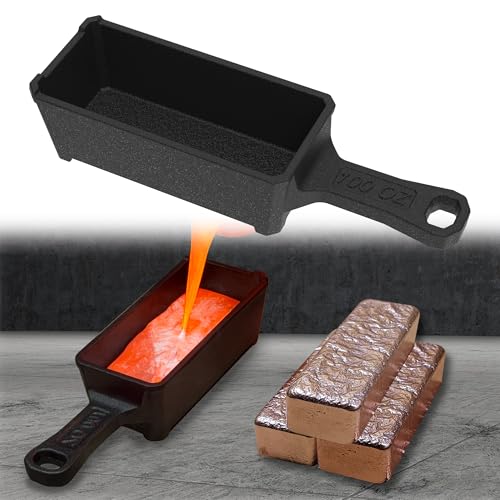
This large-capacity mold holds up to 100 troy ounces and measures 6.26 x 2.86 x 1.94 inches. It is versatile for casting, melting, and refining non-ferrous metals, including gold, silver, copper, aluminum, brass, and iron. The release tip emphasizes cooling before demolding to facilitate easy removal and prevent mold damage. While not as smooth inside as graphite options, the mold’s robust steel construction supports repeated use in demanding casting sessions.
Design considerations highlight the balance between high-volume capability and practical handling. The mold’s handle design improves control during pouring and transport, while the slightly larger cavity supports efficient production of sizeable ingots. As with other cast iron molds, consistent heat management and careful handling are essential for safe operation.
Buying Guide: Key Purchase Considerations
When selecting molds for lead casting, consider these factors to match your project needs:
- Material: Graphite ingot molds offer excellent thermal conductivity and easy release for many metals, including lead, but require careful handling and storage to avoid damage. Cast iron molds are rugged, support large ingots, and often include handles for easier handling, but may require more force to demold and can be heavier.
- Capacity: Choose mold size based on your typical batch. Smaller 1 kg graphite molds suit quick, repeated cycles; larger loaf molds (50–100 oz) increase output for bigger projects but demand more furnace capacity and better handling.
- Release and demolding: Graphite molds typically release with light tapping, while iron molds may need cooling and careful handling to avoid sticking or warping. Look for tapered walls or integrated handles to simplify demolding.
- Heat tolerance: Ensure the mold material withstands the temperatures involved in lead casting and any other metals you plan to cast. Graphite performs well at high temperatures but is susceptible to mechanical damage if dropped; iron offers durability but can remain hot longer.
- Maintenance: Graphite molds require minimal lubricants but should be kept dry and clean. Iron molds may benefit from light seasoning or cleaning after use to remove oxidation and residue.
- Safety: Lead casting involves high temperatures and fumes. Use proper ventilation, heat-resistant gloves, eye protection, and a stable workstation. Have a secure, non-slip surface for pouring and cooling ingots.
- Versatility: Some molds double as crucibles, while others are dedicated ingot molds. If you plan to melt and refine multiple metals, consider a versatile design that supports different shapes and outputs.
Overall, the right selection depends on your production goals, space, and safety considerations. For hobbyists focused on small batches and quick cycles, graphite ingot molds paired with a compact melting pot provide a streamlined workflow. For higher-output sessions, robust cast-iron loaves with integrated handles enable safer handling and easier demolding after cooling.