Exploring dioxazine purple oil paints reveals a spectrum—from deep masstone depth to vibrant, high-tinting tints. This guide highlights top options favored by artists for their pigment strength, handling, and lightfastness. Each product below offers distinct characteristics suited to different techniques, from glazing to bold impasto.
| Product | Brand | Volume | Key Benefit |
|---|---|---|---|
| Gamblin Artist’s Oil Colors Dioxazine Purple | Gamblin | 37 ml | Strong tinting strength, deep transparency |
| Gamblin 1980 Oil Dioxazine Purple | Gamblin | 37 ml | High color strength with traditional formulation |
| M. Graham Artist Oil Paint Dioxazine Purple | M. Graham & Co. | 37 ml | Walnut oil base, solvent-free, vibrant clarity |
| PHOENIX Dioxazine Purple Oil Paint | PHOENIX | 40 ml | Buttery texture, high pigment load, safe formula |
| Winsor & Newton Griffin Alkyd Fast Drying Oil Paint Dioxazine Purple | Winsor & Newton | 37 ml | Fast-drying alkyd for quicker sessions |
Gamblin Artist’s Oil Colors Dioxazine Purple

Gamblin’s Dioxazine Purple features the strongest tinting strength and deepest transparency among its pigments. Modern Diox is noted for its high tinting capacity and deep tones, useful as a high-key tint when blended with whites or lighter purples. Some artists rely on its intensity for near-black effects in grayscale work. The small 37 ml tube is convenient for study and color-matching in mixed media. The formulation emphasizes consistent pigment dispersion and smooth application, suitable for glazing or layering.
Gamblin 1980 Oil Dioxazine Purple

The Gamblin 1980 line uses a traditional base with strong color strength. The listing notes GB7260, reflecting a specific formulation within the 1980 series. The tube provides reliable coverage and depth, making it suitable for masstone applications or as a rich undertone in mixed hues. Artists appreciate its balanced pigment load and paint handling for studio projects and education settings alike.
M. Graham Artist Oil Paint Dioxazine Purple

M. Graham’s Dioxazine Purple uses walnut oil and is solvent-free, aligning with a more natural approach to oil painting. The line emphasizes increased pigment loads for stronger, more vibrant colors while preserving clarity. Colors are designed to resist discoloration associated with drying oils, helping maintain the original hue as it cures. This makes it well-suited for artists seeking intensified purples with a clean, modern feel in portraits or abstract work.
PHOENIX Dioxazine Purple Oil Paint
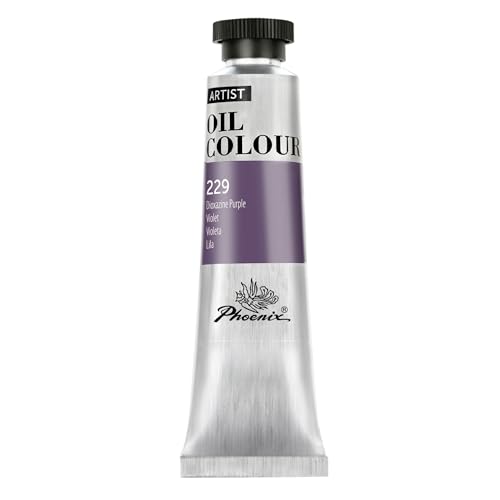
PHOENIX offers a 40 ml tube with a buttery texture derived from pure linseed oil and a natural earth drier. The pigments are milled to a silky state, enabling smooth glide and ease of blending. The paint promises high pigment load and strong covering power with museum-quality lightfastness. The product is marketed as a safer option, free from some toxic metals, and meeting AP and ASTM D4236 standards for safer art materials. It emphasizes control over drying time for both details and broad applications.
Winsor & Newton Griffin Alkyd Dioxazine Purple

Griffin Alkyds from Winsor & Newton are fast-drying oil colors designed for quicker sessions without sacrificing color integrity. The 37 ml tube is convenient for practice and professional work where time management is essential. This pigment system enables thick impasto or underpainting with a faster set time, making it useful for demonstrations, plein air studios, or rapid iterations while maintaining the classic dioxazine purple hue.
Buying Guide
- Pigment strength and tinting power: Dioxazine purple is prized for its depth and high tinting strength. Consider whether you need a masstone depth or a paint that behaves well when glazed with whites and complementary colors.
- Oil base and drying behavior: Walnut oil-based paints (like M. Graham) can exhibit different handling and drying times compared to standard linseed-based blends. Alkyd versions dry faster and are helpful for mixed media timelines.
- Lightfastness and permanence: Look for paints rated for high lightfastness to prevent fading in exposure to light. This is important for works intended to endure over decades.
- Toxicity and safety: Some brands emphasize non-toxic formulations and reduced heavy metals. Check AP or ASTM D4236 certifications for safer materials.
- Texture and application: A buttery or silky texture aids for smooth blending and glazing; a heavy-bodied tinting strength supports impasto and bold color fields.
- Volume and value: Larger tubes (150 ml or more) provide long-term value for artists who use dioxazine purple frequently, while smaller tubes are suitable for color testing and color-matching.
- Mixing behavior: Dioxazine purple often shifts with white or yellow ochre to produce a range of violets and purples. Consider pigment dispersion and flow when planning color schemes.
- Safety and storage: Store paints away from heat and sunlight. Ensure lids are sealed to prevent skinning or drying at the tube tip.