Preparing for natural disasters involves selecting reliable, ready-to-use kits that cover food, water, shelter, first aid, and basic survival gear. The following products are designed to help families and individuals respond quickly to earthquakes, storms, floods, wildfires, and more. This guide highlights five top kits chosen for broad coverage, easy portability, and adherence to preparedness guidelines. Each section provides a concise overview and key features to help you compare options at a glance.
| Product | Brand | Highlights |
|---|---|---|
| Stealth Angel 3 Person Tan 72 Hour Emergency Kit | Stealth Angel | 3-person capacity • Government-guideline aligned • Secure backpack |
| Stealth Angel 1 Person Black 72 Hour Emergency Kit | Stealth Angel | Solo survival • Compact backpack • Expert-advised design |
| First My Family All-in-One 4 Person 72 Hour Kit | FIRST MY FAMILY | Food + water for four • 85-piece first aid • Red Cross-ready |
| Complete Earthquake Bag for 2 Person 3 Day | Redfora | Color-coded packs • 3600 Calorie food bars • Comprehensive tools |
| Adventure Medical Kits QuikClot Gauze | Adventure Medical Kits | Hemostatic gauze • Kaolin-based clotting • Medical-grade |
Stealth Angel 3 Person Tan 72 Hour Kit

The Stealth Angel 3 Person Tan 72 Hour Emergency Kit is designed for families or small groups needing a ready-to-go disaster response. The kit includes necessary survival items packed securely in a high-quality backpack. It is available in multi-person configurations, with guidance informed by emergency preparedness professionals and aligned with guidelines from government agencies and nonprofit organizations. This option emphasizes practical organization and easy deployment in the first 72 hours after a disaster strike.
Stealth Angel 1 Person Black 72 Hour Kit
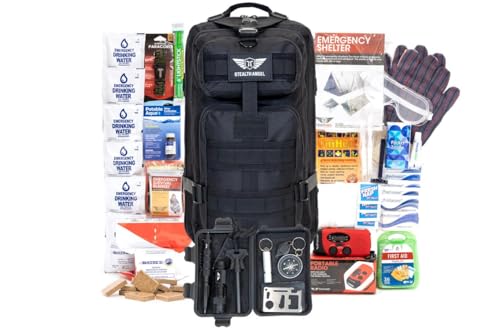
This compact 1-person kit is sized for solo survival in earthquakes, hurricanes, and other events. It follows a similar design philosophy to the larger family kits, offering essential items organized for rapid access within a sturdy backpack. The kit is described as being crafted with input from emergency preparedness experts and adheres to guidelines from relevant agencies, making it a practical choice for an individual’s emergency bag.
First My Family All-in-One 4 Person 72 Hour Kit

This all-in-one kit targets families, providing for four people with food and water rations, a large 85-piece first-aid kit, and shelter materials. It is designed to cover scenarios like floods, fires, earthquakes, or storms. The package notes that the contents exceed typical Red Cross guidelines, offering confidence that families have essential items to stay safe until help arrives.
Complete Earthquake Bag 2 Person 3 Day

This 2-person, 3-day kit from Redfora uses a color-coded organization approach with re-sealable waterproof packs. It includes 3600-calorie food bars, water pouches, water purification tablets, hygiene items, and a robust set of tools designed to help households endure the critical early hours after a disaster, with a focus on both shelter and self-sufficiency.
Adventure Medical Kits QuikClot Gauze

QuikClot gauze provides rapid control of bleeding using kaolin to enhance clotting. This hemostatic gauze is a staple in many survival kits and disaster packs due to its proven effectiveness, military-grade reputation, and inert, non-allergenic kaolin. It fits well in home, car, or office emergency kits for quick, on-site hemorrhage management.
Stealth Angel 4 Person Black 72 Hour Kit

The 4-person version of the Stealth Angel kit expands capacity while maintaining the same design philosophy: secure packing, preparedness-aligned equipment, and a backpack-based setup. It is suitable for households with more members or for shared community readiness in neighborhoods prone to natural hazards.
Buying Guide: Key Purchase Considerations
When selecting a natural disaster preparedness kit, consider the following factors to match household needs and regional risks:
- Capacity and flexibility:Choose kits that match your household size and allow for future scale-ups. Some entries offer 1-, 2-, 3-, 4-, or 5-person configurations to cover evolving needs.
- Contents and essential items: Look for a balance of food, water, shelter, hygiene, warmth, navigation, lighting, and first aid. Verify if the kit exceeds standard guidelines from recognized authorities.
- Packaging and portability: Backpacks or duffel bags should be sturdy, easy to carry, and accessible in emergencies.
- Durability and shelf life: Prioritize items with long shelf life and protection from moisture and heat. Color-coded or well-organized packs help quick access during stress.
- Guidance and compliance: Kits designed with input from emergency preparedness experts and aligned with government or nonprofit guidelines offer added reliability.
- Redundancy vs. conciseness: Some buyers prefer compact kits with critical items only, while others opt for comprehensive packs with extended supplies for longer events.
- Maintenance plan: Establish rotation schedules to replace expired food and medical supplies and rehearse family drills to improve response times.
Regional considerations should influence kit selection. For coastal areas prone to hurricanes, prioritize water and shelter resources. In seismic zones, focus on compact, easily transportable kits for fast evacuation. For wildfire-prone regions, ensure redundancy in protective gear and lighting. By aligning kit composition with local risks and household dynamics, you improve readiness and resilience.
As an objective resource, this article aggregates representative products that meet common preparedness needs. Always review product details and manufacturer guidelines before purchasing to ensure compliance with current safety recommendations and to confirm compatibility with your home environment.