Finding the right aluminum honeycomb core panels can dramatically improve structural strength, energy absorption, and lightweight performance for small projects and professional setups alike. This guide highlights five top options that balance size, core type, and practical features. Each product is evaluated for versatility, durability, and ease of use to help you choose confidently for laser cutting, model building, machining, or display applications.
| Product | Core Type / Use | Size |
|---|---|---|
| Aluminum Honeycomb Grid Core, 3/8″ Cell | Expanded aluminum honeycomb for structural support and diffusion | 10″ x 14″ x .500″ |
| Aluminum Honeycomb Grid Core, 1/4″ Cell | Lightweight core for energy absorption and airflow | 12.4″ x 24.4″ x .500″ |
| Aluminum Honeycomb Grid Core, 1/4″ Cell | Robust small-format panel for compact projects | 18.125″ x 24.125″ x .500″ |
| Creality Honeycomb Laser Bed | Full-metal honeycomb bed (iron core) with steel backup | 19.7″ x 19.7″ |
| Dofiki Honeycomb Laser Bed 460x346mm | Aluminum bottom panel with steel honeycomb core for cooling and shielding | 460 mm x 346 mm |
Aluminum Honeycomb Grid Core, 3/8″ Cell

Aluminum Honeycomb Grid Core with a 3/8″ cell offers a compact, rigid structure suitable for small projects requiring a combination of lightness and stiffness. The sheet measures 10″ by 14″ with a .500″ thickness, making it ideal for mockups, panel cores, or lightweight structural elements. Features highlight a broad range of uses including structural support, energy absorption, light diffusion, and airflow management, making it versatile for both crafts and professional fabrication. The sheet is described as a ready-to-use option for quick builds and prototyping where a strong, lightweight core is advantageous.
Aluminum Honeycomb Grid Core, 1/4″ Cell
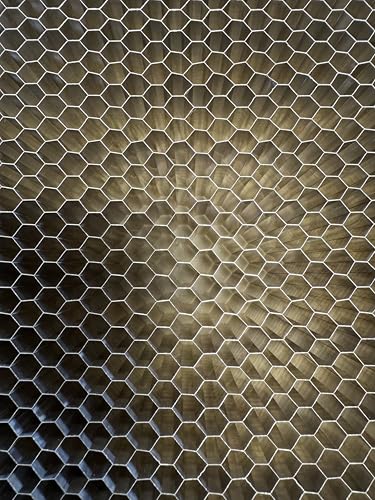
This option features a 1/4″ cell with a 12.4″ x 24.4″ x .500″ profile, unlocking a balance between rigidity and weight. It is described as perfect for small projects and suitable for a variety of applications—from structural support to diffusion and airflow. The expanded aluminum honeycomb cell geometry enhances stiffness while remaining light, making it useful for model builders, display panels, and light-duty structural panels where a uniform core is beneficial.
Aluminum Honeycomb Grid Core, 1/4″ Cell (18.125″ x 24.125″)
This larger 1/4″ cell core expands the usable area to 18.125″ by 24.125″ while maintaining a .500″ thickness. It is positioned as suitable for small-scale panels and assemblies requiring reliable load distribution, improved energy absorption, and controlled airflow. The expanded honeycomb structure helps reduce weight without sacrificing rigidity, which can be important for portable setups and compact fabrication projects.
Creality Honeycomb Laser Bed

The Creality honeycomb bed is a full-metal platform designed to stabilize laser cutting and engraving. It includes a steel sheet backup to protect the table when cutting through materials, and silicone feet to create a small gap for smoke clearance. While the core itself is iron rather than aluminum, the bed provides a stable, heat-resistant surface that complements laser work by reducing surface damage and enabling cleaner cuts. This kit is suitable for users who require a robust, long-lasting bed with protective features during engraving and cutting operations.
Dofiki Honeycomb Laser Bed 460x346mm
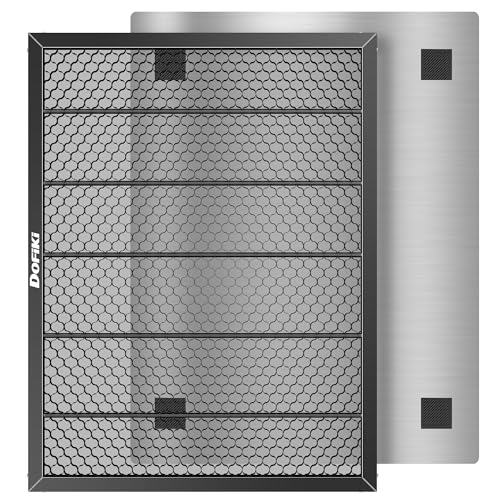
This laser bed is designed for Falcon A1 systems and ships with an aluminum bottom panel, offering a protective shield for the machine base during processing. The steel honeycomb core supports magnetic attachment of soft workpieces, balancing structural stability with lightweight handling. The design emphasizes compatibility and protection, helping to minimize debris contact and surface wear while maintaining efficient heat and airflow management during laser operations.
Work Table Desk Protector, Honeycomb Bed

Designed for laser engraving and cutting, this honeycomb panel features a zinc alloy honeycomb on a reinforced frame with a metal tray. It includes X and Y axis scales to aid quick material measurements, and central steel bars to prevent deformation under pressure. The combination of a sturdy honeycomb core with accurate measurement marks makes it suitable for workshop tables where repeatable, clean cuts are important for small-to-medium projects.
Buying Guide: Key Considerations For Aluminum Honeycomb Core Panels
- Core Cell Size: Larger cells reduce weight but can lower load-bearing capacity. Smaller cells increase stiffness and surface uniformity, which is helpful for precise laser work and delicate panels.
- Panel Thickness: Common thicknesses around .500″ balance rigidity with manageability. Thicker cores offer higher stiffness but add weight; consider your project’s weight targets and mounting needs.
- Core Material vs. Surface: Aluminum cores provide lightness and corrosion resistance, while iron or steel-backed surfaces can offer greater heat resilience and stability for laser beds. Choose based on the work material and cutting environment.
- Compatibility: Ensure the panel size aligns with your machine bed, enclosure, or project frame. Custom or nonstandard sizes may require trimming or mounting adaptations.
- Heat Management: Laser operations generate heat; support with adequate airflow, heat-resistant backing, or a protective panel to protect underlying surfaces.
- Durability And Finish: Look for panels with robust finishes and reinforced edges to resist deformation during handling and repeated use.
- Installed Accessories: Some products include steel backing, silicone feet, or measurement scales. These extras can save setup time and improve workflow accuracy.
- Intended Use: For cutting and engraving, prioritize surfaces that minimize burn marks, improve smoke diffusion, and maintain edge quality during processing.
Overall, the selection focuses on a mix of lightweight aluminum cores for general structural uses and dedicated honeycomb beds designed to optimize laser cutting and engraving workflows. Consider your project size, equipment compatibility, and the balance between weight, stiffness, and heat resistance when making a choice.