Rope and leather halters blend durability with adjustable control, creating reliable tools for daily handling, training, and turnout. This guide highlights five top options that pair traditional leather with modern rope construction, designed for American riders seeking comfort, longevity, and effective pressure distribution. Each option is chosen for quality materials, craftsmanship, and practical features suitable for a range of horses—from youngsters to hot or spooky souls.
Summary of chosen products
| Product | Brand | Key Feature | Type |
|---|---|---|---|
| Cashel Combo Leather and Rope Halter | Cashel | Leather durability meets rope flexibility | Combo Halter |
| Henri de Rivel Leather Rope Halter | Henri de Rivel | Rope and leather with rose gold hardware | Leather Rope Halter |
| Weaver Leather Diamond Braid Rope Halter and Lead | Weaver Leather | Hand knotted, double noseband, durable lead | Rope Halter with Lead |
| Weaver Leather Silvertip No. 95 Rope Halter | Weaver Leather | One-piece design, no hardware to break | Rope Halter |
| Premier Leather and Rope Control Halter | Schneiders | Rope pressure points for increased control | Leather Rope Halter |
Cashel Combo Leather and Rope Halter

The Cashel Combo Leather and Rope Halter blends leather durability with rope flexibility for versatile handling. This design uses a combination approach to manage noseband and crown tension, supporting comfort while maintaining control during training or daily routines. The harness-style construction helps distribute pressure evenly, reducing hotspots on sensitive horses. As a training tool, its mixed materials may suit horses that respond best to varied tactile cues throughout maneuvers and ground work.
Henri de Rivel Leather Rope Halter – Havana w/Black Rope
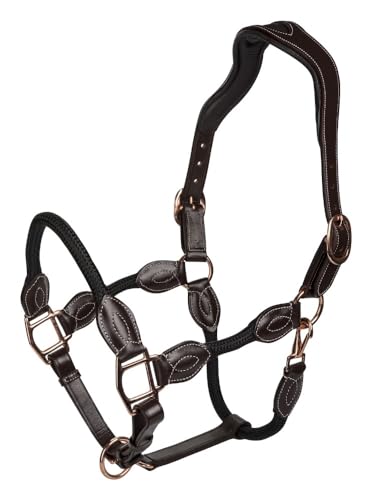
The Henri de Rivel Leather Rope Halter pairs leather with a rope nose and cheek zone, offering a classic look with modern functionality. Cheek snap and rose gold hardware add a refined touch to a practical training halter. The combination aims to provide secure control while minimizing rub points, making it a solid choice for horses that respond to tactile variety and steady cues during groundwork and handling sessions.
Weaver Leather Diamond Braid Rope Halter and Lead
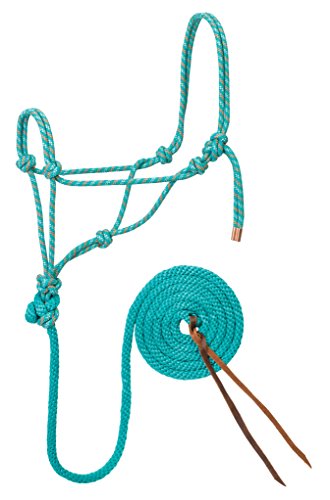
This Weaver Leather setup features hand-knotted 3/8″ poly rope and a double noseband with a crown strap for added stability. The hollow-braid 1/2″ x 10′ poly lead complements the halter, promoting smooth handling. The continuous rope construction minimizes hardware failure, while the dual-nose design helps position the head safely during leading and groundwork tasks, making it suitable for daily training and turnout.
Weaver Leather Silvertip No. 95 Rope Halter

The Silvertip No. 95 is a best-selling, one-piece design hand-tied from 5/16″ polypropylene 16-strand diamond braided rope. Its simple construction minimizes hardware exposure, reducing breakage risk. Extra knots at the noseband provide optional correction if needed, offering a straightforward, dependable option for daily handling, training sessions, and turnout with consistent performance over time.
Premier Leather and Rope Control Halter

The Premier Leather and Rope Control Halter emphasizes enhanced control with rope pressure points on the nose and crown, providing more leverage than traditional leather. Constructed from 1″ double-ply leather, this halter prioritizes durability for horses that are young, hot, or easily distracted. The blend of materials aims to balance strength with comfort, helping handlers establish boundaries during training while maintaining horse welfare in various environments.
Buying Guide: Key Purchase Considerations
- Material mix: Leather, rope, or a combination affects grip, pressure distribution, and durability. Choose based on your horse’s sensitivity and training goals.
- Hardware and construction: Look for reinforced stitching, sturdy buckles, and minimal hardware exposure to reduce breakage risk and rub points.
- Fit and sizing: Measure noseband and crown strap to ensure proper fit. A well-fitted halter reduces slippage and increases safety during handling.
- Intended use: For daily turnout, opt for comfortable, low-profile designs; for training, prioritize control features and nose/rope pressure points.
- Maintenance: Leather requires conditioning; rope halters benefit from regular inspection for wear and fraying to prevent failure during use.
- Horse temperament: Hot or spooky horses may benefit from rope- and pressure-point designs that help you manage space and timing during cues.
- Value and warranty: Consider brands with solid craftsmanship and return policies, especially for fit-critical gear.
Following these considerations helps compare options across brands and styles, ensuring a safer, more effective halter setup for varied training scenarios and daily routines.