Choosing the right label heat press machine can streamline transfer work, improve consistency, and boost productivity. This guide highlights five top options that balance control, safety, and value for American makers. The selections cover automatic presses, compact mini units, and mid‑sized models suitable for caps, hats, and labels. Use this overview to compare features like temperature range, pressure control, and heat distribution before purchasing.
style=”display:none;”>Summary Table of Chosen Products: HTVRONT Auto Heat Press Machine (15×15, Auto Release), 12x12cm Heat Press, Hat Press 2-in-1, HTVRONT Auto Heat Press 2, VEVOR 16×24 Heat Press
HTVRONT Auto Heat Press Machine For T Shirts — 15×15
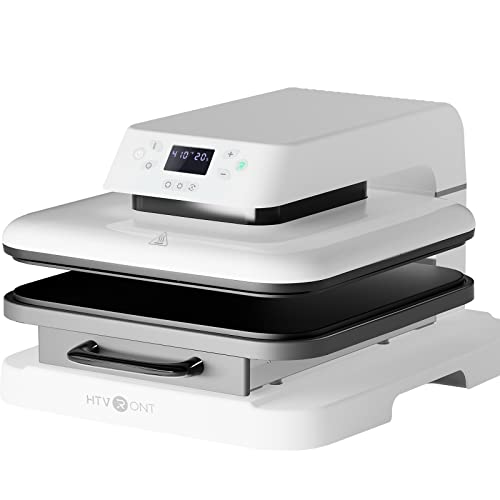
HTVRONT’s Auto Heat Press Machine combines simplicity with high‑duty performance. Its auto‑release function removes the risk of over‑pressing, even with multiple items in rotation. The machine detects garment thickness up to 1 inch and automatically presses down, then releases at the end of the timer. Temperature can reach 320°F (160°C) in about four minutes, and up to 410°F (210°C) with faster heat‑up to save time. Dual‑tube heating and an NTC thermistor support even heat distribution, delivering consistent transfers for sublimation, vinyl, and heat transfers. Modes include four fast presets, two custom modes, and an auto mode to adapt to various projects. This press suits t‑shirts, bags, and decorative items where reliable repeatability matters.
Key features include automatic pressure handling, quick heat‑up, and even heat transfer. The 15×15 inch platen is versatile for standard apparel and larger decals. The control interface prioritizes straightforward operation, making it appealing for hobbyists and small shops aiming for professional results without constant supervision.
Why choose this model
Best for those who want a set‑and‑forget workflow on typical apparel, a broad temperature range, and reliable auto‑release to minimize human error during busy sessions.
12x12cm Heat Press Machine — 600W Digital Pro Small

This compact unit focuses on small‑format transfers with dependable performance. Built from durable iron and aluminum with a protective coating, it resists deformation and corrosion while remaining lightweight enough for desktop use. Safety features include overload protection to prevent misuse and accidents. The heating pad distributes heat evenly, ensuring crisp graphics on T‑shirts or hats. Temperature can be adjusted from 32°F to 482°F (0–250°C) and time from 0 to 999 seconds, providing flexible control for various media. Its rectangular platen supports neat, centered designs and is ideal for logo labels, small patches, or badge transfers.
Practical for crafters who work with limited space, this model emphasizes consistent heat and stable operation. The built‑in controls are straightforward, reducing setup time between jobs. It’s well suited for small batches and experimenting with different inks and substrates.
Who should consider this
Ideal for beginners or hobbyists who prioritize compact size, predictable heating, and ease of use for quick label and patch projects.
Hat Press Heat Machine — 2‑in‑1 Cap And Flat Plate

This 2‑in‑1 hat press is designed for caps with a magnetic semi‑automatic lift that lets you switch to a flat platen for garments quickly. The LCD control hub provides precise temperature settings (0–399°F) and timing (0–999 seconds), enabling exact pressure and thermal transfer for both hats and flat items. A dual‑mode heating system supports interchangeable hat pads and flat plates, maximizing workflow efficiency. The magnetic auto‑lift reduces manual handling and improves user safety during cooldown and release. The device targets caps, beanies, and other headwear while remaining capable of handling small flat projects.
Consider this model if your focus is caps or hats but you still need occasional flat‑garment transfers. The rapid 3‑second pad swap and clear digital readouts help maintain accuracy in high‑volume settings or home workshops.
When it fits best
Best for cap centric projects with occasional need for flat transfers, offering quick template switching and reliable control.
HTVRONT Auto Heat Press 2 — 15×15 With Adjustable Pressure

This model improves on the standard auto heat press with adjustable pressure up to 80 kg (170 lb), addressing projects that require stronger force for thicker materials or heavier substrates. It features a higher pressing height up to 4.5 cm (1.77 in), enabling transfers on hoodies and bulkier garments. The heat‑up remains fast due to a dual‑tube heating engine and NTC thermistor technology, delivering even and stable temperatures. The 410°F target is reachable within about five minutes, balancing speed and quality for professional transfers. The 15×15 platen maintains versatility for a wide range of apparel items and label applications.
Choosing this option supports a broader set of transfer challenges, especially for thicker fabrics or larger designs. The higher clearance helps prevent crowding during platen closure, improving consistency across batches.
Who should consider this version
Best for users who push durability, need higher heat tolerance, or work with thicker materials and larger labels on garments like hoodies and jackets.
VEVOR Heat Press 16×24 — Industrial‑Grade Large Capacity

The VEVOR 16×24 heat press pairs a large platen with a digital control board for precise temperature up to 570°F (299°C) and time up to 999 seconds. Its 1700W power ensures rapid heating and strong pressure, supporting large transfers and high‑volume output. A durable teflon coating minimizes sticking and protects your fabrics, reducing heat buildup on the surface. The soft heating liner and alarm notification help maintain comfortable operation and ensure timely removal of finished items. This model is suitable for T‑shirts, bags, and larger label transfers where size and speed matter.
Think of this press when you need mass production capability in a compact footprint, or when your label designs require larger canvases than typical 12×15 inch tools. The robust construction is designed for frequent use in small business settings or educational labs.
Usage note
Best for higher volume environments needing a larger platen, dependable heat distribution, and precise control across a wide temperature range.
Calogy Mini Heat Press — Compact Craft Tool

The Calogy mini heat press is a compact craft tool designed for small projects, labels, patches, and hats. It offers a simple one‑button design approach to temperature, with three fixed settings: 284°F, 320°F, and 356°F (140°C, 160°C, 180°C). The small footprint makes it ideal for travel, craft rooms, or desks where space is at a premium. While not intended for large batches, its portability and straightforward operation support quick experiments and personalized items. The 2.87 x 4.43 inch heat plate provides targeted transfers for mini logos or patchwork with precision control.
Best suited for crafters who require a portable option for occasional projects or specialized items. The minimal interface reduces setup time and error margins for beginners exploring heat transfer techniques.
Buying Guide: Key Purchase Considerations
- Platen size and correspondingly suitable project types. Larger platens handle bigger logos, while compact units excel at patches and hats.
- Temperature range and stability. Look for models with 0–400+°F ranges and reliable heat distribution to prevent uneven transfers.
- Pressure control. Adjustable pressure helps accommodate different materials (cotton, polyester, blends, caps) and transfer methods (sublimation, vinyl, sticker labeling).
- Auto‑release and safety features. Automatic release reduces the risk of scorching and saves hands during multi‑item runs.
- Build quality and durability. Metal frames and robust heating elements extend device life in home workshops and small businesses.
- Ease of use and maintenance. Clear interfaces, alarms, and accessible components simplify daily tasks and repairs.
- Intended use case. Decide between hobbyist experimentation, cap and label production, or small‑to‑mid volume shop work to choose the right balance of speed and control.
- Customer support and warranty. A reliable provider reduces downtime and replacement costs when components fail.
When evaluating these machines, consider not only immediate price but long‑term workflow efficiency, material compatibility, and the typical size of your designs. For multi‑item sessions, models with auto release and adjustable pressure offer better consistency and reduce operator fatigue. If your projects include caps, hats, or heavy fabrics, prioritize higher platen height and pressure capacity. For hobbyists, compact and affordable units provide quick returns and easier experimentation without sacrificing learning opportunities.