For makers, artisans, and small businesses seeking clean, detailed glass etching, the right laser engraver can transform ideas into durable art and personalized gifts. This guide highlights five top-performing glass-friendly laser machines, covering power ranges, materials compatibility, and setup practicality. Each option offers a balance of speed, precision, and user-friendliness to help you choose a model that fits your project scope—from decorative glassware to industrial labeling and custom signs.
Summary Table of Chosen Products
- ACMER S1 3500mW Laser Engraver — 130x130mm working area; beginner-friendly
- ACMER S1 6000mW Laser Engraver — higher power; 130x130mm area
- xTool F1 2-in-1 Dual Laser Engraver — dual laser types; portable
- CREALITY FALCON2 22W Laser Engraver — high power with air assist
- Longer RAY5 20000mW Laser Engraver — large power, broad capabilities
ACMER S1 3500mW: High Precision Engraving

ACMER’s S1 3500mW model delivers ultra-fine accuracy with a 455±5nm diode laser and a 2mm focal length. It supports engraving and cutting on a variety of materials, including wood, acrylic, and glass, with speeds up to 10,000 mm/min and repeatable positioning accuracy of 0.01 mm. The device is designed as a 2-in-1 system, making it versatile for crafts, small business projects, and beginner-friendly use. Its 130×130 mm working area suits small glass items, coasters, and jewelry accents while maintaining a compact footprint.
Key features include a user-friendly setup that arrives largely preassembled, simplifying the learning curve for first-time laser users. This model emphasizes precision for intricate glass etching and small-scale production, enabling clean lines and sharp contrasts on frosted and clear surfaces alike.
ACMER S1 6000mW: Greater Power for Glass

The 6000mW variant from ACMER increases the output to 48W machine power, while maintaining a 130×130 mm work area and the same 455±5nm wavelength. This boost improves engraving depth and cutting capability on glass and coated materials, enabling bolder etching and deeper textures. Users can expect up to 10,000 mm/min engraving speed with 0.01 mm repeatable positioning accuracy, supporting more demanding glass projects such as etched gradients, logo marks, or decorative patterns.
As with the lower-power model, it emphasizes a dual-function design—engraving and cutting across materials like wood, bamboo, leather, plastic, and ceramics—making it a flexible option for hobbyists who want more torque for glass embellishments and small business tasks in a compact, beginner-friendly package.
Longer RAY5 20000mW: High-Output Versatility

The Longer RAY5 stands out with a 20,000 mW laser capable of penetrating thicker materials and delivering high-contrast glass engravings. Its 0.01 mm engraving precision is coupled with a 400×400 mm working area, allowing larger glass pieces and panels to be etched. The device includes a built-in 256-color palette for potential color-re production techniques and supports multi-machine synchronization via a capable ESP32 chipset for streamlined workflows in professional settings.
While power and size are the strongest attributes, the RAY5 also features a multi-core setup that can drive continuous 7×24-hour engraving, making it suitable for batch work, sign production, and more demanding glass customization tasks where speed and consistency matter.
Longer Ray5 5000mW: Balanced Speed and Flexibility

The Longer Ray5 5000mW model provides a balance of performance and cost, featuring a 0.08 × 0.08 mm laser spot and 0.01 mm engraving accuracy within a 400×400 mm area. It offers a 3.5-inch touchscreen, USB, TF card, and WiFi connectivity for flexible workflows. An included air system helps manage smoke and debris, supporting cleaner engravings on glass and other sensitive materials. The device supports common engraving ecosystems like LaserGRBL and LightBurn, making it accessible for users upgrading from entry-level devices.
Carverall K15 Pro 5W: Starter High-Quality Engraving
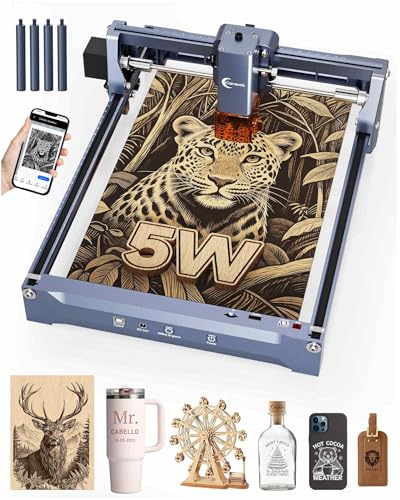
Carverall’s K15 Pro offers a true 5W output with a 0.01 mm precision and a 200×300 mm working area. Its portability and plug-and-play setup are emphasized, with a focus on ease of use for beginners and DIY enthusiasts. The integrated compatibility with CutLabX, LightBurn, and LaserGRBL makes it suitable for a gallery of glass etching tasks, including jewelry components and decorative panels. This model highlights a balance of performance, user experience, and flexibility for small studios.
xTool F1 2-in-1 Dual Laser Engraver

The xTool F1 uniquely combines a 2-in-1 setup with both a 2W infrared laser for metals and a 10W diode laser for wood and plastics. Its pre-assembled enclosure minimizes smoke exposure, and a built-in fan and optional air purifier support cleaner operations, particularly valuable when engraving on glass. The compact, portable design weighs about 4.6 kg, making it ideal for craft fairs and on-site customization. It supports a wide material range and is compatible with popular software platforms, enabling flexible glass etching workflows.
Buying Guide: Key Purchase Considerations for Glass Etching
- Power and material compatibility: Glass etching benefits from higher power when deeper or more decorative marks are needed. Consider models in the 2500–20000 mW range based on project complexity and glass type (clear, frosted, coated).
- Working area: Smaller items like glass coasters need 130×130 mm or similar; larger signs or panels require bigger areas. Choose a size that matches your typical projects to minimize waste and repositioning time.
- Laser type and wavelength: Most glass engraving uses diode-based systems around 455 nm. Some dual-laser or CO2 alternatives exist, but diode systems often balance cost and performance for small businesses.
- Precision and repeatability: Look for 0.01 mm repeatable positioning or better. This ensures consistent results across batches, especially for detailed glass patterns and text.
- Ease of use and setup: Preassembled units and beginner-friendly software enable quicker onboarding and less downtime. An enclosed or partially enclosed design reduces exposure to fumes and debris during operation.
- Software compatibility: Ensure compatibility with LaserGRBL, LightBurn, or CutLabX, plus the ability to import common vector formats for precise glass etching.
- Air assist and smoke management: An integrated or optional air assist helps reduce charring and smoke, improving edge quality on glass and other materials.
- Safety features: Look for class and safety glasses, protective housing, and clear operating instructions. Glass engraving involves laser energy and potential debris.
- Reliability and service: Power stability, spare parts availability, and responsive customer support matter for long-term use in a business setting.
When selecting a glass etching laser, align the model with both your current needs and future expansion plans. For hobby projects, a mid-power, compact unit with solid software support often delivers the best value. For small businesses pursuing higher-volume glass customization, a higher-power unit with larger working area and robust air assist can improve throughput and consistency.