Whether you’re a hobbyist or a professional potter, a reliable slab roller can streamline shaping clay into uniform sheets. This guide highlights five top slab roller options that balance manual control, durability, and value. Each entry includes key features to help you compare build quality, thickness control, and ease of use.
| Product | Brand | Key Benefit |
|---|---|---|
| Hand Cranked Ceramic Slab Machine | JIAYOFWCHI | Manual operation with foldable design for precise slabs |
| Polymer Clay Press Machine | WECLAYER | Seven thickness settings; full starter kit |
| Makin’s Professional Ultimate Clay Machine | Loew-Cornell | Wide clay path and multiple thickness options |
| JARYANNIX Manual Clay Plate Machine Slab Roller | JARYANNIX | Tabletop, large handwheel for even pressure |
| BEILOCKERY Ceramic Clay Slab Roller | BEILOCKERY | Chain drive for uniform compaction and adjustable thickness |
Choosing the right slab roller depends on how you work—whether you prefer manual control for texture and detail or want a robust setup for frequent, consistent sheets. The following sections present concise product overviews, including what makes each a reliable option for American studios and home workshops alike.
Hand Cranked Ceramic Slab Machine

The Hand Cranked Ceramic Slab Machine from JIAYOFWCHI emphasizes a high-quality manual clay plate making process. Designed for pottery enthusiasts, it operates without electrical machinery, relying on a folding design that facilitates easy storage and transport. Precision scales and even clay pieces help ensure consistent slabs suitable for plates, tiles, and sculptural elements. This model focuses on reliable manual control, making it a practical choice for students and hobbyists who value tactile feedback during rolling and shaping.
Key benefits include a straightforward workflow that reduces setup time and a robust construction built to withstand regular studio use. The manual approach may suit Artist’s studios where noise-free operation and a hands-on feel are essential. While not as feature-rich as some stainless steel kits, its simplicity and durability can be an advantage for beginners looking to learn the basics of slab creation.
Polymer Clay Press Machine
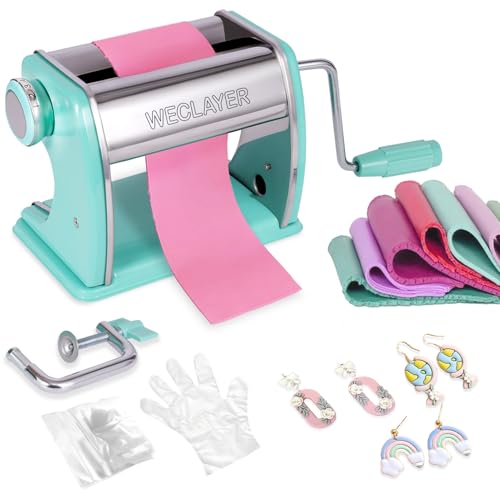
This polymer clay roller set from WECLAYER is a comprehensive starter kit that includes a clay press machine, table clamp, hand crank, non-stick sheets, and gloves. Seven thickness settings let you tailor sheets from very thin to relatively sturdy, making it versatile for a wide range of projects—from delicate petals to sturdy earring bases. The stainless steel construction offers durability and a smooth rolling surface that cleans easily, especially when paired with the included non-stick sheets.
The included non-stick sheets minimize sticking and protect both the clay and the machine, extending tool life. Gloves help keep hands clean and prevent fingerprints on the clay, which is useful for detailed sculpture work. This setup is ideal for crafters who want an all-in-one solution with reliable thickness control and straightforward maintenance, especially in a busy studio where efficiency matters.
Makin’s Professional Ultimate Clay Machine
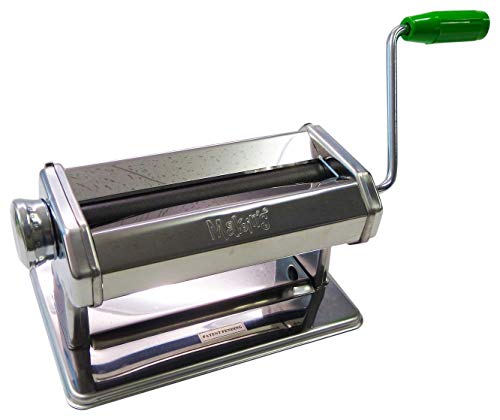
The Makin’s Professional Ultimate Clay Machine by Loew-Cornell provides an efficient workflow for mixing and blending colors with thin and even textures. It features a wide clay path and 9 thickness settings, making it suitable for projects requiring consistent sheets across large surfaces or repeated pieces. The machine typically includes essential components like a table clamp and rollers, which help stabilize the setup during operation.
Users can benefit from the broad range of thickness options, enabling experimentation with different textures and layer effects. The tool’s design supports both detailed work and broader sheet production, supporting ceramic, polymer, and sculptural applications. It suits studios seeking a proven, multi-thickness machine that balances ease of use with versatile results.
JARYANNIX Manual Clay Plate Machine Slab Roller
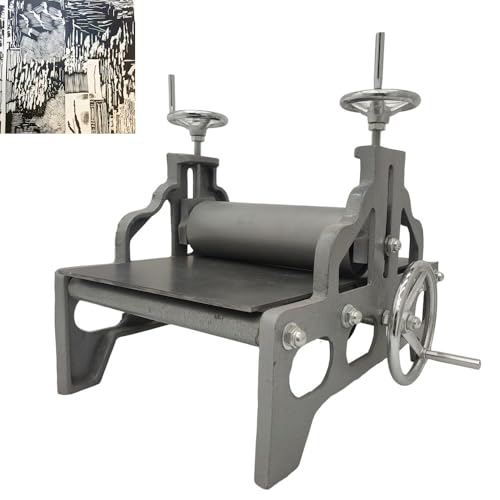
The JARYANNIX manual clay plate machine emphasizes portability and efficiency. Its large handwheel enables easy, even pressure, while the compact table-top design saves space in smaller studios. The frame and panels are designed for straightforward disassembly and transport, making it a good option for artists who move between spaces or require a lightweight setup. The elevated roll design promotes uniform clay contact, contributing to consistent slab thickness and texture across the sheet.
Operationally, this model relies on manual power, which is preferred by artists who want tactile control during the rolling process. The combination of a sturdy iron frame and PVC components offers a balance between durability and manageability for frequent use without the need for electricity. It’s particularly well-suited for classroom environments and home studios focused on hands-on learning.
BEILOCKERY Ceramic Clay Slab Roller
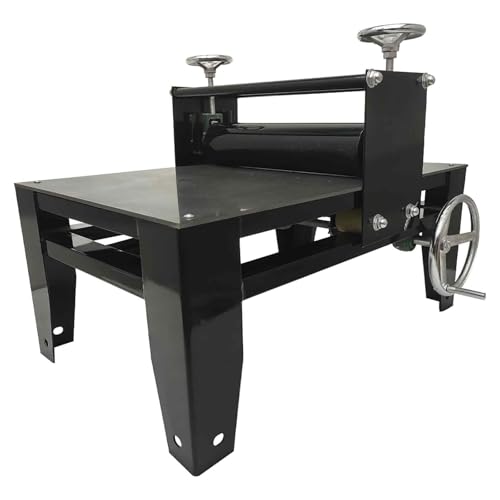
The BEILOCKERY slab roller is designed for uniform compaction with a chain drive system and a rotating handwheel, allowing precise control over clay thickness. The dual lifting handwheel enables quick thickness adjustments to meet various project requirements. Its design emphasizes ease of use for beginners, with a three-step workflow: place clay, adjust height, and roll to the desired thickness. The clamp-and-frame construction suggests robustness for steady, repeatable sheets in a busy studio.
With a focus on consistent results and beginner-friendly operation, this model supports learners who want dependable slabs without a steep learning curve. The chain-driven mechanism contributes to uniform pressure distribution, an important factor for even cooking and texture in final pieces.
Buying Guide: Key Considerations For Selecting A Slab Roller
An effective slab roller should balance control, durability, and convenience. Consider these factors to compare options and match your workflow:
- Manual vs. motorized: Manual slab rollers offer tactile control and quiet operation, useful for technique-focused projects and spaces without electricity. Motorized units provide faster throughput but can be louder and more complex to repair.
- Thickness settings: Ensure the device provides a wide range of thickness options with precise control. More settings enable finer gradations for delicate petals and thick earring bases alike.
- Material and finish: Stainless steel or high-quality iron frames improve durability and ease of cleaning. Non-stick coverings or non-stick sheets help prevent clay from sticking to rollers.
- Tabletop footprint and portability: For small studios or classroom setups, consider compact, foldable, or easily disassembled designs that store neatly when not in use.
- Clamps and stabilization: A reliable clamp keeps the machine steady during operation, improving edge-to-edge uniformity across sheets.
- Maintenance: Machines with easy-to-clean surfaces and replaceable parts reduce downtime and extend tool life.
- Included accessories: Starter kits with non-stick sheets, gloves, and clamping hardware can reduce initial costs and simplify setup.
- Intended use: Polymer clay projects may benefit from non-stick highlights, while ceramic and stoneware applications require robust, heat-tolerant materials for consistent thickness.
When evaluating options, align features with your typical projects, space constraints, and preferred workflow. For classrooms or shared studios, prioritize rugged construction, simple operation, and safety features. For dedicated hobbyists, close attention to precise thickness control and ease of cleaning can markedly improve productivity and satisfaction.