Choosing the right plastisol ink mixing system helps screen printers achieve consistent viscosity, color strength, and a smooth hand-feel. This guide reviews five relevant products that support ink thinning, pigment blending, and reliable ink preparation for cotton and synthetic fabrics. Each item is evaluated by its mixing capability, ease of use, and safety considerations to help you optimize your screen printing workflow.
style=”font-weight:bold;”>Overview Table
| Product | Primary Use | Key Benefit | |
|---|---|---|---|
| Rapid Cure Plastisol Ink Curable Reducer | Screen Print Direct | Ink viscosity reduction | Soft hand feel with easy mixing |
| Tattoo Ink Mixer Electric Pigment Mixer | ALIWOD | Pigment and ink mixing | Fast, consistent dispersion; reduces settling |
| Pigment Mixer Sticks | Mecefeno | Disposable pigment mixing | Safe, clean, connectable design |
| Screen Printing Ink Set – Rapid Cure 6 Color Plastisol Ink | Screen Print Direct | Multi-color plastisol printing | Low odor, non-toxic, beginner friendly |
| Rapid Cure Screen Printing Ink Yellow (8oz) | Screen Print Direct | Cured plastisol color | Low-temperature cure, bright opacity |
Rapid Cure Plastisol Ink Curable Reducer

The reducer is designed to lower the viscosity of thick plastisol inks, enabling easier application and a softer print hand. Recommended starting usage is 2–5% by weight, with up to 10% possible before viscosity shifts. It supports test printing to verify bleed, color strength, and opacity after mixing. Formulated for straightforward mixing with various inks, this additive aims to streamline the printing process for home and small shop setups.
Key considerations: (1) Start with conservative percentages and test prints; (2) Monitor bleed and opacity after dilution; (3) Ensure compatibility with your specific plastisol formulation and curing profile. Overall, a practical tool for achieving smoother prints when viscosity is a challenge.
Tattoo Ink Mixer Electric Pigment Mixer

This multi-purpose mixer is designed for pigment and ink blending, including tattoo inks, watercolor pigments, and brow line ink blends. It speeds up dispersion, helps minimize pigment settling, and provides a quick, consistent mix. The unit is described as easy to operate with a simple switch activation, reducing hand fatigue during repeated mixing tasks.
Key considerations: (1) Evaluate compatibility with your ink types beyond tattoo pigments; (2) Consider mixing volume and wand attachment options; (3) Ensure clean handling and safe disposal of spent pigments to maintain a tidy workspace. This tool supports faster, uniform mixing for small to medium batches.
Pigment Mixer Sticks

These disposable pigment mixer sticks are suitable for watercolors, tattoo inks, nail polishes, and brow pigments. Made of high-grade plastic, they are lightweight and designed for single-use hygiene. They connect end-to-end to extend reach and accommodate different mixing volumes, reducing the risk of cross-contamination between batches.
Key considerations: (1) Use disposable sticks to maintain cleanliness and avoid pigment carryover; (2) Check compatibility with your mixing apparatus and inks; (3) Consider length options to fit your mixing cup size. They offer a practical, sanitary option for routine ink preparation and blending tasks.
Screen Printing Ink Set – Rapid Cure 6 Color Plastisol Ink
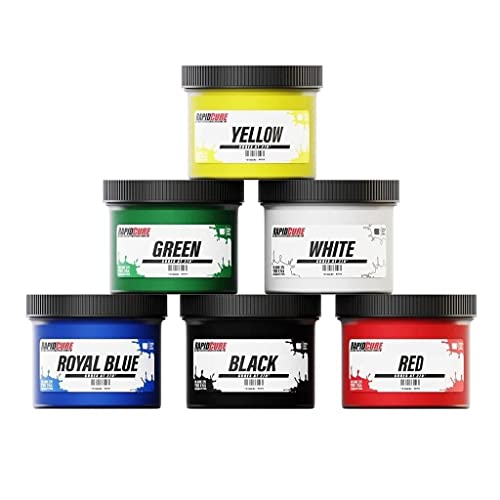
This six-color plastisol ink set is designed for screen printing on a wide range of fabrics, including cotton and blends. The inks cure at relatively low temperatures, reducing energy use and helping avoid scorching sensitive materials. The collection emphasizes safety with low odor and non-toxic characteristics, making it suitable for home studios and classrooms.
Key considerations: (1) Plan color layering to avoid bleed and color overlap; (2) Confirm curing temperatures align with your fabric choices; (3) Consider starting with core colors before expanding to metallics or pastels. This set offers a convenient way to test Rapid Cure technology across multiple colors in a single purchase.
Rapid Cure Yellow 8oz Plastisol Ink

This yellow plastisol ink is formulated for fast curing and vibrant color impact. It cures at lower temperatures, enabling quicker production cycles and reduced energy consumption. The ink is described as having low bleed and versatility across multiple textile substrates, including cotton blends. Its bold color helps create high-visibility designs with a short, manageable ink body.
Key considerations: (1) Align curing temperature with your dryer settings; (2) Test layering to ensure opacity and coverage on dark fabrics; (3) Consider pairing with a compatible white or underbase for maximum brightness. This color adds a bright, high-visibility option to your plastisol palette while preserving efficient workflow.
Buying Guide: Plastisol Ink Mixing System Considerations
When selecting a plastisol ink mixing system, consider these factors to balance performance, cost, and safety:
- Ink viscosity control: Look for reducers and mixing sticks that provide predictable, consistent thinning without compromising color strength or opacity.
- Mixing versatility: Choose tools that handle a range of inks—from reducers to pigment blends—and work with your existing equipment, such as mixers, cups, and screens.
- Print compatibility: Ensure the system supports the fabrics you print on (cotton, blends, polyester) and your curing method (heat press, conveyor dryer).
- Hygiene and safety: Disposable sticks and low-odor inks reduce exposure and cleanup effort, important for home studios and classrooms.
- Cost and scalability: Start with core items (a viscosity reducer, a reliable mixer, and a basic color set) and expand as production scales up.
- Testing protocol: Implement a standard test print to verify bleed, opacity, and color strength after any additive or color change.
- Shelf life and storage: Consider inks and reducers with long shelf life and clear storage guidelines to minimize waste and ensure consistent results.