Finding the right 12 x 18 sheet can boost DIY builds, hobby projects, and professional displays. This guide focuses on durable polycarbonate and clear acrylic options that offer better impact resistance, easier cutting, and long-term clarity compared to traditional glass or standard Plexiglass. Below, five carefully selected products are reviewed, highlighting how they perform in typical home, workshop, and classroom applications.
Summary Table of Chosen Products
| Product | Brand | Material | Size | Notable Feature |
|---|---|---|---|---|
| Polycarbonate Clear Plastic Sheet 12″ X 18″ X 0.0625″ | Robosource | Polycarbonate | 12 x 18 inches; 1/16 inch | EasyRuler protective film, shatter resistant |
| 2 Pieces 12 x 18 Cast Acrylic Sheet Plexiglass Sheets 1/8 inch Thick | Lesnlok | Acrylic | 12 x 18 inches; 1/8 inch | Protective film, clean cut edges |
| Polycarbonate Clear Plastic Sheet 12″ X 18″ X 0.030″ | Robosource | Polycarbonate | 12 x 18 inches; 1/32 inch | EasyRuler film, thermoformable |
| Falken Design Acrylic Plexiglass Sheet, White Translucent 32% | FALKEN DESIGN | Acrylic | 12 x 18 inches; 1/4 inch | Weatherproof, UV resistant |
| Spectra Glass Clear Polycarbonate Plastic Sheet 12″ x 18″ (1/8″ Thick) | Spectra Glass | Polycarbonate | 12 x 18 inches; 1/8 inch | Double-sided UV protection, film masking |
Polycarbonate Clear Plastic Sheet 12×18 0.0625″ by Robosource
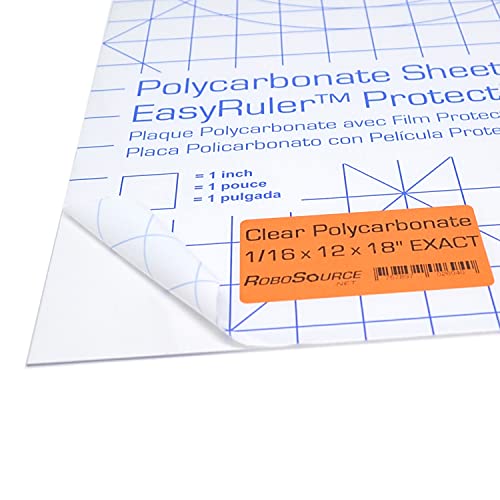
These 12 x 18 inch polycarbonate sheets are designed for robustness in domestic and workshop settings. The 0.0625″ thickness provides a solid balance between impact resistance and weight, making them suitable for protective barriers, DIY windows, or VEX robotics components. A key asset is the Exclusive EasyRuler protective film that aids initial handling and measuring, then peels away to reveal a pristine surface. Compared with glass or standard Plexiglas, polycarbonate offers superior bend-and-form capabilities and better resilience to cracking when cut or drilled with common tools.
What to expect in real-world use: the sheets cut cleanly with snips or a hacksaw, and drilling with standard bits tends to avoid chipping. The material is thermoformable and can be shaped with a heat gun or simple bending, allowing vacuum forming or straightforward curvature for custom enclosures. UV stabilization provides general outdoor viability, though UV-coated variants are recommended for significant direct sun exposure over long periods. The combination of clarity, strength, and ease of fabrication makes this a popular choice for hobbyists and education programs alike.
Polycarbonate Clear Plastic Sheet 12×18 0.030″ by Robosource

This thinner polycarbonate sheet, at 0.030″ thickness, offers greater flexibility and a lighter footprint for intricate DIY projects. The same EasyRuler film is present to simplify handling and measurement. Its properties—high impact resistance, easy cutting with basic tools, and thermoformability—make it well-suited for display enclosures, hobby projects, and lightweight protective barriers. This size is ideal for projects requiring a slimmer profile without sacrificing strength or clarity. UV stabilization adds general outdoor durability, though users should consider UV-coated options for long-term sun exposure.
Fabrication notes: cutting is straightforward with common tools; drilling is clean with no cracking when using standard bits. Bending with a heat gun is feasible, enabling creative shapes for sign housings, frames, or camera housings. The sheet’s virgin polycarbonate composition ensures consistent performance and durability across multiple projects.
Falken Design Acrylic Plexiglass Sheet 12×18 1/4″

This 12 x 18 inch acrylic sheet from Falken Design brings a translucent white finish with a substantial 1/4″ thickness. The material is weatherproof and UV resistant, offering strong outdoor performance and reduced yellowing over time. Compared with glass, acrylic is lighter and more impact-resistant, while providing clear visibility for signage, displays, and decorative elements. The 1/4″ thickness adds rigidity for structural applications or heavier display panels, albeit with a higher weight than thinner sheets. The product is suitable for outdoor signage, decorative panels, and craft projects that benefit from a brighter, lighter material.
Practical notes: Acrylic sheets are easier to cut and drill than glass, but produce sharp edges if not deburred. Protective film helps keep surfaces pristine during handling. For laser engraving or precise cut work, verify compatibility with your equipment. Outdoor use benefits from the UV resistance, though prolonged direct sun should still be monitored for any potential surface changes over years.
Spectra Glass Clear Polycarbonate Sheet 12×18 1/8″
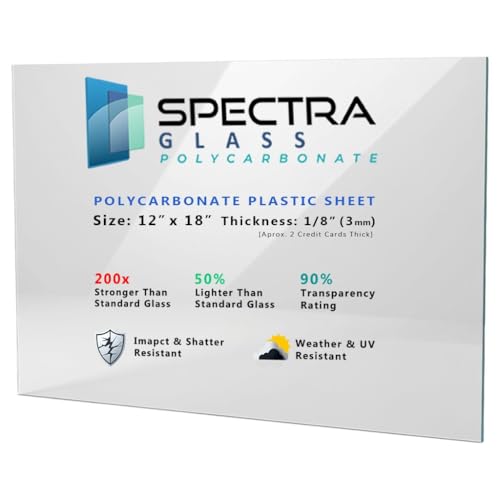
Spectra Glass offers a 12 x 18 inch polycarbonate sheet at 1/8″ thickness with several features aimed at high clarity and protection. The sheet showcases crystal-clear transparency with superior strength relative to glass, and it weighs significantly less than glass, making handling easier on large panels. A notable benefit is the double-sided UV protection and masking film, which helps prevent yellowing during storage and transport and preserves surface quality for extended periods. The masking film can aid in storage and future removal, leaving a ready-to-use surface for displays or protective covers.
In application, this sheet can serve as window replacements, protective covers, or lightweight architectural accents. While not compatible with laser equipment, it performs well in general fabrication and display contexts, especially where clear visibility and safety are required without the weight of glass.
Buying Guide: Key Considerations For 12 x 18 Sheets
- Material choice: Polycarbonate vs. acrylic. Polycarbonate offers higher impact resistance and better toughness, making it suitable for safety barriers, robotics, and high-traffic displays. Acrylic provides excellent optical clarity, sharper edges, and a lighter feel, ideal for signage and display cases.
- Thickness and rigidity: Thicker sheets (like 1/4″) offer added rigidity for structural panels but weigh more and can be harder to cut; thinner sheets (1/32″ to 1/16″) are easier to shape but less sturdy.
- UV exposure and outdoor use: UV stabilization helps prevent yellowing. For long-term outdoor projects, UV-coated or UV-stabilized sheets are recommended.
- Cutting and fabrication: Look for protective films (EasyRuler or other masking) that protect surfaces during handling and measurement. Most sheets cut with snips, hacksaws, or light power tools and can be thermoformed or bent with heat, depending on the material.
- Surface finish and edge quality: Cast acrylic tends to yield cleaner edges; polycarbonate edges can be slightly more prone to burrs if not deburred. Use proper tools and deburring steps for clean results.
- Storage and handling: Double-sided masking or protective films help minimize scratches during transport. Consider storage conditions to prevent warping or surface damage.
- Applications: Choose based on project needs—signage and displays often favor acrylic for clarity, while protective barriers, enclosures, and robotics may benefit from polycarbonate’s impact resistance.
Comparative overview: When choosing between these options, consider environment, handling, and end-use. For high-impact or safety-critical uses, polycarbonate is generally preferred. For premium optical clarity and lighter weight, acrylic is a strong choice, especially for indoor displays and signage. If UV exposure is a concern, verify whether the sheet includes UV stabilization or coating. Always plan for edge finishing and surface protection during final assembly.