Choosing a reliable dry box for 3D printing filament is essential to maintain material integrity and printer performance. The following selection highlights top-rated dry boxes and filament storage solutions designed to keep spools dry, dust-free, and ready for your next print. Each option supports common 1.75mm and 2.85mm filaments and offers varying capacities to fit both hobbyists and professionals.
| Product | Brand | Capacity | Highlights |
|---|---|---|---|
| YOOPAI Filament Storage Box – 8 Pack | YOOPAI | 4.0L per box | Water- and dust-proof with desiccants and labels |
| Polydryer Box – Polymaker | POLYMAKER | Single box; modular with PolyDryer Dock | Superior sealing; compatible with multiple spool sizes |
| Comgrow Filament Dryer Box | Comgrow | 2 rolls of 1kg spools | Drying heater and moisture removal |
| Polydryer Box – Dry & Store | POLYMAKER | 1.75mm, 2.85mm; multiple sizes | Drying dock plus sealed storage; modular |
| YOOPAI Filament Storage Box – 2 Tiers Rack | YOOPAI | Holds up to 12 rolls | Two-tier rack with desiccants |
YOOPAI Filament Storage Box – 8 Pack
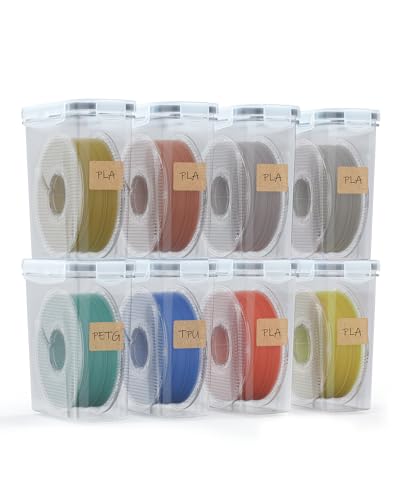
YOOPAI’s 8-pack filament storage solution is designed to protect 3D printing materials from moisture and dust. Each 4.0L container includes a 500g desiccant set, labeled dividers, and snow veil bags. The lid features a silicone seal to improve sealing with standard 1.75mm filament spools, making it a versatile option for PLA, ABS, PETG, TPU, and more. The kit’s modular design enables easy organization for home or office setups, helping reduce filament degradation from humidity and airborne particulates.
Polydryer Box – Polymaker

Polymaker’s PolyDryer Box delivers ongoing protection against dust and moisture with high sealing efficiency. Designed to work in concert with a PolyDryer drying dock, this system supports continuous filament readiness and can accommodate multiple boxes for a scalable storage solution. It is compatible with common spool sizes up to 1kg and works with 1.75mm, 2.85mm, and 3.00mm filaments, making it suitable for a wide range of materials including PA Nylon, PLA, PETG, ABS, and TPU. A practical choice for users seeking a durable, modular drying and storage setup.
Comgrow 3D Printer Filament Dryer Box

Comgrow’s Filament Dryer Box emphasizes moisture removal and storage capacity. With a large inner volume designed for two 1kg spools and compatibility with 1.75mm/2.85mm diameters, it pairs a controlled drying environment with practical safety features. The device requires setup with temperature and duration controls to match filament needs. It also emphasizes after-sales support to address any performance tweaks or troubleshooting, making it a reliable choice for users needing consistent dried filament in busy workflows.
Polydryer Box – Dry & Store

Polymaker’s PolyDryer Dry & Store solution provides a comprehensive, two-unit system: the Dry Dock creates a stable, pre-drying environment, while the PolyDryer Box offers superior sealing for continuous filament protection. This modular approach helps users pre-dry filaments for smoother printing and can be expanded with additional boxes to support larger inventories. It is compatible with a range of filament diameters and materials, making it a scalable choice for studios or workshops requiring consistent print quality across multiple projects.
YOOPAI Filament Storage Box – 2 Tiers Rack

YOOPAI’s two-tier metal filament storage rack offers a larger-capacity storage solution for up to 12 rolls. The design emphasizes safety with an upgraded cover to prevent accidental ingestion by children or pets, while desiccants are included to maintain low humidity levels. The rack supports quick access to spools and keeps filaments organized, which is valuable for workshops or makerspaces dealing with multiple projects and material types.
Caydo Filament Dryer – Auto Humidity Control

The Caydo filament dryer integrates humidity control with a 350W PTC heater to deliver fast, even drying for up to four spools simultaneously. It uses a ±3°C sensor to maintain stability and includes a desiccant compartment and silicone plugs to create an airtight storage environment. The system is designed for high-throughput environments, including multi-printer studios, and aims to prevent moisture-related issues such as stringing and poor adhesion across various filament types, including Nylon, PETG, and TPU.
Buying Guide: Key Considerations When Selecting a 3D Print Dry Box
- Capacity and scalability: Evaluate how many spools you typically store and whether you need a single sturdy box or a modular system that can grow with your needs.
- Moisture control: Look for desiccants, airtight seals, and humidity sensors. Some systems include automatic humidity monitoring or AI-assisted drying cycles for consistent results.
- Filament compatibility: Check spool sizes (1.75mm vs 2.85mm), weight, and whether the box accommodates multiple diameters; some products support 1kg spools and up.
- Sealing and material protection: A robust seal and moisture-resistant materials prevent water ingress and dust exposure, extending filament life.
- Heat management: Drying boxes with built-in heaters or drying docks should balance temperature control with filament safety to avoid heat damage.
- Ease of access and organization: Look for clear labeling, divider options, and easy-removal lids to streamline workflow during print preparation.
- Durability and safety: Metal racks or rugged plastics provide longevity; consider safety features to protect households with children and pets.
- Maintenance and support: Consider how easy it is to replace desiccants, clean interiors, and obtain customer support if issues arise.
- Cost and space: Weigh upfront cost against long-term savings from reduced filament waste and improved print quality, and ensure you have adequate workspace for the unit you select.
- Use case variety: Hobbyist setups may prioritize affordability and compactness, while studios may require modular systems and higher capacities for efficiency.
In summary, the best 3D print dry box solution depends on your printing volume, filament types, and workspace. For small collections, compact sealed boxes with desiccants may suffice. For larger operations, a modular PolyDryer system or a multi-tier storage rack can maintain filament quality across many spools and printers. When evaluating options, prioritize airtight sealing, reliable humidity control, and compatibility with your most commonly used materials to safeguard print results and minimize downtime.