Architectural modeling benefits from high-speed, reliable 3D printers that can handle detailed geometries, multiple materials, and large build volumes. The following selections emphasize fast printing, auto-leveling, multi-color options, and durable all-metal cores—ideal for rapid prototyping, concept visualization, and presentation models. Explore five top models and compare features to choose the best fit for your studio workflow.
| Product | Build Volume (mm) | Highlights | Type |
|---|---|---|---|
| FLASHFORGE Adventurer 5M Pro | 220x220x220 | 1-Click Auto Calibration, 600mm/s max speed, multi-nozzle options | CoreXY, all-metal |
| FLASHFORGE AD5X | 220x220x220 | Multi-color printing, auto leveling, high-temp extruder | CoreXY, all-metal |
| ELEGOO Centauri Carbon | 256x256x256 | Auto calibration, 320°C nozzle, built-in camera | CoreXY, enclosed |
| Creality K2 Combo | 260x260x260 | Multicolor capability, smart leveling, dual AI camera | Direct drive, CoreXY |
| FLASHFORGE AD5M Pro | 220x220x220 | Full auto calibration, quiet operation, dual filtration | CoreXY, enclosed |
FLASHFORGE Adventurer 5M Pro 3D Printer

The Adventurer 5M Pro integrates fast printing with auto calibration to streamline architectural modeling. Its 600 mm/s travel speed and 20,000 mm/s² acceleration support rapid iteration of large-scale concepts. A 280°C detachable nozzle accommodates various materials, including specialty filaments for facade projects. The tool-less setup and smart design reduce manual tweaking, enabling studios to focus on design rather than calibration. It comes with a closed, low-noise workflow suitable for shared studio spaces.
FLASHFORGE AD5M 3D Printer

The AD5M focuses on auto-calibration and high-speed, all-metal CoreXY motion. Its 1-click leveling and 600 mm/s travel speed improve workflow efficiency for architectural prototyping. The quick-swap nozzle and 220 x 220 x 220 mm build volume support iterative model building, while reliable motion structure helps maintain precision during rapid layers. The printer’s reliability makes it a strong choice for conceptual studies and client-ready models.
FLASHFORGE AD5X Multi-Color 3D Printer

Designed for vibrant multi-color outputs, the AD5X supports up to four colors simultaneously. Its 1-click auto leveling ensures a reliable first layer across color transitions, while the CoreXY all-metal frame maintains stability at high speeds. A 300°C direct drive extruder and 32 mm³/s flow hotend shorten print times for architectural components such as complex lattice cores and paneling. This model suits studios that require color-accurate, quickly produced architectural models.
FLASHFORGE Adventurer 5M Pro 3D Printer (Alternative Listing)
This variant maintains the essential advantages of the Adventurer 5M Pro with full auto calibration and a high-speed CoreXY system. It offers flexible nozzle options and a dual-sided PEI platform, enabling easy removal of complex architectural models. The model is well-suited for fast iteration cycles in schematic and presentation work, where precision and repeatability matter across multiple print runs.
FLASHFORGE AD5X Multi-Color 3D Printer with IFS
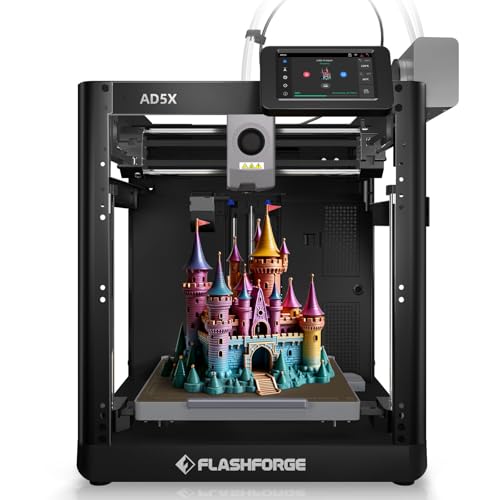
This AD5X model emphasizes a robust Intelligent Filament System for multi-color prints and streamlined material changes, ideal for architectural studies requiring color-coded components. The printer’s 600 mm/s high-speed capability, 32 mm³/s flow hotend, and 4-color printing options enable quick production of informative, color-differentiated architectural models. Its auto-leveling and all-metal CoreXY frame support high-speed performance with stability.
ELEGOO Centauri Carbon 3D Printer
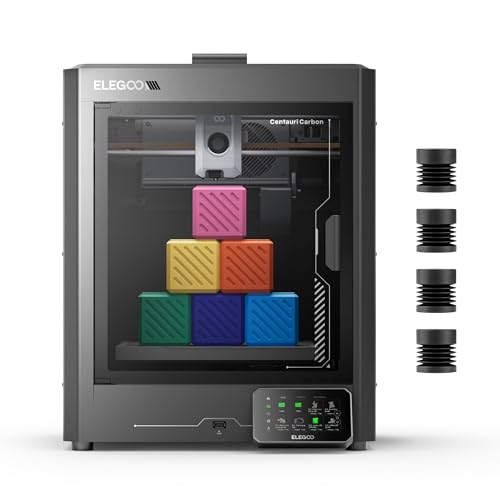
Centauri Carbon offers high-speed CoreXY printing with auto calibration and a 320°C nozzle, enabling strong performance with high-temp materials suitable for architectural components like carbon-fiber reinforced parts. The built-in camera assists in remote monitoring, critical for studio workflows and class demonstrations. Ready-to-print out of the box, its 256x256x256 mm volume supports mid-sized architectural models and assemblies.
Creality K2 Combo 3D Printer
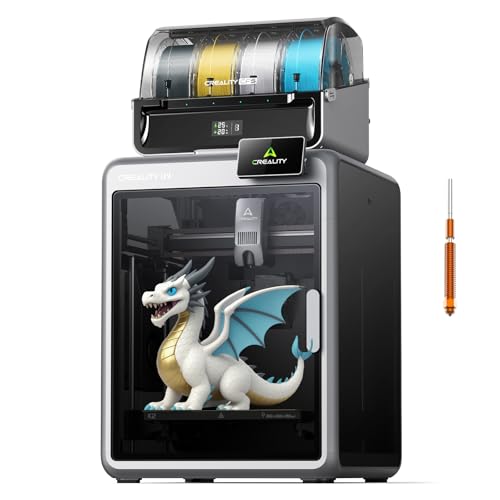
The K2 Combo targets multi-color workflows with a CFS (color filament system) unit, enabling up to 16 colors using interchangeable devices. Its 600 mm/s speeds, smart auto leveling, and dual AI camera facilitate complex architectural models and multi-material studies. The direct-drive extruder and robust frame support precise details across various filaments, improving efficiency for design iterations and client-ready renders.
Buying Guide
Key factors to consider when selecting a 3D printer for architecture include build volume, accuracy, speed, and material compatibility. For large concept models, prioritize bigger build spaces and stable coreXY or Cartesian cores with rigid frames. Auto-leveling reduces setup time and helps ensure consistent first layers, essential for complex profiles and overhangs. Multi-color capability is valuable for color-coding different building systems (structural, MEP, façades) in a single model.
Consider enclosure and ventilation if printing with high-temp or composite filaments. An enclosed chamber improves safety and print consistency, particularly in shared studios. A built-in camera and remote monitoring enable oversight during long prints, reducing revisions and losses. Filament handling and auto-feeding features minimize manual intervention, beneficial for rapid iteration cycles in architectural workflows.
For studios prioritizing speed, look for high max speeds (600 mm/s) and fast nozzle changes to reduce turnaround times on multiple iterations. However, balance speed with print quality for detailed components like lattice cores, extrusion-based panels, and intricate facades. If color is important, multi-color systems with intelligent filament management streamline multi-material studies. Finally, assess software compatibility, community support, and replacement part availability to ensure long-term reliability.
In summary, architecture-focused 3D printers favor models with auto leveling, robust CoreXY designs, high-temperature capability, and multi-color options. The selections above provide a range of capabilities—from rapid mass-modeling to detailed color studies—allowing teams to match the right tool to their project requirements and studio workflows.