Choosing the right art studio work table can transform your workflow, whether you’re sketching, painting, or drafting. This guide highlights five versatile desks that support adjustable angles, built-in storage, and solid construction for long-lasting use. Each option offers a blend of stability, ergonomic flexibility, and convenient features designed for serious crafters, students, and professionals alike.
| Product | Brand | Key Feature |
|---|---|---|
| Yaheetech Height Adjustable Drafting Table | Yaheetech | Tilting surface with adjustable height and pencil ledge |
| ZENY Adjustable Drafting Table | ZENY | Double tabletop with tilt and storage tray |
| VECELO Drafting Table | VECELO | Two fabric drawers and tilt capability |
| Lurinthal Drafting Table | Lurinthal | Open shelves and storage cabinet |
| Yaheetech Drafting Table with Stool | Yaheetech | Tabletop tilt, storage drawers, included stool |
These selections focus on adjustable angles, integrated storage, and sturdy frames that handle daily use in home studios or classrooms. All five options support creative tasks—from drafting precise lines to painting and mixed-media projects—while keeping tools within easy reach. The summarized specs below help compare core capabilities at a glance.
Yaheetech Height Adjustable Drafting Table

The Yaheetech drafting table measures 47.4 x 23.6 inches with an adjustable height range of 27.4 to 36.4 inches. It tilts 0–60 degrees for flexible work modes, from laptop tasks to drafting. A durable metal pencil ledge keeps tools in place on a tilted surface. The assembly is designed for quick setup with reliable hardware fittings to ease height and angle adjustments.
ZENY Adjustable Drafting Table

The ZENY art desk uses a steel and wood frame for stability and a 34 x 23.6 inch main tabletop with a 15 x 23.6 inch sliding tray. Height is adjustable from 28 to 35.8 inches, and the top surface tilts from 0 to 60 degrees. A secondary tray expands workspace for drafting, sketching, or laptop use, making it well-suited for architects, designers, and hobbyists.
VECELO Drafting Table

The VECELO drafting table emphasizes storage and versatility, with two fabric drawers and a fabric storage shelf beneath the tabletop. The surface tilts up to 65 degrees and is supported by a sturdy metal frame with a 12mm MDF top. Non-slip feet protect floors, and a pencil rack keeps tools secure when angled for drafting or art tasks.
Lurinthal Drafting Table
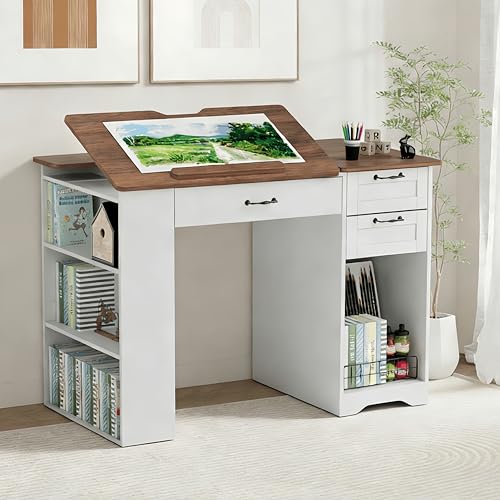
The Lurinthal model combines a storage cabinet, three drawers, and three open shelves with an adjustable tabletop that tilts from 0 to 80 degrees. Made with sturdy MDF, it offers ample space for books, paints, and tools while maintaining a stable surface for heavy drawing boards or craft materials. This table suits artists who need organized storage at arm’s reach.
Yaheetech Drafting Table with Stool

This Yaheetech set features a 50.5-inch long, 23.6-inch wide tabletop with 29.7–43.7 inches of height range. The surface tilts 0–40 degrees, and a pencil ledge secures drawing tools during tilting. It includes three fabric drawers and a long storage shelf beneath the tabletop, plus a stool that complements extended work sessions. A rugged design supports artists, students, and professionals alike.
Buying Guide
When selecting an art studio work table, consider how you work, space, and storage needs. Key factors include table surface area, tilt range, and height adjustability to suit standing or seated work. A sturdy frame with reinforced joints provides durability for long sessions and heavy materials. Storage options—drawers, shelves, and pencil ledges—help keep tools organized and within reach. Double-tabletop designs or extra sliding trays expand workspace for drafting or digital tasks. If you share a workspace, a longer, modular desk can accommodate two users without crowding the area.
- Workspace size: Choose a surface wide enough for your primary project and any required tools or laptops.
- Angle range: A broad tilt range (0–60 or 0–80 degrees) supports painting, drafting, and reading at comfortable angles.
- Height adjustability: A wide height range accommodates different user heights and postures, facilitating standing or sitting work.
- Storage design: Drawer volume, shelves, and pencil ledges reduce clutter and promote efficiency during creative tasks.
- Build quality: Look for steel or reinforced frames and quality fastening hardware to ensure stability under pressure.
- Assembly: Pre-drilled holes, labeled parts, and clear instructions help reduce setup time.
Different user scenarios may favor particular features. For shared studios, models with long desks and built-in storage help two people work side by side. For hobbyists who value mobility, lighter frames with multiple tilting options and accessible drawers enhance flexibility. The inclusion of a stool or ergonomic seating can also influence long-session comfort. Consider testing the angle controls and drawer accessibility to ensure the desk meets daily workflow demands.