Carbon fiber cloth fabric is a lightweight, high-strength material used for reinforcing structural elements, repairs, and custom wraps. This guide highlights five top-rated rolls ideal for automotive, marine, and construction projects. Each product balances weave quality, thickness, and ease of handling to suit both professional and at-home applications. Read on to compare widths, lengths, and weave patterns to find the right cloth for your project needs.
| Product | Brand | Size | Weave |
|---|---|---|---|
| Jecery 6.5ft x 12″ Carbon Fiber Fabric Roll | Jecery | 12 in x 6.5 ft | 2×2 Twill |
| Coynurex 4.2ft x 12in Carbon Fiber Fabric Roll | Coynurex | 12 in x 4.2 ft | 2×2 Twill |
| Tudomro 10ft x 12″ Carbon Fiber Fabric Roll | Tudomro | 12 in x 10 ft | 2×2 Twill |
| Jecery Carbon Fiber Fabric Roll 6 ft x 50″ | Jecery | 50 in x 6 ft | 2×2 Twill |
| Krbnk 3.3ft x 12″ Carbon Fiber Cloth Roll | Krbnk | 12 in x 3.3 ft | 2×2 Twill |
Jecery 6.5ft Carbon Fiber Fabric Roll

The Jecery roll offers a 12 inch width and 6.5 feet length with a 0.25 mm thickness, using a 2×2 twill weave and 3000 filaments per tow. Weighing 220 g per square meter, this fabric balances rigidity and flexibility for automotive, basement, and marine reinforcement. The cloth’s bi-directional strength supports uniform force distribution, while its cut-ability aids precise shaping around curves and corners.
Coynurex 4.2ft x 12in Carbon Fiber Fabric Roll
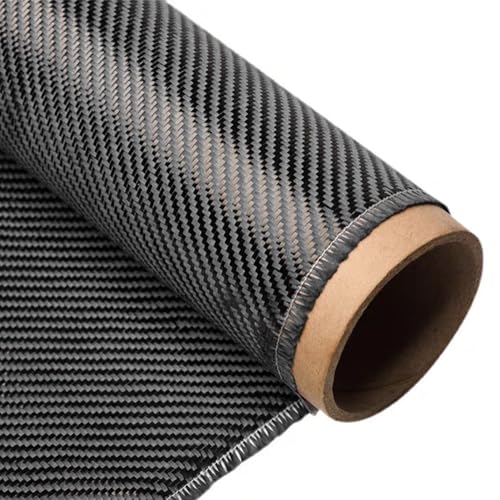
Coynurex delivers a compact carbon fiber option featuring a 2×2 twill weave and a 200 g/m² weight. The 12-inch width and 4.2-foot length are ideal for small-to-medium repairs, panel reinforcements, and hobby projects. Its flexibility makes it suitable for wrapping curved surfaces, helmets, drones, and other complex geometries without sacrificing strength.
Tudomro 10ft x 12″ Carbon Fiber Fabric Roll
Tudomro’s 2×2 twill weave fabric spans 10 feet in length with a 12-inch width and 0.25 mm thickness. At 220 g/m² and 3000 filaments, this roll emphasizes durability and ease of handling for large surface patches on concrete walls, boats, and furniture reinforcement. The cloth’s soft yet strong construction helps minimize bulging during resin infusion and curing.
Jecery Carbon Fiber Fabric Roll 50″ Wide

This 50-inch wide Jecery roll offers a broad coverage option for large panels and flat surfaces. With a 6-foot length and the same 2×2 twill weave, it provides strong, uniform reinforcement for cars, concrete walls, basements, or boats. The generous width reduces seams and simplifies wrapping and overlapping during installation.
Krbnk 3.3ft x 12″ Carbon Fiber Cloth Roll

Krbnk offers a compact 12-inch width with 3.3 feet of length, a 0.25 mm thickness, and a 2×2 twill weave. The 220 g/m² fabric combines high strength and low density, making it suitable for DIY repairs on cars, furniture, and light structural reinforcements. It also highlights heat resistance and corrosion resistance—beneficial for exterior or high-stress applications.
Buying Guide: Key Purchase Considerations
When selecting carbon fiber cloth fabric, consider weave pattern, weight, thickness, and roll size. A 2×2 twill weave is common and tends to offer good flexibility and drapability for curved surfaces, while maintaining strength. Fabric weight (g/m²) influences rigidity and resin uptake; higher weights yield stiffer components but can be harder to mold. Roll width and length affect coverage and seams; wider rolls reduce joints on large panels but can be less maneuverable in tight spaces.
Resin compatibility is another important factor. Most carbon fiber cloths are designed for epoxy resin systems, but some can also work with vinyl ester or polyester resins. Ensure you follow resin-impregnation and curing instructions to prevent fiber crush or delamination. If you’re reinforcing structural elements (concrete walls, basements, boats), verify the material’s temperature tolerance and UV resistance, especially for exterior exposure.
Applications vary by project. For automotive repair or panel wraps, choose a medium-weight 2×2 twill with adequate length to cover curves with minimal seams. For larger surface repairs on walls or boats, a wider roll can save time and reduce weak seams. Consider the availability of extra accessories, such as epoxy resin kits and protective gloves, which can streamline the process and improve results.
Durability and consistency matter. Look for fabrics with uniform filament counts (such as 3000 filaments per tow) and a stable tensile profile to avoid uneven stiffness across panels. Certification and quality control, such as “First Quality” labeling in some products, can offer assurance of consistent batch quality and fewer defects.
In summary, match the cloth to your project scale, surface geometry, and resin system. Balance width for coverage against maneuverability, and select a weave that provides the best combination of strength, flexibility, and finish aesthetics for your application.