Coplin jars are a staple in histology and microscopy labs, enabling consistent staining, sanitation, and slide handling. This guide highlights five top options designed to hold multiple slides, resist staining solutions, and withstand routine sterilization. Each product below is evaluated for capacity, material, and durability to help lab technicians choose the right jar set for their staining workflows.
| Product | Capacity | Material | Notes |
|---|---|---|---|
| QWORK Glass Coplin Jars (4 pack) | 60 mL per jar | Soda-lime glass | Stable on benches; fits up to 5 slides |
| Sieral Coplin Staining Jars (6 pieces) | 60 mL per jar | Glass | Supports up to 5 slides; durable |
| EISCO Coplin Jars (3-pack) | 5-10 slides per jar | Polypropylene | Grooved design for slide separation |
| LemonRoad Coplin Jars (4 pack) | ~5 slides per jar | Polypropylene | High-temperature and microwave sterilizable |
| Karter Scientific Coplin Staining Jar (Single) | 5 slides vertically or 10 back-to-back | Soda-lime glass | Side slots for upright slide placement |
QWORK Glass Coplin Jars 60 mL — 4 Pack
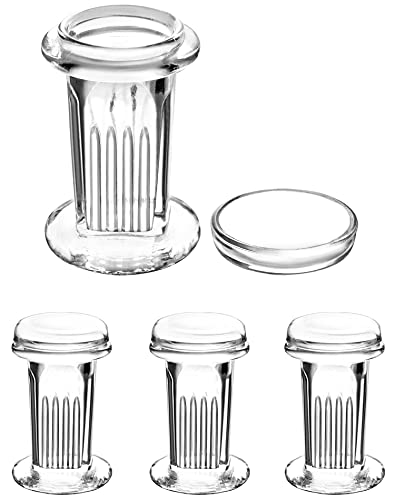
These glass Coplin jars are designed for tabletop staining workflows. Each jar holds about 60 mL and is compatible with up to five microscope slides arranged vertically. The soda-lime glass construction helps resist common staining solutions, supporting repeated use in histology labs. While intended for bench staining, they are not recommended for sealed transport or vigorous shaking. The 4-pack provides a cost-efficient option for parallel staining steps or multi-sample experiments.
Sieral Coplin Staining Jars — 6 Pieces

The Sieral set includes six 60 mL jars designed to hold up to five slides each. The generous capacity supports multiple slides or larger histology specimens in a single staining cycle, boosting workflow efficiency. Made from sodium-calcium glass, these jars prioritize durability for repeated use and reliable performance across staining steps. The multi-pack format is ideal for shared lab environments or projects requiring simultaneous staining of several samples.
EISCO Coplin Jars — 3 Pack

The EISCO 3-pack features polypropylene Coplin jars with grooves to separate slides, enabling complete submersion during staining. Each jar holds 5–10 slides depending on orientation, making them versatile for various staining protocols. The grooved design reduces slide contact and helps prevent sticking, aiding in consistent staining results. This set is suitable for labs prioritizing a balance between durability and cost-effectiveness, especially in teaching or research settings with moderate usage.
LemonRoad Coplin Jars — 4 Pack

These white polypropylene Coplin jars are designed for high-stress laboratory conditions, including high-temperature sterilization and microwave processing. Each jar accommodates five slides, ideal for staged staining procedures or batch processing. The 4-pack format supports consistent workflow across multiple stations or labs, offering a practical balance between usability and price for routine histology work.
Karter Scientific Coplin Staining Jar — 1

The Karter Scientific jar holds five slides vertically or ten back-to-back, with side slots to keep slides upright and separated. Made from soda-lime glass, it resists staining from common stains like eosin and hematoxylin, making it a solid choice for traditional histology staining sequences. This single jar is ideal for labs needing a reliable, ready-to-use option for standard staining protocols or classroom demonstrations.
QWORK 8 Pack Coplin Canisters

This eight-pack from QWORK emphasizes leak resistance and complete submersion for thorough staining. Each container holds five slides (ten back-to-back) and features four notches to separate slides, helping to maintain order during multi-step staining processes. The polypropylene construction supports repeated sterilization with minimal distortion, making these jars suitable for busy labs requiring durable, reusable staining vessels.
KimLab Coplin Jars — 6 Pack (5-Slide)

KimLab offers a pack of six glass Coplin jars, each capable of holding five slides vertically or ten slides back-to-back. The heavy-walled soda-lime glass provides robust resistance to staining solutions and repeated handling. This option suits labs seeking a practical balance between glass durability and traditional use, with a focus on long-term performance in staining workflows.
FRCOLOR Coplin Jars — 3 Pack (60 mL)

The FRCOLOR set includes three 60 mL glass jars designed for five-slide capacity, suitable for histology and biology labs. The glass construction supports stable staining environments and resistance to common reagents used in histological staining. The lids help reduce evaporation and contamination, reinforcing consistent staining results across multiple samples. This trio is well-suited for labs performing multi-step staining sequences with a moderate volume of samples.
Buying Guide: Key Purchase Considerations
- Material and chemical compatibility: Glass jars offer excellent chemical resistance, while high-quality polypropylene variants withstand heat and sterilization. Choose based on the staining reagents used in your workflow.
- Capacity and slide accommodation: Most Coplin jars hold around 60 mL and fit 5 slides (vertical) or 10 slides back-to-back. Confirm whether your slides are standard 75 x 26 mm or require different spacing.
- Durability and reuse: Look for heavy-walled construction and secure lids to minimize evaporation and cross-contamination during staining steps.
- Sterilization compatibility: If you routinely sterilize between runs, polypropylenes often tolerate high-temperature processes, while glass jars require careful handling during heat cycles.
- Grooves and slide separation: Grooved designs help keep slides upright and evenly exposed to staining solutions, reducing cross-contact and uneven staining.
- Pack size and workflow: Multi-pack options enable parallel staining at several stations or scalable experiments, improving throughput in larger labs.
- Cost versus value: While glass jars are sturdy and chemically inert, plastic variants may offer lower upfront cost and easier handling, depending on usage intensity.
When selecting Coplin jars for staining, consider your typical stain types, slide dimensions, sterilization practices, and the number of samples processed per day. A mix of glass and plastic jars can cover a range of staining workflows, from high-stability, long-term use to more economical, rapid-turnaround tasks. Each option listed above provides a viable path to consistent, repeatable staining results across histology, pathology, and educational labs.