Exposing units are a core tool for screen printers, enabling precise image transfer from film to emulsion. This guide highlights versatile units that fit home studios to small shops, focusing on reliability, timer features, and exposure area. Each product below is evaluated for ease of use, build quality, and suitability for various screen sizes. Use the summary table to compare key specs at a glance.
| Product | Brand | Exposure Area | Key Feature |
|---|---|---|---|
| Nevertheless Tabletop 500W | Nevertheless Screen Printing Supply | Up to 20×24 | Beginner friendly, simple assembly |
| 110v UV Exposure Unit | Screen Printing Equipment | 20×24 | Timer, 8 LED tubes |
| 18″ X 13″ 60W LED Unit | SAHUANIYE | 18×13 | Automatic memory timer, press-friendly sponge |
| HayWHNKN LED Exposure Unit | HayWHNKN | 18×12 | Automatic memory, durable construction |
| Dorhui 30W LED Exposure Unit | Dorhui | Varies with setup | Compact, energy efficient, long lamp life |
Note: The following sections present five selected units with practical considerations for buyers, including exposure area, timer features, and how they handle common screen printing tasks such as Diazo and emulsion-based processes. Each entry includes a direct link to the product on Amazon for quick reference.
Nevertheless Tabletop 500W Exposure Unit
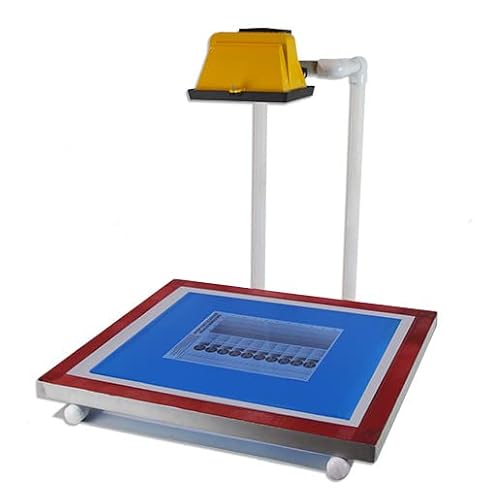
The Nevertheless Tabletop 500W unit is designed for beginner screen printers, offering straightforward assembly and included instructions. Its 500W light is suitable for burning down to emulsion on screens up to 20×24 inches. The compact tabletop form supports small studios while maintaining solid exposure performance. The unit emphasizes ease of use, with a focus on consistent results for entry-level workflows and quick setup for new printers transitioning from hand-coated emulsions to plate-based workflows.
Key considerations: power and heat management are important for consistent exposure, particularly when curing diazo or emulsion layers. The included stand and setup steps help new users avoid misalignment, and the 20×24 inch exposure area matches common student or small-batch screen sizes. For production, consider the unit’s heat dissipation and timer reliability over longer sessions.
110v Screen Printing UV Exposure Unit

This 110V unit provides a built-in timer and eight LED UV tubes, designed to support screens up to 20×24 inches. The timer memory function stores exposure settings, which can improve repeatability across sessions. The eight LED tubes offer a long service life and stable output, reducing the need for frequent lamp changes. The included sponge packs help press the film flat against the emulsion, potentially improving edge sharpness in high-detail designs.
Buying angle: The timer memory and multi-tube setup are advantageous for consistent exposure, especially when working with sensitive emulsions or varying ink processes. Assess whether the unit’s footprint fits your workspace and whether 10,000-hour tube life aligns with your production pace.
18″ x 13″ 60W LED Exposure Unit

This unit blends a durable iron frame with a precise countdown timer and a pressing sponge sized at 7.87×11.81 inches. The high-density sponge helps maintain film contact, which can lead to sharper edges when exposing thicker emulsions or laminates. The timer’s memory function ensures exposure times are reapplied consistently, even if the unit is powered on and off during long sessions. The compact 18×13 inch form factor suits small studios needing reliable daily exposure.
Prospective buyers should evaluate the exposure quality against their emulsion type and plate thickness. A strong, corrosion-resistant housing supports long-term use in busy shops, while the pressing sponge and flat weights improve uniform plate exposure under varying film thickness.
HayWHNKN LED Exposure Unit
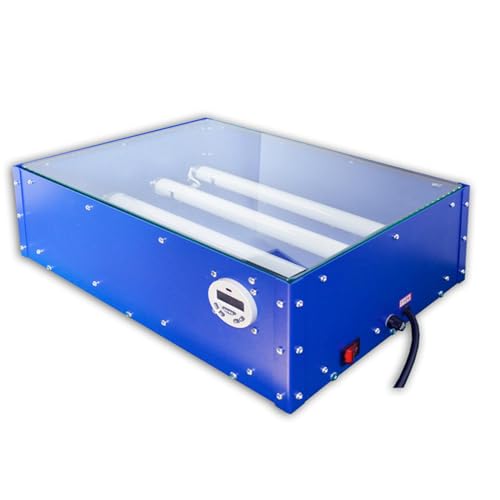
The HayWHNKN LED model emphasizes automatic memory and a robust build. Its 18×12 inch exposing area is suited for mid-sized screens, including common 18×16 and 20×24 formats when placed strategically. The timer’s automatic shutoff after exposure helps prevent overexposure, a common risk with longer emulsions or dense positives. The unit’s construction prioritizes corrosion resistance, ensuring reliable performance in typical shop environments.
Users should consider the availability of replacement lamps and the ease of achieving even exposure across the field. The included timer memory and solid pressing surface help maintain repeatable results across multiple runs with Diazo or UV-curable emulsions.
Dorhui 30W LED Exposure Unit

The Dorhui 30W unit offers a compact exposure solution with a 30W LED array and a simple on/off control. Its relatively small footprint makes it suitable for micro-studios or as a supplementary exposure lamp for smaller screens or test plates. The unit supports quick exposure cycles, which can be beneficial for fast turnarounds in entry-level environments. It also emphasizes energy efficiency and lamp longevity, which is advantageous for frequent use.
Consider how the unit’s exposure area integrates with your typical screen sizes and whether you need a secondary unit for high-volume days. The 395nm wavelength aligns well with Diazo and standard emulsions, but the shorter exposure area means it is best for smaller plates or as a supplementary exposure option.
Buying Guide: Key Considerations for Exposing Units
- Exposure area and compatibility: Verify that the unit’s maximum screen size matches your typical formats (common sizes include 18×16, 20×24, and 24×36 inches). Some units support smaller test plates, while others handle full-scale production.
- Light source and wavelength: LED-based units with wavelengths around 395 nm are common, offering long lamp life and stable output. Consider brightness consistency across the exposure surface to avoid uneven curing.
- Timer features: A reliable countdown timer with memory can simplify workflows by preserving exposure times across sessions. Look for automatic shutoff after exposure to prevent overexposure.
- Construction and durability: A robust frame (often iron or coated steel) resists wear and ensures consistent alignment. A high-quality sponge or press surface improves contact between the film and emulsion for sharper edges.
- Ease of use: Beginners benefit from clear assembly instructions, simple controls, and accessible maintenance parts. A compact footprint helps fit in smaller studios without sacrificing performance.
- Maintenance and lifespans: LED tubes with long lifespans reduce replacement frequency. Check for availability of replacement parts and ease of lamp access in case of repairs.
- Workflow compatibility: Ensure the unit supports common processes such as Diazo, photo emulsion, and cyanotypes. Some units pair well with test strips to calibrate exposure times before full runs.
- Safety and workspace: Position units to minimize heat buildup and ensure ventilation as needed. Secure power supplies and stable stands help prevent accidents in busy studios.
- Value for money: Compare not just the upfront cost but also long-term operational costs, such as lamp replacements, power consumption, and potential impacts on print quality.
- Customer support and warranty: Units from reputable suppliers with clear return policies and accessible support help resolve issues quickly during critical production periods.