Honeycomb carbon fiber fabrics combine the modern look of carbon fiber with a lightweight, high-strength weave. They’re ideal for reinforcing car panels, marine projects, boats, and even structural repairs around the home or garage. This guide highlights top honeycomb-style carbon fiber fabrics from trusted brands, explaining what to look for, how to choose the right size, and how to work with these materials on common projects.
| Product | Brand | Size | Pattern | Notes |
|---|---|---|---|---|
| VitalCozy 10Ft x 12″ Roll | VitalCozy | 10 ft x 12 in | Bee Hive / Honeycomb | 3K, 220 g/m^2, 2×2 twill |
| KARBXON 12 in Beehive Weave | KARBXON | 12 in wide, 5 ft | Beehive / Honeycomb | 3K, 240 g/m^2 |
| Tudomro 10ft x 12″ Roll | Tudomro | 10 ft x 12 in | Bee Hive / Honeycomb | 2×2 twill, 220 g/m^2 |
| Jecery 10 ft x 39.3″ Roll | Jecery | 10 ft x 39.3 in | 2×2 Twill | 3K, 220 g/m^2 |
| Jecery 6.5 ft x 12″ | Jecery | 6.5 ft x 12 in | 2×2 Twill | 3K, 220 g/m^2 |
VitalCozy 10Ft X 12″ Bee Hive Carbon Fiber Fabric Roll

VitalCozy’s honeycomb carbon fiber fabric offers a 2×2 twill weave with a bee hive surface pattern. The fabric is constructed from 3000 filaments, providing a bidirectional strength with lightweight properties. It measures about 12 inches in width and 10 feet in length, with a thickness near 0.25 mm, making it suitable for structural reinforcement on cars, boats, concrete walls, and marine projects. The fabric is marketed as soft and flexible, reducing bulging during shaping and installation, while delivering uniform load distribution across the surface.
KARBXON 12 in Beehive Weave Carbon Fiber Cloth

KARBXON offers a 12-inch-wide beehive weave carbon fiber fabric with a 3K tow composition and a density of about 240 g/m^2. While marketed for repair and DIY projects, the pattern emphasizes a honeycomb aesthetic that helps with load distribution on curved surfaces. With a hemmed finish designed for durability, this fabric supports reinforced repairs on cars, boats, and other projects requiring a thin, strong skin. The product highlights a helix-like carbon fiber structure, suggesting strong interlaminar properties for handling stresses.
Tudomro 10ft x 12″ Carbon Fiber Fabric Black

Tudomro supplies a 10-foot by 12-inch roll of carbon fiber fabric, designed with a 2×2 twill weave and a weight of roughly 220 g/m^2. The fabric uses a 0.25 mm thickness, with 3000 long filaments that help resist bulging and bending under load. It’s described as reliable and durable, offering easy cutting and fit for various shapes, including car panels and structural sections in concrete walls, basements, or boat repairs. The emphasis is on balance between rigidity and flexibility for automotive and marine applications.
Tudomro 10ft x 12″ Double Roll Carbon Fiber Fabric

This Tudomro listing features two 10-foot by 12-inch rolls of carbon fiber twill weave fabric, offering a combined length for larger projects. Like the single-roll version, it uses a 2×2 weave, 220 g/m^2, and 3000 filaments. The dual-roll setup is marketed for convenient, extended coverage on longer repairs, enabling consistent thickness and pattern across larger surfaces while maintaining light weight and ease of handling.
Coynurex 4.2ft x 12in Carbon Fiber Fabric Roll
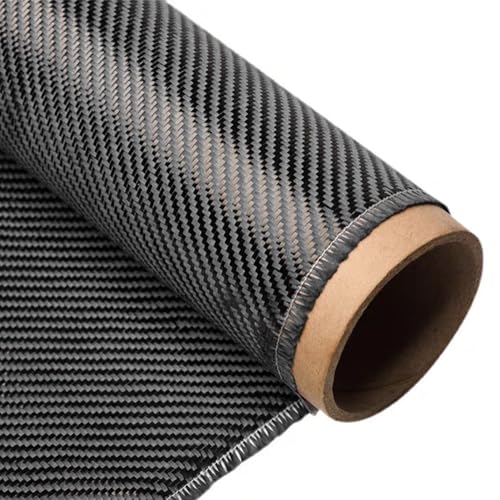
Coynurex presents a compact 4.2-foot by 12-inch carbon fiber fabric roll with a 3K Twill weave and 200 g/m^2 weight in black. Its smaller footprint is ideal for small-to-medium reinforcement tasks, especially in automotive DIY, marine, or RC projects. The weave supports easy shaping and curvature conformance, making it a practical option for wrapping panels, helmets, or models that require a clean, professional finish.
Jecery 10 ft x 39.3″ Carbon Fiber Fabric Roll

Jecery’s 10-foot roll measures an expansive 39.3 inches in width and uses a 2×2 twill weave at about 220 g/m^2. The generous width supports large surface repairs without seams, suitable for high-coverage areas on concrete walls, basements, and boats. The fabric is described as soft with good flexibility, enabling clean curves and uniform load distribution, while remaining cuttable for precise shaping on irregular surfaces.
Buying Guide: Key Considerations For Honeycomb Carbon Fiber Fabrics
When choosing honeycomb or “bee hive” carbon fiber fabrics, several factors impact performance and project outcomes. This guide outlines essential considerations and compares typical options to help you select the best fabric for your needs.
- Weave and pattern: A 2×2 twill weave is common and offers balanced drapability with good directional strength. Honeycomb-like textures are primarily aesthetic but can indicate a high-quality prepreg-like mat or real beehive-style surface on some fabrics.
- Weight and thickness: Fabric weight (g/m^2) and thickness influence stiffness and the amount of resin needed for consolidation. Heavier fabrics provide more strength but require more resin and careful curing to avoid delamination.
- Width and length: Wider rolls reduce the number of seams on large surfaces, improving finish. For curved or contoured surfaces, wider sheets can be trimmed and shaped with heat and resin systems.
- Filament count: The tow count (e.g., 3000 filaments) impacts tensile strength and elongation. Higher filament counts generally improve stiffness and impact resistance but may require more meticulous layup.
- Durability and flexibility: A balance between flexibility for shaping and rigidity for load-bearing is crucial. Soft fabrics are easier to lay into complex shapes, while stiffer sheets resist deflection under stress.
- Application fit: Automotive, marine, and structural repair projects may demand different resin systems and curing profiles. Ensure compatibility with epoxy or other resins used in your project.
- Ease of cutting and finishing: Cuttable fabrics help minimize waste. Consider whether you prefer precision tools or simpler trimming for large panels.
For best results, verify product notes on resin compatibility, recommended curing temperatures, and surface preparation steps. If you’re new to composite repairs, start with a moderately sized roll and practice on scrap panels before tackling critical structural components. Always follow safety guidelines for resin handling and cure ventilation.