Explore the art of sumi-e and Japanese-inspired painting with a carefully curated set designed for beginners and experienced artists alike. This guide highlights five top products that blend traditional Japanese aesthetics with modern usability, covering brushes, inks, and watercolor options. Each item is chosen for quality, versatility, and how well it supports learning and practice in Japanese ink painting and related styles.
| Product | Brand | Type | Notes |
|---|---|---|---|
| Corciosy Chinese Calligraphy Brushes Set (4 brushes, ink, stones, and more) | Corciosy | Brush Set with Ink | Great starter set for Chinese and Japanese calligraphy, includes practice sheets |
| Corciosy Chinese Calligraphy Brushes Set (Purple version) | Corciosy | Brush Set with Ink | Similar starter kit with different mat color |
| Kissho Paint for Japanese Painting Horn Face Aya Ayami Ink 20 Colors | Kissho | Watercolor Ink Set | Japanese-style ink colors, versatile for sumi or watercolor techniques |
| Kuretake GANSAI TAMBI Watercolor Paint Set 24 Colors | Kuretake | Watercolor Paint | Vivid, opaque, traditional Japanese watercolor |
| Kuretake GANSAI TAMBI SUMI Colors 6 Colors Set | Kuretake | Watercolor/Ink Colors | Smaller, focused sumi-ink-inspired palette |
Note: The five selections below are chosen for their relevance to Japanese ink painting and sumi-e practice, offering a mix of brushes, solid inks, and watercolor-compatible options. Each product section includes a concise overview, key features, and how it supports technique development.
Corciosy Beginner Sumi Brush Set With Ink
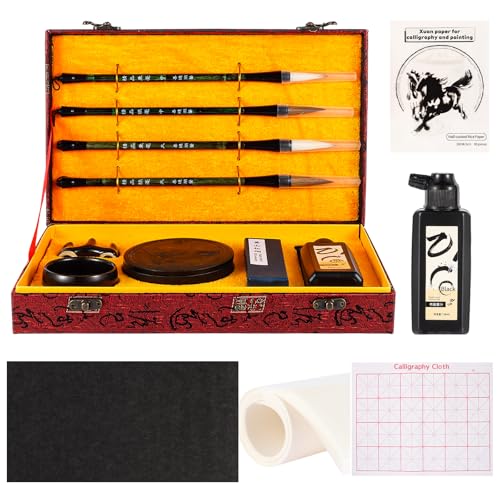
The Corciosy kit provides a complete starting point for practicing Japanese brush painting and calligraphy. It includes four brushes, 120g black liquid ink, an ink stone, ink stick, a brush rest, porcelain bowl, reusable cloth, a black felt mat, and 30 sheets of rice paper. This setup supports traditional ink grinding and water control essential for sumi-e practice. The materials are described as higher-quality for beginners who want an elegant and calm painting experience. The set also accommodates writing Japanese characters and Kanji, reinforcing cross-cultural techniques.
Key features emphasize a ready-to-use package that mirrors authentic ink-writing processes. Practitioners can pace ink grinding and water addition, promoting focus and steady brushwork. The included rice paper helps learners understand how different papers absorb ink, shaping line quality and tonal variation. The kit aims to deliver an approachable, traditional experience without requiring immediate separate purchases.
Corciosy Sumi Brush Set (Purple Mat Variant)

This second Corciosy version mirrors the core starter combination with a similar 4-bruished kit and ink tools, but features a purple felt mat in the package. It remains suitable for learners focusing on brush control, ink tone, and steady strokes in Japanese painting and calligraphy. The kit’s emphasis on a complete practice setup makes it practical for beginners who want a comprehensive entry into sumi-e and kanji writing, with reliable guidance on water use and brush pressure.
The included elements support repeated practice: the ink stone and ink stick enable traditional grinding to achieve the desired consistency, while the rice paper provides immediate feedback on how ink spreads. This helps students understand line quality and the balance between light and dark tones that are central to East Asian ink art.
Kissho Sumi-Inspired Ink 20-Color Set

The Kissho Ink Set offers a curated array of Japanese-style pigments designed for painting and calligraphy. With 20 colors, the palette supports both traditional sumi tones and more vibrant color experiments. The listing indicates a country of origin as Japan, reinforcing authenticity in the materials. The color range includes yellows, blues, greens, and browns suitable for landscapes, flora, and architectural motifs common to Japanese painting. This set pairs well with brush work, ink washes, and layered glazing techniques.
Practically, these colors can be diluted with water to produce transparent washes or used more opaquely for defined shapes. The combination supports blending and gradient creation, essential for achieving subtle tonal shifts in ink-based compositions. Artists can explore layered techniques that resemble traditional ink drawing, ink wash, and light color accents that complement monochrome sumi work.
Kuretake GANSAI TAMBI Watercolor 24 Colors

This Kuretake Gansai Tambi 24-color set is a staple for Japanese watercolor painting, known for vivid, opaque colors that align with sumi-e’s bold tonal possibilities. The paints are large pans that lend themselves to quick washes with big brushes, making it easier to create broad tonal areas essential for landscapes and natural scenes. The paints are described as non-toxic and made in Japan, with a slightly glossy finish when dry. These properties help achieve rich, luminous washes that can emulate ink and pigment combinations often used in traditional Japanese art.
Important techniques supported by this set include flat-washes, layering without visible hard edges, and blending through controlled dilution. The pigment formulation is designed to hold color without excessive granulation, which helps artists achieve smooth transitions between light and dark areas. This makes it a versatile companion for sumi painting when mixed with brush work on rice paper or similar surfaces.
Kuretake GANSAI TAMBI Sumi Colors 6 Colors

The 6-color SUMI set from Kuretake focuses on a compact palette aimed at sumi-style work and ink-inspired shading. The combination of six carefully chosen tones lets artists craft nuanced greys, deep blacks, and subtle color accents that complement traditional monochrome ink paintings. This set is well-suited for artists who want a focused range of tones for precision brushwork, shading, and gradient effects in Japanese painting or calligraphy projects.
Across the five products, the emphasis remains on authentic Japanese painting tools that support learning, practice, and expression. Whether you prefer actual ink and stone, a robust brush kit, or a versatile watercolor palette, these selections offer solid foundations for developing techniques in sumi-e, kanji brushwork, and landscape painting.
Buying Guide: Key Purchase Considerations
- Purpose and style: Decide if you want traditional ink-based sumi-e, calligraphy, or watercolor techniques. Sets that mix brushes, ink, and rice paper suit beginners who want a complete starter experience, while pure pigment palettes suit color-focused practice.
- Materials quality: Look for real sumi ink, durable brushes with natural bristles, and rice paper appropriate for ink and watercolor. Higher-quality materials provide better control and longer-lasting tools.
- Paper compatibility: Rice paper (xuan paper) absorbs ink differently from watercolor papers. Consider a kit that includes practice paper or offers guidance on how to choose the right surface for your technique.
- Color range vs. monochrome: If you plan to explore color, watercolor sets with pigment lightfastness and good mixing properties are valuable. For strict monochrome sumi work, focus on ink quality and grayscale tones.
- Portability and storage: Beginners benefit from compact kits that store neatly. A well-organized set reduces setup friction and encourages regular practice.
- Maintenance: Ink and pigments require cleaning brushes and stones properly. Look for kits that include a brush rest, cloth, and cleaning aids to sustain tool longevity.
- Origin and authenticity: Sets made in Japan or featuring traditional formulations tend to align with authentic sumi-e techniques and color systems, though quality varies by brand.
- Learning resources: Some kits come with practice sheets or guides. These can help beginners understand brush pressure, stroke order, and tonal balance more quickly.
When comparing options, consider how each item supports core skills: brush control, ink tone management, water-to-ink ratios, and layering techniques. A versatile kit that accommodates both initial trials and ongoing refinement can provide long-term value for Japanese ink painting practice.