For screen printers seeking quick curing, strong opacity, and versatile performance, low-cure plastisol inks can boost production without sacrificing quality. This article highlights five top options that cure at lower temperatures, reduce heat exposure on fabrics, and maintain durable finishes. Each product is evaluated on ease of use, cure temperature, fabric compatibility, and color payoff. Use the buying guide at the end to compare features and pick the best fit for your setup.
| Product | Key Benefit | Ideal For |
|---|---|---|
| Rapid Cure White 8 oz (Screen Print Direct) | Low-temperature cure; high opacity | Small runs and beginner shops |
| Rapid Cure White Quart 32 oz (Screen Print Direct) | Low-temp cure; large-volume supply | Expanding production or teaching setups |
| Rapid Cure Gold 8 oz (Screen Print Direct) | Bold metallic with fast cure | Logo accents and specialty designs |
| Rapid Cure 6 Color Set (Screen Print Direct) | Starter kit; six colors with low temperature cure | New silk screen projects and color practice |
| Rapid Cure Violet 16 oz (Ecotex) | Vibrant, versatile color; low-temperature cure | Colorful designs on cotton and blends |
Rapid Cure White Ink (8 oz.)

Rapid Cure White Ink for plastisol screen printing is designed to cure at temperatures as low as 270°F—significant savings over the typical 320°F cure. This 8 oz. bottle is formulated for easy handling, with a shelf life exceeding 12 months, helping printers reduce waste and inventory risk. It delivers bold, opaque coverage on a range of fabrics, including cotton and polyester blends, while remaining forgiving in screen printing passes. The ink’s consistency supports smooth screens and consistent squeegee passes, enabling quick production cycles without sacrificing print quality.
Key features include low bleed resistance and broad textile compatibility. In addition to standard screen printing, Rapid Cure White can be used for plastisol heat transfers and cold-peel transfers, offering flexibility across printing methods. The result is a durable finish with vibrant white coverage suitable for logos, text, and graphics on light to dark fabrics. The ink’s body is designed to work well with standard press setups, reducing clogs and smearing risks during long production runs.
Print specialists considering this ink should factor in the pre-press setup, including proper fabric pretreatment and controlled flash times to maximize adhesion at the lower cure temperature. Because it relies on a lower cure temperature, verify your platen temperature with a reliable thermometer and test a small batch before full production to confirm color density and opacity on your specific fabrics.
Rapid Cure White Ink (Quart – 32 oz.)
This quart-size version extends the advantages of rapid curing to higher-volume workflows. Like its 8 oz. counterpart, this ink cures quickly at around 270°F, enabling faster production without subjecting fabrics to excessive heat. The extended shelf life and lower odor contribute to a safer, more efficient shop environment, especially in shared spaces. Its low bleed characteristics help maintain sharp edges on high-contrast designs across cotton, poly-cotton blends, and other common textiles.
Coloring strength remains bold and opaque, with a short body that couples well with standard emulsion and screen mesh setups. The ink’s versatility supports both direct screen printing and transfer applications, making it a flexible option for shops that run mixed processes. When planning long runs, consider scheduling occasional color checks to ensure consistent color density across batches and to guard against any subtle viscosity changes over time.
For best results, perform a few test passes on your most-used fabrics and confirm that your dryer settings align with the ink’s low-temperature cure profile. A brief pre-dry flash can help lock colors in place before final cure, improving adhesion and wash-fastness on diverse fabric blends.
Rapid Cure Gold Ink (8 oz.)
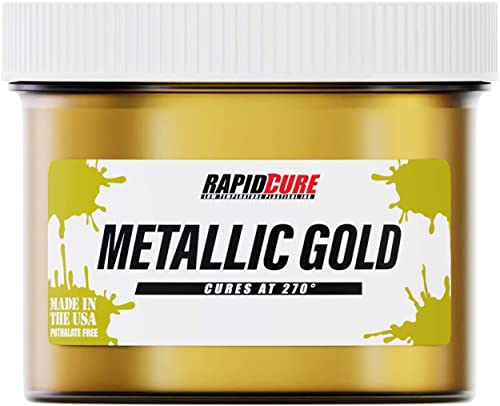
Rapid Cure Gold provides a metallic option with the same low-cure advantages as the white variants. This ink cures at 270°F and yields a bright, high-impact metallic finish suitable for logos, accents, and design highlights on apparel. Its opaque characteristics help it stand out on darker fabrics, and its short body remains compatible with standard screen printing workflows, including squeegee pressure and mesh count. The ink’s formulation supports layering and overprinting without excessive trapping issues, enabling multi-layer designs with metallic details.
Because metallic inks can sometimes have special handling needs, printers should verify drying times and ensure proper ventilation during curing, especially in tightly controlled environments. A few test runs on representative fabrics will help determine the ideal flash and cure times, minimizing risk of adhesion problems or dull finishes after washing. The 8 oz. size is ideal for short runs and sample orders where the gold accent is a primary design element.
Overall, this ink pairings well with standard pigment-based color inks from the Rapid Cure line, enabling high-contrast designs with a consistent cure profile. When mixing metals with other ink colors, consider color separation and potential hue interactions to maintain color integrity across presses and batches.
Rapid Cure 6 Color Set Kit
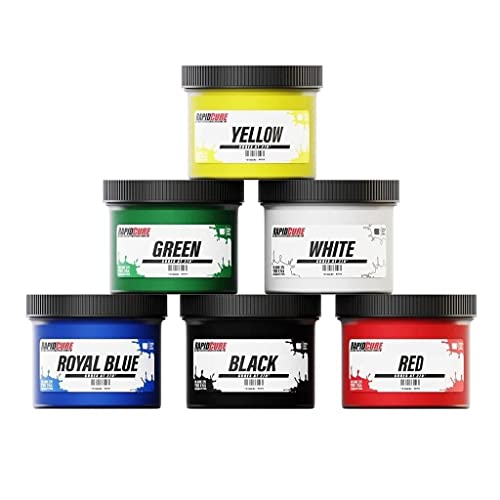
This paperback-style starter kit includes six color options designed for low-temperature curing. The set is ideal for new screen printers building a palette or for shops that want to test Rapid Cure performance across a variety of hues on different fabrics. The kit emphasizes a non-toxic, low-odor profile suitable for home or small office setups, reducing the need for dedicated ventilation in some environments. The colors are intended to print with a soft hand once cured, preserving the fabric feel while maintaining vibrant coverage.
For best results, users should practice on multiple fabric types—cotton, polyester blends, and even some synthetics—to understand how each color behaves under low-heat conditions. The six-color range provides opportunities for testing color harmony, opacity, and layering compatibility. The set’s recommended viscosity and mixing guidelines help achieve consistent results across different screen meshes and squeegee setups. As with any color system, maintaining accurate color references and batch records will support production planning and shirt stock control.
This kit is particularly suitable for shops that frequently switch between designs and require reliable low-temperature curing to speed up turnaround times without compromising print quality.
Rapid Cure Plastisol Ink Reducer (Pint – 16 oz.)

The Rapid Cure Ink Reducer is designed to adjust viscosity for easier handling of plastisol inks. By reducing the ink’s thickness, printers can improve flow, leveling, and the overall print feel. The recommended starting point is 2% to 5% by weight, with a gradual increase up to 10% if needed, followed by test prints to monitor bleed, color strength, and opacity. The reducer supports compatibility with various plastisol inks in a shop’s lineup, helping to optimize consistency during color changes or job shifts.
Use scenarios include curing optimization, smoother squeegee performance, and better control over mesh and stencil alignment. It’s essential to test reductions on your specific fabrics, as lower viscosity can influence coverage and edge sharpness. If misused, it can cause color bleeding or reduced opacity, so small incremental adjustments are prudent. The reducer is a versatile tool for achieving uniform finishes in high-volume runs or challenging material blends.
Rapid Cure White Ink And Ecotex Press Wash

This bundle combines Rapid Cure White plastisol ink with Ecotex press wash solutions for efficient cleaning and maintenance of screens and equipment. The ink shares the low-temperature cure advantage, enabling faster production cycles while reducing heat exposure on fabrics. The press wash components help remove dried plastisol and keep screens free from buildup, supporting longer screen life and easier color changes between jobs. The combination is designed for shops that prioritize turnkey workflows and minimal downtime between runs.
When using a press wash in conjunction with Rapid Cure inks, follow label instructions for dilution and rinsing to avoid residue that could affect ink adhesion on subsequent prints. Store cleaners and inks properly to maintain shelf stability and reduce the risk of contamination. Regular cleaning routines can help sustain print quality across multiple production sessions and color changes.
Rapid Cure Black and White Ink Bundle (Pint) – Set

This bundle pairs black and white Rapid Cure inks in pint sizes to provide essential contrast options for logos, text, and designs. The low-temperature curing feature remains a core benefit, helping to reduce heat exposure for delicate fabrics while delivering dependable adhesion and durability. The pairing supports standard screen printing workflows, allowing designers to create bold graphics with reliable coverage and fast curing. The kit is well-suited for store-room stockers and printers who routinely run two-tone designs.
Printing considerations for the black and white bundle include ensuring accurate registration and proper underbase planning when printing on dark garments. Layering white underneath black or other colors can improve opacity, while maintaining a crisp edge. Consistent heat control and curing tests help prevent issues like gloss variation or color bleeding on textured fabrics. As with any plastisol system, perform color and fabric tests before large-scale production to confirm results align with expectations.
Buying Guide: Key Purchase Considerations
- Low-temperature curing: Prioritize inks designed to cure at 270°F–290°F to protect fabrics and reduce energy use.
- Color performance: Look for high opacity, strong color payoff, and good layering behavior for multi-layer designs.
- Fabric compatibility: Confirm compatibility with cotton, polyester blends, and other common textiles in your shop.
- Shelf life and handling: Long shelf life and easy handling reduce waste and improve workflow stability.
- Ease of cleanup and maintenance: Bundled cleaners and reducers can streamline production and maintenance tasks.
- Kit value vs. individual inks: Starter sets provide a cost-effective way to build color options, while individual inks suit restocking needs.
- Safety and odor: Low-odor formulations are preferable for home studios and shared workspaces.
- Print consistency: Check recommended viscosity and curing guidelines; run test prints to ensure repeatable results across batches.
- Transfer options: Some inks support plastisol heat transfers and cold-peel transfers, extending design options beyond direct print.
- Maintenance tools: Include compatible reducer and press wash products to maintain screen longevity and ink performance.
When selecting a low-cure plastisol ink system, consider your typical garment mix, run length, and production tempo. A balanced approach that combines reliable opacity, fast cure times, and ease of use will yield the best long-term results for a diverse range of screen printing projects.