Cosplay enthusiasts rely on moldable plastics to craft durable, detailed pieces like armor, helmets, and accessories. The right thermoplastic beads, sheets, or pellets can be heated, shaped, and reused for countless projects. This guide highlights five top options that balance malleability, strength, and reusability for American makers, whether you’re building a full suit or small prop elements. Each option includes practical uses, handling tips, and what makes it stand out for cosplay workflows.
| Product | Brand | Best For |
|---|---|---|
| Sukh 310G Moldable Plastic Pellets | Sukh | Large, customizable parts with budget-friendly reuse |
| Polly Plastics 22 oz Moldable Pellets | Polly Plastics | Long projects needing durable, reusable material |
| InstaMorph Reusable Moldable Plastic 3oz | InstaMorph | Lightweight parts, molds, and quick fixes |
| Polly Plastics Re-Seal 7 oz Moldable Pellets | Polly Plastics | Portable kits with instruction booklet |
| Polly Plastics Heat Moldable Sheets (3 sheets) | Polly Plastics | Flat panels, armor plates, or wrap-around shapes |
The following sections cover five standout products in detail, explaining why each is well suited for cosplay work, along with practical considerations such as heat requirements, reusability, and finish options.
Sukh 310G Moldable Plastic Pellets

The Sukh moldable plastic pellets offer excellent malleability, enabling intricate designs that can be pulled, sculpted, painted, or attached to other materials. With a 310 g weight, the beads provide ample material for larger cosplay pieces and temporary repairs. The process is straightforward: boil the beads until transparent, then shape by hand or with tools around supporting objects. The material is reusable, economical, and suitable for long-lasting fittings, mechanisms, or decorative components in costumes. Practical cosplay applications include props, armor accents, and helmet detailing where consistent, repeatable reshaping may be needed.
Care and handling tips: keep heat exposure under controlled conditions to avoid warping; use a heat-safe surface for shaping; once cooled, sand or paint to achieve a seamless finish. The pellet format makes it easy to estimate material needs for different parts of a costume and replace fragments without waste.
Polly Plastics 22 oz Moldable Pellets
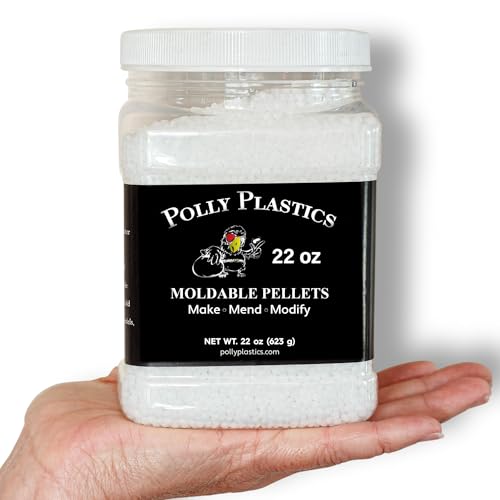
Polly Plastics offers heat-activated pellets designed for precision shaping, ideal for cosplayers who need reliable, reusable material. Heating in hot water (>150°F) softens the pellets, allowing meticulous molding, detailing, and joining of pieces. The 22 oz size is well-suited for larger projects or modular armor sections, making it easier to build multiple components with a consistent material profile. A compact instruction booklet accompanies the product, guiding techniques to maximize impact while reducing trial-and-error time.
Usage considerations include ensuring even heating for uniform shaping, and planning for post-mold finishing such as sanding or painting. The durable material can be remelted and reworked if adjustments are required, supporting iterative design cycles during cosplay builds.
Polly Plastics 10 oz Moldable Pellets

The 10 oz Polly Plastics pellets deliver the same heat-and-mold versatility in a compact package, balancing project scale with manageability. Like the larger version, these pellets require hot water to become malleable and can be reshaped multiple times, making them suitable for recurring cosplay concepts, from flexible armor sections to accessory components. The included idea and instruction booklet helps users explore techniques, such as layering for strength, creating complex textures, and achieving high-detail results in a controlled workflow.
Best practices include working in stages: warm, mold, cool, and refine. This approach can help cosplayers achieve precise contours for helmets, gauntlets, and prop weapons, while maintaining the option to rework if a design changes mid-project.
Polly Plastics Re-Seal 7 oz Moldable Pellets

This re-seal package combines portability with a robust craft set. The 7 oz bag is ideal for on-the-go cosplayers or for hobbyists expanding their toolkit without committing to a larger supply. The pellets heat and mold similarly to other Polly Plastics products, enabling precise shaping and durable results that can be reused across multiple builds. The included 12-page color booklet offers technique ideas and step-by-step instructions to help users maximize efficiency and accuracy in cosplay roles, from armored bracers to prop embellishments.
Considerations include planning which sections will be heat-formed, how to join pieces for a seamless look, and selecting compatible paints and finishes to achieve a polished final result.
Polly Plastics Heat Moldable Sheets (3 Sheets)

This 3-sheet pack provides a convenient option for flat forms, armor plates, or wrap-around shapes. Each sheet measures 8″ x 12″ with a 1/16″ thickness, enabling straightforward cutting and shaping with heat. The sheets are paintable, which makes it easy to achieve color-consistent finishes across cosplay projects. They’re especially useful when you need consistent, large-area panels that can be heat-wrapped or formed around rounded forms. The sheets can be heated with a heat gun above 150°F and shaped by hand or with tools for precise control.
Tips for using sheets include pre-roughing edges for better bending, experimenting with layer builds for structural strength, and attaching sheets with compatible adhesives or mechanical fasteners to create modular costume pieces.
Buying Guide: Key Considerations For Moldable Plastic In Cosplay
- Material form and project type: Pellets, beads, and sheets each suit different applications—from small detailed parts to large armor panels. Choose based on part size, weight constraints, and required flexibility.
- Heat source and working conditions: Most products require hot water or a heat gun to soften. Ensure a stable work environment with proper ventilation and heat-safe surfaces, and test a small piece first to tune heating time.
- Reusability and lifecycle: Many options can be melted and remolded multiple times, allowing iterative design. Consider a workflow that anticipates adjustments and upgrades during the build process.
- Finish and aesthetics: Plan for painting, sanding, or texturing. Some products accept paints well and can be smoothed for a seamless finish; others may require priming or sealing for durability.
- Detail and strength vs. weight: Heavier pieces may feel more durable but could impact wearability. Lightweight options like InstaMorph are ideal for ornate, high-detail components, while pellets provide bulk for larger sections.
- Documentation and learning aids: Instruction booklets or included guides can shorten the learning curve. Look for tutorials or technique ideas that match your design goals.
- Storage and portability: Re-seal bags and compact kits support field repairs and on-site adjustments. Sheets offer ready-to-use panels for quick assembly on the go.
- Compatibility with other materials: Consider adhesion to foam, resin, or metal parts. Some plastics bond better with specific adhesives or mechanical fasteners; test combinations during early prototypes.