Discover essential tools and supplies to improve precision, finish, and efficiency in plastic model building. This guide highlights trusted sets that cover cutting, trimming, sanding, painting, and assembling, helping beginners and seasoned hobbyists alike achieve cleaner, professional results.
| Product | Brand | Primary Use | Key Benefit |
|---|---|---|---|
| Rustark 21Pcs Modeler Basic Tools Craft Set | Rustark | General modeling and assembly | Comprehensive starter kit with durable steel and anti-corrosion tools |
| RUITOOL Model Nippers | RUITOOL | Precise part trimming | Ultra-thin edge and anti-slip design for clean cuts |
| Model Building Tools Kit – 6-Piece | MAREKINEKO | Trimming, sanding, and assembling | All-in-one for beginners with durable high-carbon steel parts |
| stedi Model Tools Kit for Beginners 14 PCS | stedi | Professional-grade basic toolkit | All-metal construction and precision tweezers |
| Honoson 20 Pcs Sanding Sticks | Honoson | Smoothing and finishing surfaces | Wide grit range with labeling for quick selection |
Rustark 21Pcs Modeler Basic Tools Craft Set
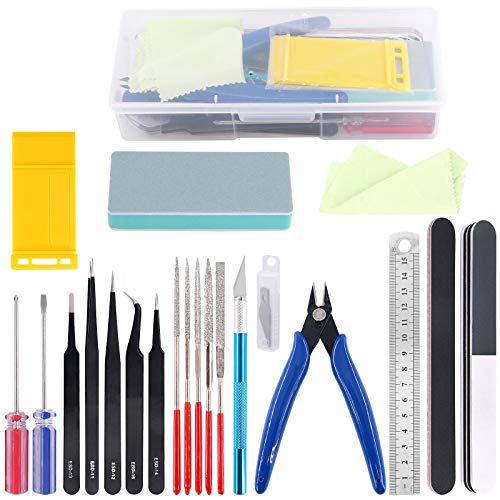
The Rustark kit targets both beginners and advanced modelers, encompassing tools for toy, car, robot, and other craft projects. It includes a side plier, screwdrivers, files, a separator, a steel rule, a polishing block, polishing bars, tweezers, a graver, spare blades, and a polishing cloth. The set ships in a plastic box for protection, ensuring easy transport and organization. Construction emphasizes durability: carbon steel cutting pliers, stainless steel tweezers, and high-hardness grips support repeated use with reliable performance.
GJJC09B Painting Stand Base And Alligator Clip Set

Designed for painting small model parts, this base provides stability for airbrushing and hand-painting tasks. The base is built to support delicate components during finish work, with plastic construction offering a light yet stable platform. It’s presented as an ideal gift for model enthusiasts seeking reliable support during miniature painting and detailing processes.
RUITOOL Model Nippers

RUITOOL’s model nippers emphasize precise cutting with an ultra-thin single-edge blade and chrome vanadium steel construction. The design includes a limiting lever to prevent excessive opening, a limit lock to avoid damage from overexertion, and a reset spring to minimize cutting effort. These features help reduce visible whitening and ensure smoother join lines on plastic parts.
MAREKINEKO Model Tools Kit – 6-Piece

This six-piece kit includes a single-edge nipper, a hobby knife, two tweezers, and two sanding boards. It offers a complete workflow from trimming to smoothing and assembly, with high-carbon steel construction for durability. The kit is positioned as beginner-friendly while delivering professional-grade performance for trimming plastic models, miniatures, and 3D-printed parts.
stedi Model Tools Kit – 14 PCS

Crafted for professional-level basic usage, this 14-piece set includes model pliers, high-quality tweezers, a full-metal utility knife with blades, sanding sticks, and a spare spring for nippers. The kit emphasizes durability and precision, featuring an all-metal construction and tools that perform across dry and wet applications, with rigorous testing for each piece to ensure quality.
Bigstone 20 PCS Model Tool Kit

The Bigstone set covers essential tools for Gundam and other plastic modeling tasks, including a pen knife, blades, a separator, diagonal pliers, a steel rule, polishing blocks, screwdrivers, files, tweezers, and a plastic box for storage. It emphasizes a wide range of tools in a cost-efficient pack, suitable for building, repairing, and detailing various models.
Buying Guide: Key Purchase Considerations
When choosing plastic model tools and supplies, consider the following factors to match your project needs and skill level.
- Tool versatility: Look for sets that cover trimming, cutting, sanding, and finishing in a single purchase. This reduces the need to mix brands and often lowers overall cost.
- Cutting precision: Nippers and hobby knives should offer sharp, clean cuts with minimal plastic whitening. A thin, single-edge blade and anti-slip grips improve control for delicate parts.
- Durability and material: Tools made from high-carbon steel, stainless steel, and chrome vanadium steel typically offer longer life and reliable performance under repeated use.
- Ergonomics: Comfortable grips and balanced weight reduce hand fatigue on longer build sessions. This is especially important for beginners building accuracy over time.
- Finishing options: A broad grit range of sanding sticks helps achieve smoother surfaces and better fit between parts. Labeled grits aid quick selection during workflows.
- Organization: A sturdy plastic box or case keeps tools protected and accessible, which is especially helpful for hobbyists who switch between projects.
- Compatibility: Ensure the kit includes tools appropriate for your typical models (Gundam, cars, miniatures, 3D-printed parts). Some kits are more tailored to specific genres.
- Warranty and support: Reputable brands often offer replacement parts or customer support, which can be valuable for beginners navigating tool selection.
Best practices for using plastic model tools
Work in a well-lit space, secure small parts with a helping hand or vice, and trim away from the body to avoid slips. Use masking and finishing techniques to reduce visible seams, and test cuts on scrap parts before applying techniques to your main model.
Common model-building workflows
A typical workflow can start with careful part removal using quality nippers, followed by cleaning edges with knives, smoothing surfaces with sanding sticks, and finishing with paint or decals. Having a complete, balanced toolkit ensures smoother transitions between steps and more consistent results across projects.