Polycarbonate (PC) filament is prized for its high strength, heat resistance, and dimensional stability, making it ideal for functional parts, prototyping, and engineering components. This guide highlights top PC filaments from trusted brands, with practical tips to optimize print quality on most FDM printers. Each option offers a balance of toughness, printability, and affordability, helping you choose a reliable material for demanding applications.
Summary of selected products
| Product | Brand | Filament Type | Key Benefit | Approximate Spool |
|---|---|---|---|---|
| ELEGOO PC Filament | ELEGOO | Polycarbonate | Excellent heat resistance and dimensional stability | 1 kg |
| Polymaker PolyLite PC | POLYMAKER | PolyLite PC | Strong, with light-diffusing properties | 1 kg |
| Polymaker PolyMax PC | POLYMAKER | PolyMax PC | Enhanced toughness and printability | 1 kg |
| ANYCUBIC PC Filament | ANYCUBIC | Polycarbonate | High toughness with UV resistance | 1 kg |
| IEMAI PC CF Filament | IEMAI | Carbon Fiber PC | High stiffness and heat resistance | 1 kg |
ELEGOO PC Filament 1.75mm Clear Black
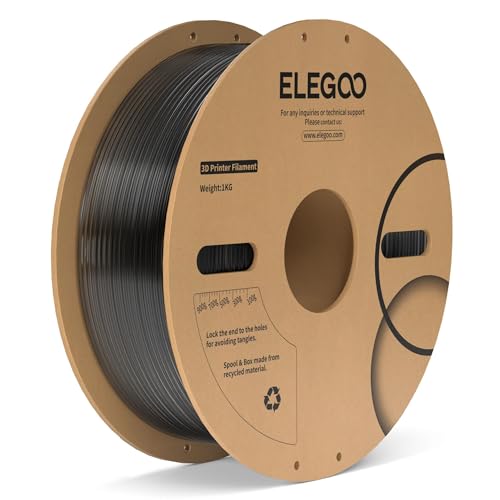
ELEGOO PC Filament delivers outstanding mechanical performance with high impact resistance, suitable for functional parts and prototypes. Its excellent heat resistance provides thermal stability for parts exposed to elevated temperatures, such as automotive or electrical components. The filament emphasizes dimensional stability with a low warping profile, making it reliable for large prints and high-precision parts. The 1 kg spool is a practical size for routine PC projects, and the material is designed to maintain dimensional accuracy during cooling and solidification.
Polymaker PolyLite PC Filament

Polymaker PolyLite PC stands out for robust strength and heat resistance, with light-diffusing properties that can improve surface aesthetics on translucent prints. The PC family is designed for consumer-grade printers while delivering professional-grade performance. It’s a practical starting point for users seeking reliable Christmas-ornament clarity or translucent housings, combined with strong mechanical properties and relatively straightforward printing behavior.
Polymaker PolyMax Tough PC Filament

PolyMax Tough PC is designed for applications demanding superior toughness and heat resistance. It emphasizes improved printability alongside higher impact strength, making it suitable for load-bearing parts, functional prototypes, and components subject to mechanical stress. The filament’s minimal shrinkage during cooling supports reliable large-format prints, helping users achieve consistent results across various geometries.
ANYCUBIC PC Filament 1.75mm
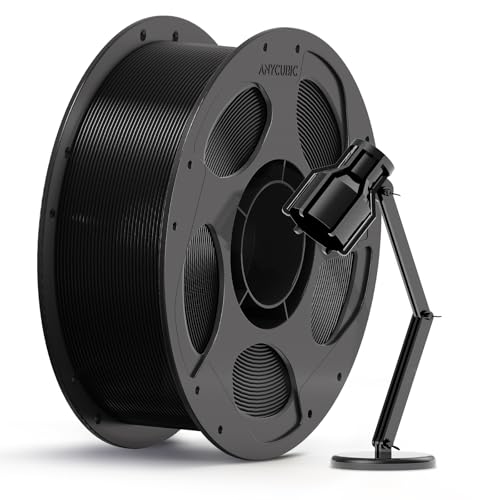
ANYCUBIC PC Filament blends toughness with outdoor resilience. It offers strong impact resistance and UV stability to help prevent yellowing and degradation of outdoor parts. The filament is suitable for mechanical housings, automotive components, and outdoor equipment where long-term exposure to sunlight and heat is a concern. Its 1 kg spool sizing aligns with typical hobbyist and semi-professional workflows.
IEMAI PC CF Filament 1.75mm

IEMAI PC CF Filament combines carbon fiber reinforcement with polycarbonate for high tensile strength and rigidity. The 20% chopped carbon fiber contribution yields enhanced load-bearing performance, making it suitable for engineering-grade parts, jigs, fixtures, and assemblies. It remains stable under high temperatures, with dimensional accuracy within ±0.02 mm, and is a good option for parts requiring precise tolerances and structural stiffness.
Buying Guide: Key Considerations For Choosing Polycarbonate Filament
- Printing temperature and bed settings: PC filaments typically require higher nozzle temperatures (often around 260-280°C) and heated beds (often 100-110°C). Ensure your printer hardware can reach and maintain these conditions reliably.
- Dimensional stability and shrinkage: Look for filaments that advertise low warping and tight dimensional tolerances. This is crucial for high-precision parts and large prints where warping can compromise fit.
- Heat resistance and applications: If parts will experience heat or mechanical stress, prioritize PC or PC blends with strong heat deflection and impact resistance ratings. Carbon fiber PC variants offer additional rigidity but may increase printing difficulty.
- Print settings and surface finish: PC filaments can vary in gloss and transparency. PolyLite PC and PolyMax PC offer good surface finishes with dependable flow. Consider whether a translucent or opaque appearance is desired for your project.
- Printer compatibility and calibration: Ensure your printer’s extruder, hot end, and frame can handle high-temp printing without excessive heat creep. A controlled enclosure can improve print quality and reduce warping with PC materials.
- Moisture sensitivity and storage: PC filaments can absorb moisture, affecting print quality and strength. Use airtight storage and dry when needed to maintain performance.
- Brand reliability and support: Reputable brands like ELEGOO, Polymaker, ANYCUBIC, and IEMAI offer documented profiles and customer support that can simplify setup and troubleshooting.
- Cost vs. performance: PC filaments range in price based on toughness, transparency, and reinforcement (like carbon fiber). Evaluate your application’s demands against budget to choose the best value.
In this selection, the ELEGOO, Polymaker PolyLite PC, and PolyMax PC filaments emphasize robust mechanical properties and heat resistance for functional parts, while ANYCUBIC and IEMAI provide durable choices with practical printability and enhanced rigidity through carbon fiber reinforcement. Each option offers a balance between strength, stability, and ease of use to meet different engineering and prototyping needs.