Rotating cutting mats are essential tools for quilters, sewers, and craft enthusiasts who want precise angles and smooth cuts without moving their project. The best rotating mats combine self-healing surfaces, stable anti-slip bases, and easy 360-degree rotation. Below is a curated selection of five top-rated mats that balance size, rotation quality, and durability. Use the quick-reference table to compare key specs at a glance, then read through each product’s details to determine which fits your workflow and space.
| Product | Brand | Size | Rotation | Surface |
|---|---|---|---|---|
| Calibre Art Rotating Self Healing Cutting Mat 14×14 | Calibre Art | 14×14 | 360° | Self-healing, EN 71-3 compliant |
| The Quilted Bear Rotating Cutting Mat 12×12 (Blue) | The Quilted Bear | 12×12 | 360° | Self-healing |
| OLFA 12×12 Rotating Cutting Mat RM-12S | OLFA | 12×12 | 360° | Self-healing |
| Fiskars Rotating Cutting Mat 14×14 | Fiskars | 14×14 | 360° | Self-healing |
| Headley Tools 12×12 Rotating Cutting Mat | Headley Tools | 12×12 | 360° | Self-healing, Anti-slip base |
Calibre Art Rotating 14×14 Self Healing Cutting Mat
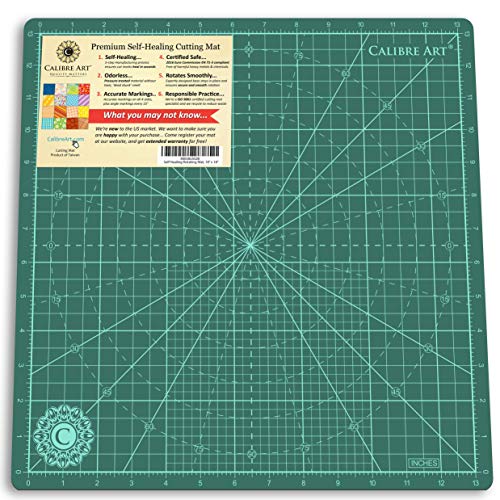
The Calibre Art rotating cutting mat features a smoothly rotating surface mounted on a non-detachable base. Its self-healing surface reseals minor cuts to extend blade life, maintaining a consistently smooth workspace. The mat uses an EN 71-3 compliant surface compound, meeting stringent safety standards for chemical quality. This 14×14 inch mat is well-suited for quilting and art projects that require repeated passes with rotary cutters and rulers.
The Quilted Bear 12×12 Rotating Cutting Mat (Blue)

This 12×12 rotating mat by The Quilted Bear emphasizes a precision locking mechanism that lets you switch between rotating and fixed modes. The surface is self-healing, designed to withstand frequent cuts from rotary cutters while remaining smooth for future work. With 360-degree rotation, users experience smooth fabric movement, reducing wrist strain during quilting, sewing, and scrapbooking tasks. The locking feature adds stability on any craft table, making it ideal for multi-step projects.
OLFA 12×12 Rotating Cutting Mat RM-12S

OLFA’s RM-12S rotates 360 degrees on a non-slip bottom layer, allowing the top mat to turn while your project stays in place. Its self-healing surface reseals cuts to extend blade life and protect your workspace. The 12×12 size is particularly suited for intricate cuts and small spaces, making it a practical option for detailed fabric work, applique, and sewing patterns requiring frequent angle changes.
Fiskars 14×14 Rotating Cutting Mat
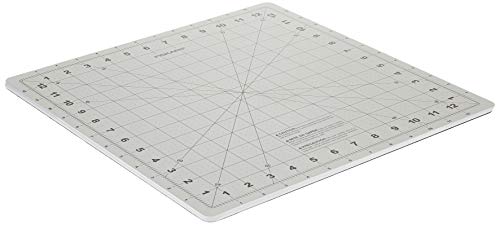
Fiskars offers a robust 14×14 inch rotating mat featuring easy-to-read grids and bias lines at 30, 45, and 60 degrees for precise angle cutting. The mat rotates to accommodate various angles without moving the project, which helps when aligning fabric and rulers. The surface is self-healing and designed for long-term durability, complementing Fiskars rotary cutters and other Fiskars craft tools to deliver reliable results over time.
Headley Tools 12×12 Rotating Cutting Mat

Headley Tools presents a 12×12 rotating cutting mat with a 360-degree swivel and an anti-slip base. The self-healing surface protects blades and keeps the workspace smooth after repeated cuts. The anti-slip feature ensures the mat stays stable during rotations, which is valuable for long patterns or when working with multiple layers of fabric. The mat’s compact size fits well on smaller tables and craft stations, supporting quick tasks and hobby projects.
Buying Guide: Key Purchase Considerations
When choosing a rotating cutting mat, consider the following:
- Size and work area: Larger mats (14×14) support bigger projects, whereas 12×12 mats are ideal for compact spaces and detailed cuts. Think about your typical project size and table size.
- Rotation mechanism: Look for a smooth 360-degree rotation with a stable base. A non-slip bottom helps prevent shifting during cutting, improving safety and accuracy.
- Surface longevity: Self-healing mats reseal minor cuts, extending blade life and maintaining a flat cutting surface. Verify the surface chemistry or standards if you require chemical safety.
- Grid and measurement features: Clear grids, diagonal lines, and angle markings (30°, 45°, 60°) facilitate precise cuts and complex patterns, especially for quilting and applique.
- Locking function: Some mats offer a locking mechanism to switch between rotating and fixed modes. This can be beneficial when you need stability for straight lines.
- Durability and material quality: A robust mat resists warping and maintains flatness over time, ensuring consistent guide lines for future projects.
- Brand compatibility: If you already use a specific rotary cutter or ruler system, check compatibility with the mat’s grid spacing and lines.
- Safety and standards: For some buyers, EN 71-3 compliance (or equivalent safety standards) can be a deciding factor for the quality of surface compounds used.
In practice, quilters and crafters may prioritize rotation smoothness and surface longevity, while hobbyists with limited space may favor 12×12 mats with reliable locking mechanisms. A mat’s ability to withstand repeated blades without losing traction or causing blade wear is critical for productivity and results. Consider purchasing a mat that complements your primary tools, such as a compatible rotary cutter and precise rulers, to maximize accuracy and efficiency.