For anyone building a reliable screen printing workflow, a sturdy screen stretcher or high-quality pre-stretched frames can dramatically improve registration, tension consistency, and overall print quality. This guide reviews five top options that align with common studio needs—from compact, portable stretchers to ready-to-use aluminum frames with durable mesh. Each selection emphasizes build quality, material clarity, and practical performance in American print shops and hobbyist setups alike.
Summary at a glance: the following table highlights key attributes of the chosen products to help you compare at a glance.
| Product | Brand | Mesh Range / Availability | Notes |
|---|---|---|---|
| High Precise 24″ x 24″ Manual Screen Stretching Machine | Ving | 24″ x 24″ manual stretch | |
| 20 x 24 Inch Pre-Stretched Aluminum Frames (2 Pack) | GoldUpUSAInc | 160 White Mesh | |
| Gold Up USA Inc Aluminum Frame 10 x 14 (Pre-Stretched) | GoldUpUSAInc | 160 White Mesh | Compact size; versatile for small designs |
| 20 x 24 Inch Pre-Stretched Frames (2 Pack, 110 Mesh) | GoldUpUSAInc | 110 White Mesh | Value pack with reliable tension |
| 20 x 24 Inch Pre-Stretched Frames (6 Pack, 160 Mesh) | GoldUpUSAInc | 160 White Mesh | Best for bulk projects and consistent prints |
High Precise 24×24 Manual Screen Stretching Machine

The 24″ x 24″ manual screen stretching machine from Ving is designed for compact spaces with a focus on precise tension control. The frame is built to accommodate a standard screen, helping to maintain consistent mesh tension across the entire surface. The design emphasizes portability, making it suitable for small studios or mobile setups where space is at a premium. The machine’s light weight reduces fatigue during long sessions, and its straightforward operation minimizes adjustment time between screens.
Key features include a robust frame construction and a compact footprint that helps maximize workflow efficiency. For users prioritizing ease of transport and quick setup, this stretcher offers a balanced blend of performance and practicality. Its dimensions align well with common 24″ x 24″ mesh panels, reducing the risk of misfit or slippage during exposure or printing stages.
20 x 24 Inch Pre-Stretched Aluminum Frames (2 Pack)

These pre-stretched aluminum frames are built for quick setups with 160-count white mesh. The outside dimensions are 20″ x 24″, with an inside opening around 17.2″ x 21.2″. The frames use a sturdy tubular edge (1 3/8″ profile), offering a reliable grip and stable tension across prints. This option is ideal for shops that value replaceable frames that can be swapped quickly between designs or colors without re-stretching.
Mesh tension falls within a strong range, typically suitable for a variety of inks and substrates. The aluminum construction keeps the frames lightweight yet durable, supporting repeated exposure cycles and long print sessions. For studios handling production runs, the two-pack convenience helps maintain consistent output across tasks or teams.
Gold Up USA Inc Aluminum Frame 10×14 Inch (Pre-Stretched)
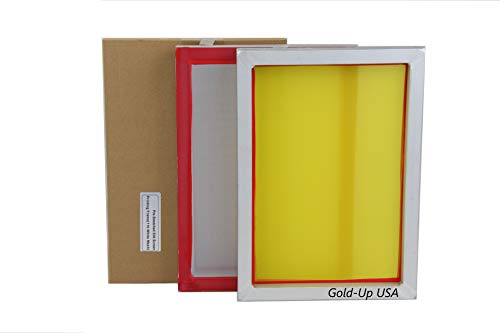
This compact pre-stretched frame measures 10 x 14 inches and features 160 white monofilament polyester mesh. The interior dimensions are 8.5 x 12.5 inches, with a 0.75-inch frame thickness. The sandblasted mesh side and solvent-resistant adhesive add durability and stability under exposure and printing conditions. It’s a practical choice for smaller runs or hobby projects where precision on tighter artwork is essential.
With a lightweight aluminum build, this frame minimizes handling effort while providing reliable tension. The frame’s small footprint makes it easy to stock multiple frames for different colors or designs, enabling quick color swaps and rapid job changes without sacrificing print quality.
20 x 24 Inch Pre-Stretched Aluminum Frames (2 Pack, 110 Mesh)
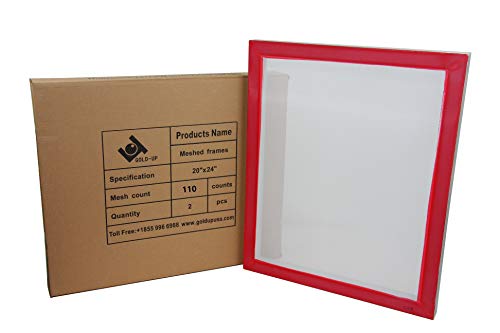
The 2-pack of frames offers 110 mesh counts per inch, which is suitable for a broad range of textile and surface printing tasks. The outside dimension is 20″ x 24″, with an internal opening around 17.2″ x 21.2″ and a 1 3/8″ tube along the edges. The white mesh ensures clear opacity for bold prints, while the tension range maintains consistent performance across multiple runs. This option is ideal for studios expanding their print capacity without sacrificing consistency.
For workflow efficiency, having two frames on hand allows simultaneous color plates or quick replacement when screens are drying or exposed. The aluminum construction remains a long-term investment that holds up well under frequent use and cleaning cycles, supporting a clean, precise printing process.
20 x 24 Inch Pre-Stretched Aluminum Frames (6 Pack, 160 Mesh)

This six-pack provides a cost-effective solution for higher-output environments that demand consistent results across multiple screens. The frames maintain 160-count white mesh and feature the same outside dimensions of 20″ x 24″ with an inside pocket around 17.2″ x 21.2″. The 1 3/8″ tubular frame ensures solid support and dependable tension across all screens in the pack. This option is well-suited to schools, community centers, or busy print shops that rotate through several designs weekly.
Choosing bulk frames reduces downtime between jobs, enabling teams to dedicate more time to the artwork rather than frame preparation. The high mesh count supports finer detail and edge definition, which is beneficial for graphics with delicate line work or color gradients.
20 x 24 Inch Pre-Stretched Frames (2 Pack, 230 Mesh, Yellow)

This pair uses a 230-count yellow mesh, offering higher sensitivity for photo emulsion exposures and faster curing under standard UV light. The outside dimensions are 20″ x 24″, with inside space approximately 17.2″ x 21.2″. The 1 3/8″ tube framework is designed to resist warping and maintain uniform tension across the print area. The yellow mesh’s light-absorption properties can improve exposure precision, particularly for detailed artwork or layered designs.
For users exploring higher-resolution printing, the combination of high mesh density and yellow color can enhance image clarity and print sharpness. This option is suitable for intricate line work and color-blend graphics on textiles and hard substrates alike.
Buying Guide: Key Purchase Considerations and Comparisons
- Intended use: If you primarily print on textiles, consider frames with a mesh density of 110–160 counts per inch for balance between durability and detail. For high-detail designs, 230-count or higher meshes may be beneficial, but require precise tension control.
- Frame material: Aluminum frames are lightweight, durable, and easy to clean, making them a common choice for studios that require frequent frame changes. Wood can be heavier and less stable over time, while plastic options may not hold tension as consistently.
- Tension consistency: A key factor in print quality is how well the frame maintains uniform tension across the screen. Look for frames with straight edges, stable mounting, and proven tension ranges (often listed in newtons per centimeter).
- Size and footprint: Measure your exposure unit, printer, and workspace to ensure the chosen frames or stretchers fit comfortably. Smaller stretchers are ideal for rapid setups, while larger frames enable bigger designs but require more space.
- Quantity vs. cost: Bulk packs offer cost savings per frame but require more storage space. If you run a shop with multiple designs in rotation, a mix of individual, mid-size frames and a bulk option can optimize workflow.
- Maintenance: Look for frames with corrosion-resistant components and resist adhesive residue. Regular cleaning and careful storage extend frame life and maintain mesh integrity.
- Color and exposure considerations: Some mesh finishes (e.g., white or yellow) have distinct light absorption properties that affect exposure times. Depending on your emulsions and exposure setup, you may prefer one mesh color over another for consistent results.
In summary, the best screen printing screen stretcher solutions balance space, durability, and print quality. Choose a primary stretcher for your core workflow and supplementary pre-stretched frames to support color changes and repeat orders. For studios handling multiple projects, a mix of one or two stretchers plus several frame packs often yields the most flexible, scalable setup without sacrificing efficiency.