Choosing the right non-stick protector is essential for clean, high-quality heat transfers. This guide highlights five products that help prevent sticking, scorching, and damage during heat pressing. It covers silicone and PTFE options, their durability, and practical usage tips for both beginners and seasoned crafters in the American market.
| Product | Brand | Use Case | Material Type |
|---|---|---|---|
| PPD Silicone Protective Paper | PPD | Protects transfer papers and garments | Silicone-coated paper |
| TransOurDream Teflon Paper Mix Pack | TransOurDream | Heat transfer with minimal sticking | Teflon/PTFE coated |
| HTVRONT PTFE Sheets | HTVRONT | Heat press transfers, high-temp use | PTFE sheet |
| YRYM HT PTFE Sheets | YRYM HT | Reusable non-stick protection | PTFE sheet |
| Cohpoh Heating Press Paper Pre-Cut | Cohpoh | Greaseproof parchment for presses | Parchment with silicone coating |
PPD Silicone Protective Paper For Heat Transfer

PPD’s silicone protective paper is designed to shield transfer papers and garments during heat pressing. It acts as a non-stick barrier between the iron or heat press and the transfer material, preventing sticking, scorching, or damage to designs. Each silicone sheet is reusable up to 10 times, offering durable value for repeated use. Measuring 8.5×11 inches, it is compatible with both irons and heat presses and can be used on either side. The sheets accommodate a wide range of transfer papers and fabrics, helping preserve print quality while extending the life of your transfer materials.
TransOurDream 30 Pack Teflon Paper Mix

This mix pack includes PTFE Teflon paper suitable for heat press tasks, offering an isolation layer to prevent adhesion to the heating plate. It’s designed for high-temperature and high-pressure transfers, protecting transfer quality across multiple tasks. The product description notes a range of temperature tolerance and an economical angle for small businesses or beginners who want to reduce replacement costs. The mix format provides flexibility for different transfer sizes and temperatures, expanding versatility in substrates like clothing and plastics.
HTVRONT PTFE Sheets For Heat Press
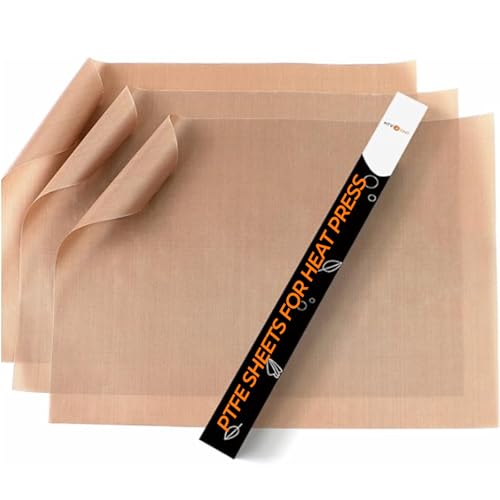
HTVRONT offers three PTFE-coated sheets designed to resist sticking and enable easy cleanup after pressing. The non-stick surface is easy to wipe clean, resisting residue from paints, glues, wax, and other transfer byproducts. These sheets are reusable and highly heat resistant, suitable for sublimation and other DIY projects beyond standard heat press tasks. The packaging emphasizes durability and wide applicability from crafts to electronics-related applications.
3 Pack PTFE Sheet For Heat Press By YRYM HT

These PTFE sheets are designed for high-temperature protection and multiple uses. Made from durable PTFE material, the sheets offer non-stick performance up to 600 degrees Fahrenheit, helping safeguard your vinyl, garments, and irons during HTV application. The sheets are described as reusable and tear-resistant, making them suitable for repeated projects and professional workflows where consistent heat distribution is important.
Cohpoh Heating Press Paper Pre-Cut Parchment

This parchment paper kit features silicone coating on double sides with pre-cut dimensions across multiple sizes. It’s reusable for 2-4 presses and is advertised as non-stick and heat resistant up to 425°F–450°F. The set is positioned as an affordable and flexible accessory for heat press users, offering convenient sizing across common project dimensions and compatibility with various transfer papers and materials.
Buying Guide: Key Purchase Considerations
- Material and heat tolerance: Silicone-coated and PTFE (Teflon) sheets provide non-stick surfaces. Check maximum temperature ratings to match your press settings (commonly up to 425–600°F depending on material).
- Reusability and durability: Reusable sheets reduce ongoing costs. Consider sheets advertised as reusable up to a certain number of uses and whether they resist tearing or staining.
- Compatibility: Ensure the sheet size fits your platen dimensions and is compatible with your heat press or iron. Pre-cut parchment options save time for smaller projects.
- Substrate safety: Different papers protect various materials—cottons, blends, plastics, and metals. PTFE is versatile for many surfaces, while parchment and silicone sheets excel with delicate fabrics.
- Ease of cleaning: Some sheets wipe clean easily, while others may require mild detergent. Consider whether residue transfer could impact future designs.
- Use-case flexibility: If you work with sublimation, vinyl, or crafts beyond textiles, a combination of PTFE sheets and silicone protective papers can cover broader needs.
- Cost-to-use ratio: Compare bulk packs and multi-packs to determine long-term savings, especially for businesses or frequent crafters.
- Storage and portability: Portable, cut-to-size options are helpful for on-the-go customization or on-site events.
Users should evaluate their workflow when selecting silicone or non-stick papers. For delicate designs or high-heat substrates, PTFE papers provide robust protection. For projects requiring frequent changes in size and shape, silicone-coated protective sheets or parchment variants offer flexible, reusable options. Durability, cleaning ease, and compatibility with existing transfer papers should guide final choices.