Choosing the right single screen printing press can boost your DIY T‑shirt projects, crafts, and small-batch prints. This guide highlights reliable single-color presses and compact multi-station models that fit tight spaces while delivering consistent results. We evaluate build quality, adjustment features, and ease of use to help you pick a press that aligns with your space, budget, and printing needs.
Summary of selected products:
- VEVOR Screen Printing Machine, 4 Color 1 Station, 21.2×17.7 in, Rotatable
- VEVOR Screen Printing Machine, 4 Color 4 Station, 21.2×17.7 in, Rotatable
- Caydo Screen Printer, 1 Color 1 Station, Hinge Design Wood Table
- Tianiuseen Screen Printing Table Press Kit, 1 Color 1 Station, 22×18 in
- HayWHNKN 4 Station 1 Color Screen Printing Machine with Stand
VEVOR 4 Color 1 Station Rotating Screen Press

Designed for compact spaces, this 4-color, 1-station press keeps footprint small while offering a stable, 360° rotating fuselage. Independent metal bearings ensure smooth operation and precise positioning, making it suitable for occasional printers who still demand quality. The 21.2 x 17.7 inch printing area supports a wide range of designs on T‑shirts, fabrics, and flat items. A double-layer positioning pallet reduces deviation, helping you land your mark with every print. Ideal for hobbyists and small studios seeking dependable performance without a large footprint.
Features emphasize stability and repeatability: a screwed-on fuselage for bench mounting, a dedicated position stop under each arm, and a design that accommodates a range of flat materials including textiles, plastics, glass, ceramics, and leather. Users can benefit from straightforward setup and predictable results across repeat jobs. While it’s compact, the press still handles multi-material projects, expanding the scope of typical home screen printing workflows.
Pros: compact footprint, accurate alignment, versatile material compatibility. Cons: single station means slower multi-color workflows; heavier prints may push the table’s limits over time if used extensively. This model works well as a starter system or backup press for small shops that value stability and repeatable placement.
VEVOR 4 Color 4 Station Rotating Screen Press

This model expands to four colors and four stations, offering greater throughput without increasing the workspace dramatically. The 21.2 x 17.7 inch printing area remains the same, preserving maneuverability while enabling more complex designs across multiple passes. The rotating fuselage and independent metal bearings deliver stable operation and precise positioning, which helps reduce misprints in multi-color work. It’s a strong choice for small shops looking to scale up print volume without a full-sized automatic press.
Key strengths include space-efficient design, sturdy construction, and reliable alignment aids such as the double-layer positioning pallet. The press is well-suited for clothing, pillowcases, fabrics, and other flat substrates. Its versatility makes it a logical upgrade for users who outgrow a 1-station machine but aren’t ready for industrial-grade gear. Consider this model if your projects frequently involve multi-color transfers on apparel and flat goods.
Potential drawbacks: the complexity increases with four stations, so setup and maintenance may require more attention. For best results, keep the work area clean and regularly inspect bearings and clamps to ensure continued accuracy throughout production runs.
Caydo Screen Printer 1 Color 1 Station With Hinge Design

The Caydo press emphasizes user-friendly operation with an innovative hinge design that lifts and hovers the screen frame for precise placement. A base groove and centerline aid garment alignment, helping ensure prints land evenly on the target area. This model is particularly appealing to beginners or hobbyists who want an approachable setup that minimizes learning curves while producing consistent results on T‑shirts and other garments.
The hinge design reduces fatigue and streamlines repetitive tasks, while the base groove helps stabilize the material to prevent shifting during printing. Although it’s a 1-color, 1-station unit, its thoughtful design supports accuracy and ease of use, making it a solid entry point for those testing screen printing at home or in small classrooms or art studios. If you’re prioritizing beginner-friendly features over multi-color throughput, this Caydo press stands out in its category.
Considerations: ensure the frame fits your screen size and that you’re comfortable with manual alignment. This model may require additional press frames for longer runs, but its simplicity is a benefit for new printers focusing on fundamental techniques and alignment practice.
Tianiuseen 1 Color 1 Station Screen Printing Table Kit

The Tianiuseen kit provides a 22×18 inch workspace with 1 color and 1 station, making it a compact option for single-color designs. It features an adjustable clamp and removable pallet, allowing for some customization in print thickness and garment stability. The machine’s bracket system helps secure the platen to the press, promoting balance during operation and reducing the likelihood of drift during production.
Adjustability is a highlight here: a screen frame clamp can be modified for different thicknesses, and the pallet’s back-and-forth travel accommodates various garment dimensions. The setup is straightforward, which is valuable for beginners and for classrooms or maker spaces where quick start-ups matter. This model suits small print runs, prototyping, and educational use where a simple, reliable press is preferred over high-volume throughput.
Operational notes: stability and balance rely on the tension springs and proper screwing of the press to the work surface. It’s a good match for designers who want to learn screen printing fundamentals without committing to a larger, more expensive multi-station system.
TECHTONGDA 3D Micro-Registration Screen Printer

This press emphasizes precision with 3D micro-registration, enabling adjustments in three directions and a screen height range up to 7 inches. It is designed for non-textile substrates as well as transfer papers, PVC boards, nameplates, glass, metal, and similar materials. Do not use it for apparel printing, which is a crucial caveat for buyers focused on T‑shirts.
The 3D micro-registration feature helps align complex designs across multiple passes, which is useful for small parts, signage, and non-fabric applications. The unit includes gravity balance plates to stabilize weight when lifting the screen, and the lifting angle/height can be tuned to meet project needs. This press is well-suited for users who need high registration accuracy on rigid or semi-rigid materials rather than fabrics.
Strengths include flexible registration and robust balance; limitations include its non-fabric focus and slightly more complex operation. It’s a strong choice for craft projects and small-scale production where precise alignment on non-textile substrates is essential.
Screen Printing Equipment 4 Color 2 Station Press

This table-type press blends two stations with two color capability in a compact footprint. The adjustable dual-spring system supports various screen weights, and the design leverages a simple, practical construction that is easy to assemble and transport. The model’s 90° and 180° configurations maximize the use of space while maintaining stability during printing.
Users can benefit from a straightforward setup, making it accessible for beginners and schools. While it’s not the most feature-rich option in multi-color capacity, its practical design and space efficiency are appealing for hobbyists and small studios focusing on reliable single- or two-color prints. This press provides a good balance between functionality and portability for limited workspaces.
VEVOR 4 Color 2 Station Silk Screen Printing Kit

This kit combines four colors with two stations, designed to balance space efficiency with increased production capability. It features a table-type design for easier transport and stable, precise operation through multiple bearings and mechanical components. The kit’s robust construction aims to deliver consistent results across repeated cycles, making it a practical choice for small businesses and serious hobbyists who want more color options without stepping up to a full industrial press.
Key advantages include space-saving design, durable finish, and stable positioning for longer print runs. It’s suitable for apparel, flat goods, and a range of substrates that benefit from consistent color accuracy. As with any multi-color setup, operator familiarity and careful bed alignment are important to minimize misprints during high-volume sessions.
HayWHNKN 4 Station 1 Color Rotating Screen Printer
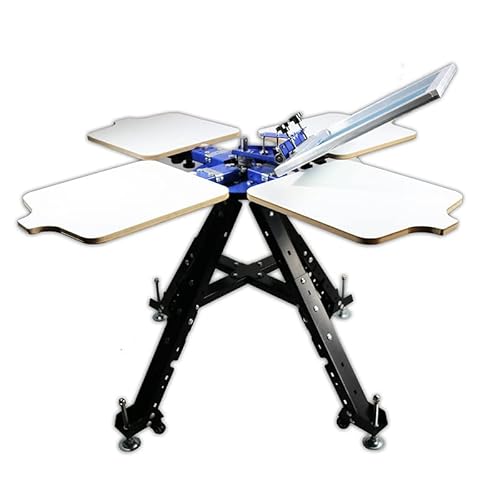
This press features a height-adjustable stand, rotating screen frame, and magnet-based balance to keep the frame stable during printing. With 4 stations and 1 color, it is best suited for designs that require precise alignment and steady control across passes. The stand’s height range supports standing or seated operation, helping users tailor the workflow to comfort and ergonomics while maintaining printing accuracy.
The adjustable stand and rotating frame give users flexibility in placement and access, while the magnet adsorption system helps keep the frame balanced during ink deposition. It’s a strong option for individuals who want a versatile, stand-alone press for single-color designs and occasional multi-pass projects. As with other similar machines, ensure you have a stable workspace and adequate lighting to maximize print accuracy.
Buying Guide: Key Purchase Considerations
- Print volume and color needs: If you primarily print single-color designs, a 1-color 1-station model may suffice. For more complex or higher-volume runs, a 4-color option or a dual-station setup can increase throughput.
- Space and footprint: Table-type and compact footprint presses work well in home studios or small workshops. Consider whether you need a freestanding stand or a table-mounted model for stability.
- Registration accuracy: Look for features like 360° rotation, double-layer positioning pallets, and micro-registration options to improve alignment across passes or multiple colors.
- Material compatibility: Most presses handle T‑shirts and flat fabrics, but some models are better suited for non-fabric surfaces (glass, metal, wood) or signage. Verify the intended substrate compatibility before purchasing.
- Ease of use and setup: Hinged frames, base grooves for garment alignment, and adjustable clamps can shorten learning curves for beginners. Consider whether you value quick-start setups or more advanced adjustable controls.
- Durability and maintenance: Powder-coated frames, rust-resistant hardware, and high-quality bearings contribute to long-term reliability. Regular inspection of screws, clamps, and springs helps maintain print quality.
- Adjustability and ergonomics: Stand height, screen frame tension, and weight balance influence comfort and accuracy during longer sessions. A rotating frame can reduce operator fatigue and improve alignment.
- Budget and scalability: Start with a model that matches your current needs but consider future growth. A 1-color/1-station machine can be a cost-effective entry point, while a 4-color/4-station setup supports expanding capabilities.
Overall, the best single screen printing press depends on your space, output goals, and substrate variety. For beginners focusing on T‑shirts and simple designs, a sturdy 1-color machine with a reliable alignment system offers the quickest path to consistent results. Those planning to scale up may prefer a 4-color or multi-station option that maximizes throughput while maintaining accuracy. Always verify compatibility with your intended materials, and seek models with easily adjustable components to adapt as your skills and needs evolve.