For hobbyists building scale models, DIY instruments, or decorative fixtures, small brass tubing offers durability, workability, and a polished look. This guide highlights five top-rated brass tube sets and what to consider when choosing the right size, wall thickness, and length for your project. From multi-size assortments to precision tubes for delicate crafts, these picks cover common scales and applications—knife making, model building, electronics framing, and more. Each product section provides key specs, fabrication notes, and practical tips to help you select tubes that cut, weld, and finish smoothly.
| Product | Sizes (OD) | Wall Thickness | Length | Material |
|---|---|---|---|---|
| Eorbow 18 Pack | 2, 2.5, 3, 3.5, 4, 5, 6, 8, 9 mm | 0.5 mm | 300 mm each | H65 Brass |
| Mardatt 12 Pcs | 1, 1.5, 2, 2.5, 3, 3.5 mm | 0.2 mm | 300 mm each | Brass |
| K&S Precision Metals | 1/16″ to 13/32″ OD | 0.014″ | 12″ (per tube) | Seamless Aluminum (brass option not in name; option listed for comparison) |
| YTKavq 3/16″ OD | 3/16″ (≈4.76 mm) | 0.02″ (0.5 mm) | 12″ (300 mm) | Brass |
| uxcell 4 mm OD | 4 mm | 0.5 mm | 200 mm | Brass |
Eorbow Brass Tube Set
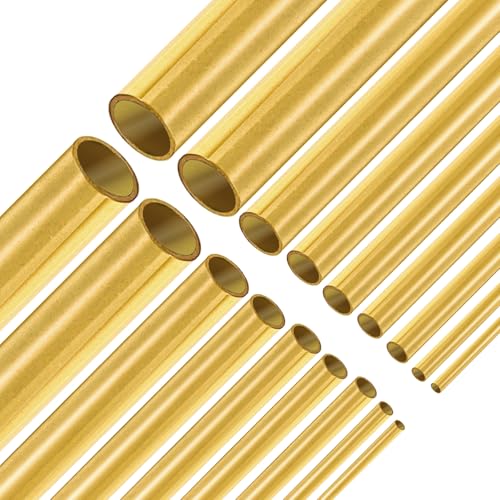
The Eorbow kit provides a valuable assortment of nine outer diameters, ranging from 2 mm up to 9 mm, with a uniform 0.5 mm wall thickness. Each size is supplied in two pieces, totaling 18 tubes per set and 18 packs in the box. Built from durable H65 brass, these tubes offer good ductility and thermal conductivity, making them suitable for model work, small frame assemblies, and structural features in hobby projects. The tubes are designed to be easy to cut and punch, and they weld readily with common equipment. For best results, store tubes in airtight packaging to limit oxidation between uses.
Key considerations: ensure you have the right diameter to fit your joints and connectors; plan to cut with a fine tube cutter to preserve straight ends; and consider the 300 mm length if you need longer runs or require trimming for precise fits. This multi-size approach helps hobbyists prototype quickly without frequent shopping trips.
Mardatt Brass Tube Set

The Mardatt assortment includes six sizes of seamless brass tubes, from 1 mm to 3.5 mm OD, each with a 0.2 mm wall thickness and 300 mm length. Brass tubes are polished with a passivation finish for corrosion resistance and durability, making them suitable for precision hobby projects, model components, and decorative fittings. The seamless construction minimizes burrs and seams, which helps reduce finish work and improves fit in tight assemblies. The kit’s 12 tubes total offer efficient coverage for typical small-scale builds.
Practical tips: use fine hand files or abrasive cloth to smooth ends before assembly; consider flux and appropriate soldering methods when joining brass to brass; and store tubes in a dry, controlled environment to prevent tarnish during longer projects.
K&S Precision Metals Brass Telescopic Tubing

This K&S Precision set offers a broad range of small-diameter, precision tubes for DIY projects, modeling, and crafts. The catalog includes tubes from 1/16″ to 13/32″ outer diameter, all cut to standard 12″ lengths with a 0.014″ wall thickness. While described as seamless aluminum in the product listing, it’s often used for lightweight structures and precision components in hobbies. The assortment excels for designers who need multiple diameters to test fit, balance, and structural integrity across different mini projects.
Considerations: verify material composition in your specific project notes, as some listings emphasize aluminum; for brass-focused builds, cross-reference with brass alternatives to achieve color and conductivity goals; be mindful of wall thickness when planning for bending and soldering stresses.
YTKavq Brass Tubing, 1″ OD

YTKavq presents thick-walled brass tubing with a 1″ outer diameter and a 1 mm wall thickness, offered in 12″ lengths. The robust wall provides superior rigidity for structural components in knife making, model building, and mechanical assemblies. The two-pack short lengths reduce waste for small builds and prototypes, allowing precise fabrication without committing to a full-length run. The tubes are easy to cut, drill, solder, and polish with standard hobby tools, making them a versatile choice for hobbyists who value strength in a compact form.
Notes for use: plan for fittings and connectors that accommodate the 1″ diameter; maintain clean, square ends for reliable joints; and consider surface finishing to achieve a consistent brass sheen across components.
uxcell Brass Round Tube, 4 mm OD

uxcell’s 4 mm outer diameter brass tubes offer a balanced option for modeling and craft projects. This 200 mm length set provides a compact, manageable size for precise assemblies and small fixtures. Brass’s natural conductivity and corrosion resistance make these tubes suitable for hobby electronics frames, decorative fittings, and model details. The tubes are described as easy to weld and cut, enabling hobbyists to tailor fitment to unique project geometries.
Practical guidance: when cutting, use a fine blade or tube cutter to preserve straight edges; test fit joints before soldering; and consider a light sanding to ensure smooth mating surfaces for clean assembly and finishing.”
uxcell Brass Round Tube, 1.5 mm OD

uxcell’s smaller 1.5 mm outer diameter brass tubes provide a precise option for tiny models and micro-assemblies. With a 0.25 mm wall thickness and 300 mm length, this set suits delicate framing, model details, and craft components that demand light, rigid tubing. The brass composition offers good weldability and corrosion resistance, enabling a range of fabrication techniques from soldering to brazing. This size is particularly popular for intricate detail work and incremental builds.
Tips: use micro-notching tools for tight joints; keep joints clean and lubricated when bending; and plan your color finish to match brass’s warm tone for a cohesive look.
Buying Guide: Key Considerations For Brass Tubing In Hobby Projects
Choosing the right brass tubing depends on several project-specific factors. Consider the following perspectives to guide your purchase decision:
- Size and fit: Identify the precise outer diameter (OD) required by your connectors, joints, or decorative fittings. When possible, select an assortment that covers a range of common sizes to minimize additional shopping.
- Wall thickness and strength: Thicker walls increase rigidity and load-bearing capacity but reduce bendability. For delicate models, a thinner wall is easier to shape; for structural components, a thicker wall is often preferable.
- Length and waste: Longer tubes allow more flexibility but can create waste if parts are small. Shorter tubes reduce waste but may require more joints. Plan your layout and cut plan ahead.
- Material quality: Brasses like C2680/HS steel equivalents provide good ductility, corrosion resistance, and ease of fabrication. Look for seamless construction when precision and interior smoothness matter.
- Fabrication methods: Brass tubes weld well with appropriate equipment; some sets are designed for bending, soldering, or brazing. Have the right tools ready (tube cutters, deburring tools, soldering irons) to ensure clean joints and clean finishes.
- Finish and appearance: Brass tones can range from bright to aged patina. Plan finishing steps such as polishing, passivation, or lacquer coatings to maintain a consistent look across all parts.
- Storage and care: To prevent oxidation, store tubes in airtight or desiccated environments when not in use. This helps preserve smooth inner surfaces and external finishes for repeated projects.
Across these five selections, you gain a spectrum of options from broad assortments to precise, single-diameter tubes. This mix supports a variety of hobby disciplines—from model making and knife handle framing to small mechanical assemblies and decorative crafts. When evaluating options, match the tube’s OD and wall thickness to the intended joint geometry, bending radii, and the finishing techniques you plan to employ. Always perform a test fit before committing to soldering or permanent connections to ensure a clean, durable result.