Whether you’re teaching beginners, helping kids stay oriented on the keyboard, or revisiting muscle memory, the right piano key stickers can boost learning efficiency. This guide reviews five popular options designed to label white and black keys, stay durable through touch, and remove cleanly without residue. Each choice brings a unique approach—from traditional adhesive stickers to silicone strips and solfege overlays—so you can pick the one that aligns with your setup and goals.
| Product | Brand | Key Features |
|---|---|---|
| Piano Keyboard Stickers for 88/61/54/49/37 Key | COYAHO | Removable, transparent with back-printed letters; fits all common keyboard sizes; no glue residue; waterproof. |
| BEATBIT Piano Notes Guide (Rainbow Colors) | BEATBIT | Silicone note strips; no stickers; double-staff display; easy on/off with no residue; beginner-friendly. |
| Piano Keyboard Stickers for Beginners (Lrokimg) | Lrokimg | Colorful, removable, transparent; fits 88/76/61/54/49 keys; no sticky residue; eye-catching labels. |
| Piano Keyboard Stickers for Beginners Removable (Eison) | Eison | Large letters with solfege; bold colors; compatible with 88/61/54/49/37 keys; residue-free removal. |
| Removable Piano Stickers – Silicone Strips (Belfort) | Belfort | No stickers or glue; silicone overlays; reusable; easy placement and removal; non-residue. |
Notes: This selection emphasizes accessibility, durability, and classroom suitability across varying piano types. Each item is designed to help students quickly locate notes, read letter names or solfege, and maintain keyboard cleanliness during practice.
Piano Keyboard Stickers For All Keys — COYAHO
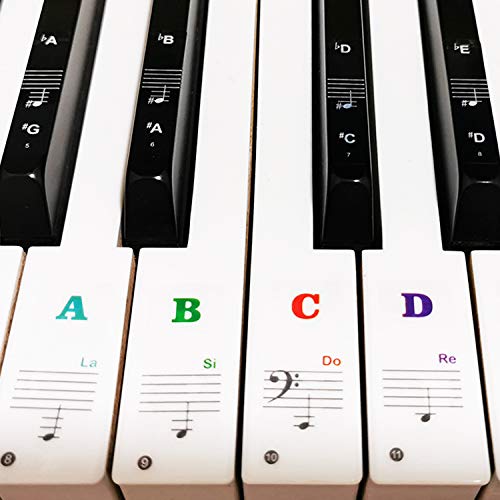
COYAHO’s sticker set is designed for broad compatibility across keyboards from 37 to 88 keys. The white keys feature a 4.0 cm by 1.55 cm label size, while black keys measure 3.9 cm by 0.85 cm. The letters are printed on the backside of a transparent sticker, helping them stay legible through repeated finger contact. The stickers are waterproof and easy to wipe clean, maintaining visibility during humid or sweaty practice sessions. A key advantage is the adhesive’s clean removal—no sticky residue remains on the keys, preserving the keyboard’s finish for long-term use. This option is well-suited for classrooms and home studios seeking a straightforward labeling system that won’t damage surfaces.
Beatbit Silicone Note Strips For Beginners — BEATBIT

BEATBIT offers a switch from traditional stickers to silicone note strips. These strips connect notes in a double-staff format, helping learners quickly identify which key corresponds to which note on both treble and bass staves. They require no adhesives, leaving the keyboard surface pristine and easy to clean. The system is particularly beginner-friendly, as it eliminates the need to memorize key names or locate Middle C initially. Installation is fast, removal is residue-free, and reusability makes it a practical choice for ongoing practice and demonstrations in group settings.
Lrokimg Colorful Keyboard Stickers — Lrokimg

Lrokimg’s pack emphasizes compatibility with a wide range of keyboard configurations, including 88/76/61/54/49-key models. The stickers are transparent and thin, ensuring minimal interference with the playing feel. They are easily pasted and removed without leaving sticky residues, which helps protect the keys over time. The set uses bright colors to distinguish different keys, aiding beginners in quickly scanning for notes during exercises and games. The vibrant design can also add a fun element to practice sessions in classrooms or at home.
Eison Removable Key Labels With Solfege

Eison combines large bold lettering with solfege syllables (do re mi fa so la ti do) for quick, intuitive learning. The stickers are designed for compatibility with all common key counts (88/61/54/49/37), and the font size is increased by about 20% to aid recognition. The palette emphasizes high-contrast colors, with Middle C highlighted for immediate location during practice. The material is designed to minimize any effect on the playing feel, offering a balance between visibility and playability. Removal is residue-free and suitable for repeated repositioning as learners progress.
Belfort Removable Silicone Piano Stickers

Belfort offers a silicone-based, glue-free solution that sits on top of piano keys like a screen overlay. The silicone strips are reusable and easy to reposition, making them ideal for teachers who rotate keyboard layouts or need to switch between practice modes. Since there is no adhesive, there is minimal risk of damage to the keys or finish. The product emphasizes a clean learning surface that remains free from residue after removal, enabling a quick transition between lessons or players. This option is well-suited for demonstrations and practice rooms that demand flexibility and quick changes.
Buying Guide: Key Considerations and Comparisons
When choosing piano key stickers or overlays, consider the following factors to match your needs:
- Application method: Adhesive stickers versus silicone overlays. Adhesive options stay in place longer but may leave residue; silicone is reusable and residue-free but sits on top of keys, which can affect feel slightly.
- Key compatibility: Ensure the product supports your keyboard size (88, 76, 61, 54, 49, or 37 keys) and whether it covers both white and black keys accurately.
- Label style: Letters versus solfege. Letters help with reading, while solfege can aid in auditory association and scale recognition.
- Durability and cleaning: Waterproof or water-resistant stickers resist sweat and oils; silicone strips are easy to wipe clean and typically long-lasting.
- Residue and keyboard finish: If the keyboard has a polished or wooden top, choose residue-free options to preserve finish and resale value.
- Removability: For classrooms or temporary use, opt for removable or repositionable options that won’t damage surfaces.
- Color and contrast: High-contrast colors aid quick lookup, but ensure they are not distracting during performance or serious practice sessions.
In summary, the COYAHO stickers provide a traditional, adhesive-based approach with clear letter labeling; BEATBIT offers a no-sticker silicone system that doubles as a staff guide; Lrokimg emphasizes color and transparency with broad compatibility; Eison combines large readable letters with solfege for a melodic learning path; Belfort supplies a reusable silicone overlay emphasizing residue-free use. Depending on your teaching style, budget, and keyboard type, any of these options can improve note location accuracy and practice efficiency without obstructing the playing experience.