Thin wood veneer sheets are essential for lightweight refinishing, edge banding, and craft projects. The following selections focus on ultra-slim options that are easy to work with, highly adaptable, and suitable for cabinetry, furniture, and decorative panels. Each product features real wood veneers with thin profiles designed for flexible applications and clean results.
| Product | Brand | Use | Notes |
|---|---|---|---|
| BEVTEE Birch Edge Banding | BEVTEE | Edge banding for plywood, furniture edging | 3/4 inch wide, 50 ft roll, 0.6 mm thick |
| OMUKI Natural Wood Veneer | Omuki | General veneer sheets for furniture & interiors | Thin sheets with natural textures |
| Dovetail Birch Edge Banding | Generic | Edge banding for cabinets and crafts | 50 ft, 3/4 inch, pre-glued |
| Maple Wood Veneer Sheet | Samlee | Furniture restoration, cabinetry, crafts | 9 ft x 10 in, 0.25 mm |
| Camland Red Oak Veneer Sheets | Camland | Woodworking, decor, refinishing | 9 x 98 inches, 0.25 mm |
The selections above emphasize thin, flexible veneers suitable for DIY enthusiasts and professionals. They span edge banding options and plain veneer sheets in diverse wood tones, offering multiple choices for finishing edges, panels, and decorative overlays. All items are designed to minimize warping and cracking while delivering natural wood aesthetics. Use cases include cabinet edging, furniture restoration, speaker enclosures, and craft projects where a lightweight veneer is advantageous.
BEVTEE Birch Edge Banding – Natural Birch Finish

BEVTEE Birch Edge Banding provides a ready-to-apply solution for edging plywood and furniture. The roll is 50 feet long and 0.6 mm thick, offering enough material to cover substantial projects. The edge banding features a pre-glued hot-melt adhesive, enabling quick and clean application by ironing. Crafted from high-grade birch veneer, it yields a smooth texture and natural appearance, reducing the risk of splits or mismatches at joins. This option is ideal for restoring cabinetry, shelving, and DIY builds where a durable, seamless edge is required.
OMUKI Natural Wood Veneer – Thin Wood Sheets
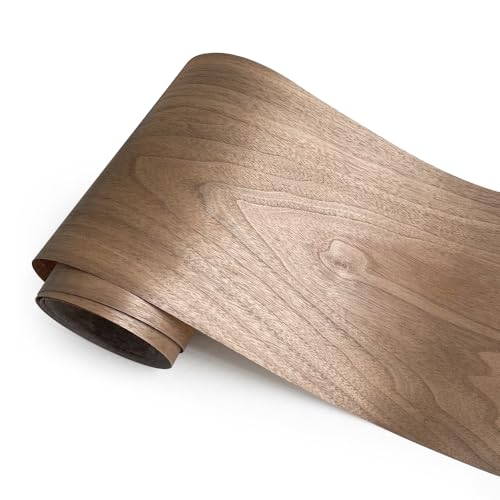
OMUKI offers thin wood veneer sheets suitable for refurbishing furniture, guitars, speakers, and automotive interiors. The veneer is produced through rotary cutting or sawing of logs, yielding natural textures and tones suitable for multiple design styles. Backed by a stable structure, these sheets are durable and less prone to deformation. They are versatile for applying to various surfaces, including cabinets and wall panels, with a natural wood feel that enhances visual appeal while remaining easy to handle and cut to size.
Dovetail Birch Edge Banding – 50Ft

This Dovetail edge banding roll is crafted from flexible birch veneer and offers strong adhesion for long-lasting results. The 50-foot length and 3/4 inch width provide ample material for completing cabinets and edging tasks. The pre-glued, iron-on design simplifies application, reducing mess and facilitating a clean finish around curves and corners. The veneer’s thin profile supports precise alignment, making it a good match for projects requiring seamless edges and a natural wood appearance.
Maple Wood Veneer Sheet – 9ft x 10in

Samlee Maple veneer sheets offer a large, flexible surface ideal for furniture restoration and cabinet refinishing. Measuring about 9 feet by 10 inches with a 0.25 mm thickness, these sheets are thin enough to bend around gentle curves yet durable for long-lasting use. The non-woven fabric backing helps stabilize the sheet, facilitating easier cutting and handling. This veneer is well-suited for projects where a light, natural maple grain is desired on flat or gently contoured surfaces.
Camland Red Oak Veneer Sheets – 9×98 Inches

Camland’s Red Oak veneer sheets provide a durable, natural oak finish for woodworking and decor projects. The sheets measure approximately 9 x 98 inches with a thickness of 0.25 mm, offering ample material for large panels and doors. Crafted to be flexible enough for curved applications, these veneers are suitable for cabinets, shelves, and accent walls. Realistic red oak patterns add warmth and character to restored or new furniture pieces.
Buying Guide
Key purchase considerations when selecting very thin wood veneer:
- Thickness and flexibility: Very thin veneers (around 0.2–0.6 mm) bend more easily and conform to curved surfaces, ideal for edge banding and panel overlays. Check compatibility with heat-activated glue if you plan to iron-on.
- Backing and stability: Veneers with non-woven fabric backing provide stability during handling and cutting. Backings can affect adhesion and coating compatibility, so match backing to your chosen adhesive or glue.
- Wood species and grain: Birch, maple, red oak, and cherry each offer distinct grain patterns and color tones. Select a species that complements existing wood or desired aesthetics for the project.
- Finish and color consistency: Natural veneers exhibit grain variation between batches. For large panels, consider ordering extra to account for color and grain differences.
- Adhesive method: Edge banding with pre-applied glue saves time and reduces mess. For plain sheets, choose the right adhesive (contact cement, wood glue, or spray adhesive) and test on a scrap piece first.
- Sheet dimensions: Ensure sheets are large enough for your project and manageable for handling. Wide rolls are convenient for long runs; larger sheets reduce seams on panels.
- Intended use: Edge banding is optimized for edging and finishing; full sheets are better for panels and overlays. Consider whether you need heat resistance, abrasion resistance, or moisture tolerance for the environment.
- Cost and waste: Higher-grade veneers yield better aesthetics but may be pricier. Plan for occasional cutting waste and potential rework if grain alignment is critical.
- Cutting and finishing: Use sharp blades or specialty veneer saws to prevent chipping. Light sanding and a compatible topcoat can enhance durability and appearance.
Overall, thin wood veneers provide versatile finishing options with natural aesthetics. When selecting, consider your project type, surface shape, and desired final look to balance ease of use with visual appeal. Always follow manufacturer guidelines for adhesion and heating to achieve the best results.