Water-based sculpting clays are favored for their smooth pliability, easy cleanup, and forgiving working times. This guide highlights five top options that suit beginners and seasoned artists alike, spanning air-dry variants and low-fire pottery clays. Each product is chosen for versatility in hand-building, sculpting, and basic wheel-related projects, with practical notes on mixing, drying, and firing where applicable. Explore durable textures, plasticity, and safe formulations to decide which clay best fits your technique and workspace.
Summary Table of Selected Products
| Product | Brand | Type | Key Benefit |
|---|---|---|---|
| Crayola Air Dry Clay (5lbs) | Crayola | Air-dry modeling clay | Easy to sculpt with water-activation and bulk classroom use |
| ZEHIQ Premium Air Dry Clay | ZEHIQ | Air-dry modeling clay | Natural kaolin blend, flexible and crack-resistant |
| ReArt Natural Air-Dry Modeling Clay | ReArt | Air-dry modeling clay | Large 10 lbs with a comprehensive tool set |
| Deouss 5 lbs Low Fire Pottery Clay | Deouss | Low-fire pottery clay | Excellent plasticity for sculpting and wheel work |
| Old Potters Low Fire Pottery Clay (10 lbs) | Old Potters | Low-fire terra-cotta clay | User-friendly for beginners and advanced, versatile textures |
Crayola Air Dry Clay (5lbs)

Crayola Air Dry Clay is a widely used budget-friendly option favored in classrooms and home studios. The product includes 5 pounds of natural white air-dry modeling clay stored in a resealable bucket to maintain moisture between sessions. It supports common sculpting techniques such as coil, slab, pinch, and score-and-weld, making it suitable for a broad range of projects. The clay’s water-activated nature allows for easy softening when needed, and it does not require firing, simplifying cleanup and storage in spaces with limited kiln access. As a classroom staple, it is well-regarded for consistency and safety in educational environments.
When working with Crayola Air Dry Clay, artists can benefit from its forgiving texture, which lends itself to quick prototyping of forms and textures. For best results, keep the clay slightly damp during modeling to avoid cracking as it dries. Once fully dry, pieces can be painted with acrylics or sealed with appropriate finishes. While not suitable for functional ware that must be fired, it offers a reliable path to expression and experimentation, particularly for beginners building confidence in sculpting techniques.
ZEHIQ Premium Air Dry Clay
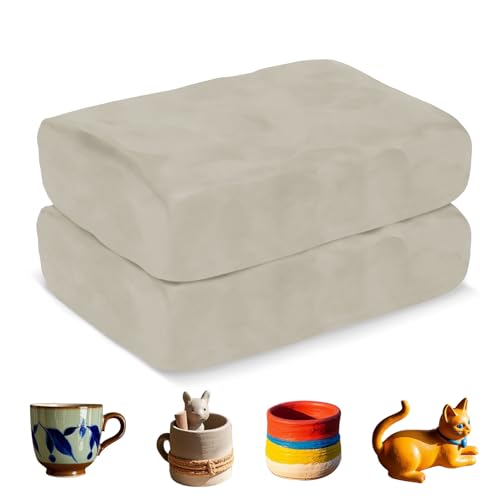
ZEHIQ Premium Air Dry Clay comes in two 1.1-pound packs, totaling 2.2 pounds, and is designed for air-drying without firing. The formulation emphasizes natural kaolin content with no talc or artificial additives, reducing odor and impurities. This clay offers good plasticity and resistance to cracking during the drying process, provided that proper humidity control and moisture management are observed. It is well-suited for sculpting, carving, and shaping, and can be fired later if desired. The product is versatile for both beginners and experienced artists seeking a non-fired option that still yields durable, smooth surfaces after drying.
Artists should monitor drying conditions to avoid cracks and warping—placing pieces on a flat, dust-free surface and turning them as they dry can help. After air drying, you may choose to glaze and fire for a finished ceramic look, or leave as a matte sculpture depending on your project goals. The absence of strong odors makes this clay appealing for indoor studios with children or sensitive spaces.
ReArt Natural Air-Dry Modeling Clay

ReArt Natural Air-Dry Modeling Clay provides a large 10-pound supply paired with a 40-piece pottery tool set, offering a comprehensive package for sculptors and students. The clay is porcelain-based kaolin, noted for its fine texture and uniform consistency. It air dries without firing, reducing equipment needs and enabling projects that can be completed in a single session. The included tools support a wide range of sculpting tasks—from detailing and carving to smoothing and shaping—making it suitable for classroom demonstrations, home studios, or personal art kits. The non-toxic, odorless composition aids in safer indoor use.
Application tips include warming the clay slightly to increase plasticity before sculpting and keeping pieces evenly moist at the edges to prevent cracking during drying. The finished pieces can be sanded and painted after complete drying, or sealed with appropriate finishes to enhance durability for display pieces. Since it is air-dry, larger or more intricate structure may require careful drying planning to avoid warping.
Deouss 5 lbs Low Fire Pottery Clay

Deouss 5 lbs Low Fire Pottery Clay is a terra cotta option designed for both beginner and advanced ceramic projects. The clay’s kaolin base contributes to a fine, uniform texture with strong plasticity and low stickiness, facilitating hand-building, sculpting, and wheel throwing. It remains non-toxic, tasteless, and environmentally friendly, aligning with safe studio practices. The clay is described as moist with excellent plasticity, making it suitable for moldable forms and intricate detailing. Ideal firing guidance suggests bisquing to Cone 04 and glazing to Cone 06, a workflow compatible with common studio kilns and educational settings.
Working with terra cotta clays like this one often yields warm, earthy results, ideal for sculpture and decorative forms. Proper moisture management during use helps prevent surface cracking as projects dry. Keep stored in a sealed container to maintain plasticity between sessions. While it is marketed for low-fire applications, testing your kiln setup is recommended to confirm optimal glaze results and to prevent glaze compatibility issues with terra cotta surfaces.
Old Potters Low Fire Pottery Clay (10 lbs)

Old Potters Low Fire Pottery Clay provides a 10-pound Terra Cotta supply designed for a broad range of skill levels. The clay is described as premium quality, US-made, and non-toxic, emphasizing safety and reliability for educational or personal studios. Its low-fire formulation supports wheel throwing, hand-building, sculpting, and general clay modeling, with plastics suitable for diverse artistic approaches. The Terra Cotta color delivers warm, natural tones suitable for decorative and functional clay pieces. As with other terra cotta clays, workability, surface texture, and firing outcomes will depend on kiln setup and glaze compatibility, so practitioners can tailor their process to their preferred aesthetic.
Users should consider moisture control during long sessions, wrap or store unused portions promptly, and plan drying times to minimize cracking on larger forms. This clay’s versatility makes it a practical choice for mixed-media sculptures, relief projects, and classroom demonstrations where varying levels of detail are pursued.
Buying Guide: Key Considerations for Water Based Sculpting Clays
- Clay type and firing needs: Decide between air-dry clays that require no kiln and low-fire pottery clays if you plan to glaze and fire. Air-dry clays are convenient for quick projects and classrooms; low-fire clays offer durability and glaze options but require a kiln.
- Plasticity and texture: Look for clays with strong plasticity for sculpting and shaping. Terra cotta-based clays provide warmth in color, while white stoneware offers a cleaner surface for detailed work.
- Drying behavior: Air-dry clays can crack if not dried evenly; ensure a controlled drying environment and consider using moisture-retentive techniques or sealing finishes for longevity.
- Safety and cleanup: Prioritize non-toxic formulations and easy cleanup, especially in home studios or classrooms with children. Odor and texture matter for prolonged use.
- Availability and accessories: Some packages include tool sets and accessories, which can be advantageous for beginners or large projects. Storage in resealable containers helps maintain plasticity.
- Intended application: For decorative sculptures or hand-built forms, air-dry options may suffice. If you want wheel-thrown ware or functional pieces, a low-fire clay with glaze compatibility is preferable.
- Color and finish: Terra cotta tones yield earthy aesthetics, while white or gray clays provide neutral bases for painting and glazing. Consider the final appearance when selecting the clay.
- Project scale: Large sculptures benefit from clays with consistent plasticity over long working times. Smaller pieces may prefer air-dry clays that dry quickly and uniformly.
In selecting a water-based sculpting clay, balance your workspace capabilities, drying and firing options, and your preferred aesthetic. The five products highlighted here span air-dry versatility and traditional low-fire options, offering practical pathways for projects ranging from classroom crafts to professional sculpture. Review the features and usage notes to align your choice with your technique, equipment, and schedule.