Maintaining razor-sharp edges is essential for precise wood carving. This guide highlights top sharpening tools and stropping solutions that help keep gouges, chisels, and knives in peak condition. From waterstones that reduce mess to dedicated strops that polish edges to a mirror finish, these picks cover a range of needs, whether you’re detailing fine features or rebuilding a dulled edge after heavy carving sessions. Explore five standout options and how they complement different carving styles and tool profiles.
| Product | Brand | Key Benefit |
|---|---|---|
| Sharp Pebble Sharpening Stones for Wood Carving Tools | Sharp Pebble | Grooved, contour-matching waterstones for gouges and chisels |
| Flexcut SlipStrop | FLEXCUT | On-tool polish with a dedicated compound for long-lasting edge |
| Amazon Basics 8-Piece Wood Carving Chisel Set | Amazon Basics | All-in-one set with honing guide and stone for easy sharpening |
| BeaverCraft LS5P1 Wood Carving Strop | BeaverCraft | European-made strop for consistent edge maintenance |
| DDF iohEF Wood Carving Sharpener | DDF iohEF | Longer stone with multiple grooves for various tool profiles |
The following sections review each selected product, focusing on how the sharpening tool fits into a broader carving workflow. You’ll find details on edge maintenance, ease of use, and how these tools work with different chisels, gouges, and knives.
Sharp Pebble Sharpening Stones For Wood Carving Tools
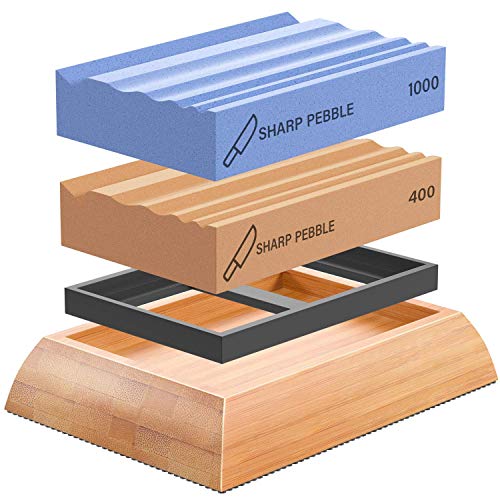
These waterstones provide a dual-grit setup that suits both maintenance and heavy edge restoration. The 400 grit stone is aggressive for dull edges, while the 1000 grit polishes and refines for ongoing use. A key feature is the grooved design, which helps match gouge contours and chisels to appropriate surfaces. The system uses water rather than oils, simplifying cleanup and reducing mess. A non-slip bamboo base stabilizes the stones during sharpening, improving control for contoured tools. The kit is particularly useful for users working with lathe tools, chisels, and varied gouge profiles.
Flexcut SlipStrop For Razor-Sharp Edges

The Flexcut SlipStrop is designed to polish and debur cutting edges after sharpening. It combines a textured coarser surface with a smoother finish to help create a durable edge. The kit includes a polishing compound that can be applied directly to the strop. This setup is especially beneficial for V- and U-gouges, where a controlled, featherlight pass helps sustain a sharp edge while reducing micro-chipping. The approach emphasizes a balance between aggressive sharpening and a refined finish for longer edge life.
Amazon Basics 8-Piece Wood Carving Chisel Set With Sharpening Stone
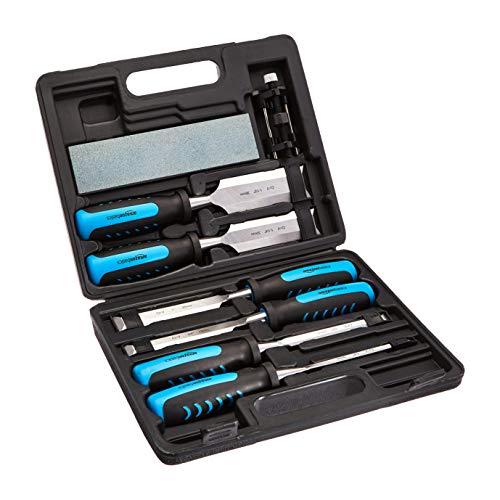
This all-in-one package pairs a practical 8-piece chisel lineup with a honing guide and a dual-grit sharpening stone (120/240 grit). The blades are heat-treated chrome vanadium steel with narrow bevels, designed to reduce effort during carving and support accurate cuts. Contoured handles are intended to lessen hand fatigue, enabling longer sessions. For beginners or hobbyists building a basic kit, this set provides a straightforward sharpening workflow, from rough reshaping to edge maintenance.
BeaverCraft LS5P1 Wood Carving Strop

This European-made stropping kit focuses on spoon carving and similar bevel tools. The paddle-strop design provides a stable platform for maintaining sharp edges between sharpening sessions. The kit includes a polishing compound to enhance edge polish and reduce burr formation. For carvers who shape fine profiles, the strop-based approach offers a controlled, low-abrasion finish that helps extend tool life and maintain consistent edge geometry across sessions.
DDF iohEF Wood Carving Sharpener
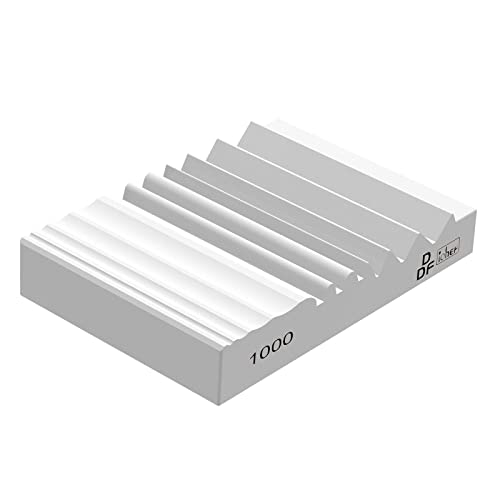
The DDF iohEF sharpener features a longer white corundum stone with multiple grooves designed to accommodate a variety of tool profiles. The 1000 grit stage is intended for edge maintenance, providing a refined finish that balances sharpness with durability. The design supports sharpening across chisels, gouges, and other carving blades by matching grooves to contour shapes. Durability and heat resistance are highlighted, aiming to deliver consistent results through repeated use.
Buying Guide: How To Choose Wood Carving Sharpening Tools
Edge maintenance strategy
- Grit range: Start with a coarser grit to reform dull edges and move to finer grits for polishing. A two-grit setup is often enough for most carvers and keeps the workflow efficient.
- Tool compatibility: Choose stones and strops that accommodate the common shapes used in your kit—flat chisels, triangular gouges, and round-shape cutters.
Sharpening method and mess
- Waterstones offer a cleaner alternative to oils, reducing buildup and cleanup. Ensure you have a stable base to prevent slips during use.
- Strops and polishing compounds help achieve mirror finishes on bevels, which can improve edge retention during carving sessions.
Stability and ergonomics
- A non-slip base or dedicated bench setup improves control, especially when working with contoured gouges or hooked knives.
- Ergonomic handles on chisels and comfortable textures on strops or stones reduce fatigue during longer sessions.
Durability and maintenance
- Consider stones with robust materials (corundum or ceramic compounds) for long-term use under frequent sharpening. Protecting edges of tools from overheating during sharpening preserves temper and blade life.
- Strops and polishing compounds should be selected based on the metallic hardness of your tools to avoid micro-scratching or edge rounding.
Skill level and budget
- Beginners often benefit from all-in-one sets that include a honing guide and basic stones. Advanced carvers might invest in higher-quality stones and dedicated stropping systems tailored to specific tool profiles.
- Balance cost with maintenance needs; consider whether you prefer water-based stones for cleaner workflow or oil-based systems for slightly faster material removal.
Maintenance routine ideas
- Regularly flatten waterstones to maintain even cutting surfaces. A dedicated flattening plate or plate-backed abrasive solution works well.
- Clean strops after use and store components in a dry environment to prevent rust or degradation of polishing compounds.